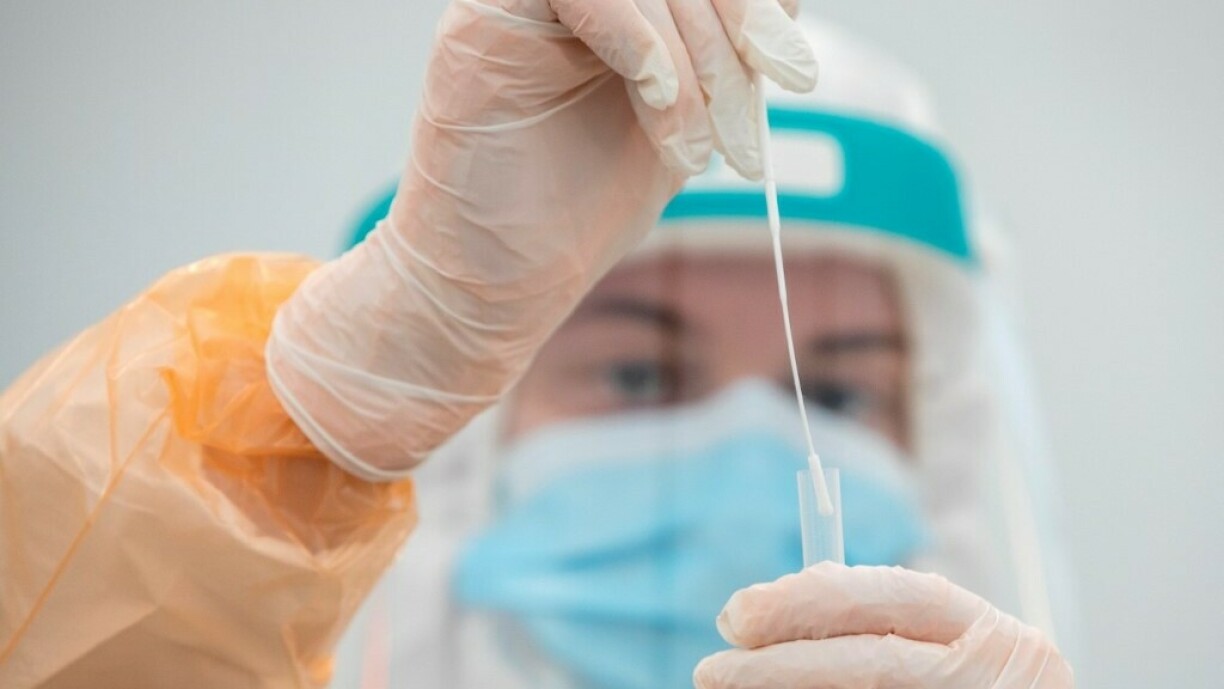
The growing number of medical laboratories in Luxembourg has raised questions about whether the trend is improving access to healthcare or simply intensifying commercial competition in town centres.
The town of Steinsel offers a telling example of a phenomenon becoming increasingly common across the country: two laboratories operating practically next door to each other in the heart of the community.
Within the span of a few months, two lab branches opened near the local church in Steinsel's town centre. For Mayor Manon Kolber, this reflects local economic dynamism rather than oversaturation. While she acknowledged that having two competing labs side by side may not be ideal from an urban planning perspective, she noted that any response to a demonstrated need is ultimately a positive development.
The municipality itself has limited control over which specific businesses set up in a given area. The General Development Plan (PAG) defines broad zoning categories but does not dictate the exact nature of shops or services. Although the town centre had initially hoped to attract more restaurants and traditional retail, Kolber suggested the arrival of the labs could present an opportunity. In her view, they may serve as a catalyst, encouraging other businesses to establish a presence in Steinsel.
Luxembourg currently counts 274 sampling points operated by the country's three private laboratory groups: Bionext, Ketterthill, and Laboratoires Réunis. From major urban centres to the smallest villages, access to blood tests and other medical analyses is now available in nearly every corner of the country.
This geographic density is the result of a deliberate strategy. The laboratories argue that proximity is becoming increasingly important for patients – particularly for the elderly and those living with chronic conditions.
According to the Federation of Luxembourg Laboratories (FLLAM), demographic trends are the primary driver behind the expansion. Speaking on behalf of FLLAM, Liu Janssen explained that a growing population inevitably leads to a higher volume of medical analyses and a greater prevalence of chronic illness. He noted that between 2024 and 2025, the number of vulnerable individuals in the country rose by 15,000 to 20,000 – a trend expected to repeat in 2026.
The numbers bear this out. Between 2024 and 2025, the number of local sampling points increased by approximately 6.45%. Over the same period, the volume of medical prescriptions grew by 6.2%, suggesting that the expansion of laboratory infrastructure is keeping pace with demand.
Looking ahead, the trend is expected to intensify. According to recent studies, the incidence of chronic illness in Luxembourg could surge by as much as 70% by 2050. This would entail more routine checks, more analyses, and consequently, greater demand for the infrastructure to support them.
The question remains whether the proliferation of laboratories is displacing other types of businesses. According to the Luxembourg Confederation, which monitors commercial activity across the Grand Duchy, the answer is nuanced.
Théodore Biewer of the Luxembourg Confederation said he prefers to view the labs as a complement to existing commerce rather than as direct competition. He noted that laboratories tend to open in locations where there is demonstrated demand, and that their presence may in fact draw customers to neighbouring shops who might not have visited the area otherwise.
Contextual data suggests that laboratories do not overwhelmingly dominate the commercial landscape. In Luxembourg City's Ville-Haute neighbourhood, which is home to more than 400 shops, only two laboratories are present. In Esch-sur-Alzette, approximately 250 shops coexist with five labs. In Ettelbruck, a smaller town by comparison, there are around 100 shops and three laboratories.
At best, the arrival of a lab can bring renewed visibility to a town centre, potentially benefiting surrounding businesses. For the laboratories themselves, the priority remains proximity to patients. And as the case of Steinsel illustrates, where there is demand, supply sometimes arrives in duplicate.





