The German daily bases its ranking on a Eurostat study listing overnight stays by foreign tourists in accommodation such as hotels and other establishments in 2024.
The article describes countries such as Luxembourg, Liechtenstein, and North Macedonia as hidden gems for a pleasant holiday, claiming visitors would encounter the fewest tourists there. According to Die Welt, the Grand Duchy ranks third. Montenegro, Malta, North Macedonia and Latvia are also front-runners.
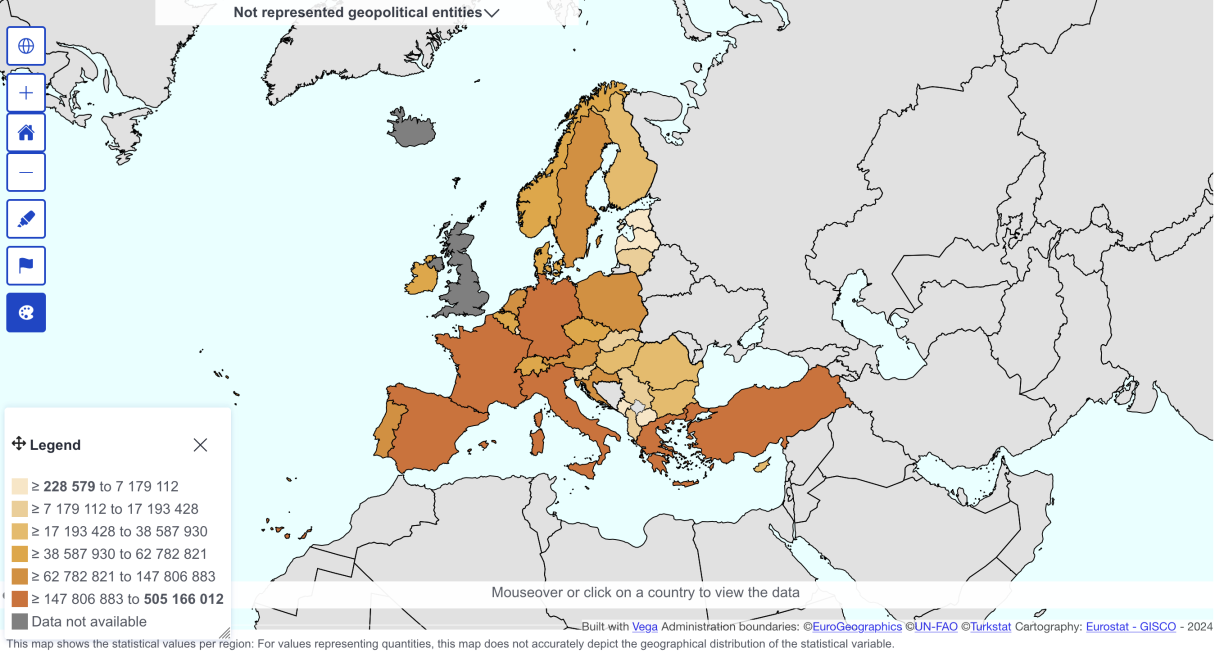
However, the absolute number of overnight stays alone says little about whether visitors will actually experience a quiet and relaxed holiday. Many other factors need to be taken into account, meaning the issue cannot be assessed solely on total tourist numbers. For example, the ratio between a country’s population and the number of tourists plays an important role. The size of a country, its surface area and the distribution of tourist infrastructure all influence whether visitors are likely to encounter large crowds.
If the number of residents is compared with the number of foreign tourists visiting annually, the ranking looks very different and arguably reflects reality more accurately. In this case, the number of overnight stays by tourists is divided by the population of the respective country. The result indicates how many tourist overnight stays there are per resident each year.
On that basis, North Macedonia ranks at 1.2, followed by Romania at 1.6, Serbia at 1.9, Turkey at 2.4, Latvia and Poland at 2.5, Slovakia at 2.6, Albania at 2.7, Lithuania at 2.9 and Hungary at 3.3. These would be, according to the Welt interpretation, the top 10 calmest and most relaxed destinations. At the other end of the scale are Croatia, Malta and Greece, where tourist density is significantly higher.
Luxembourg, meanwhile, sits in the middle of the table, alongside countries such as France, Germany and Sweden.
If surface area, tourism infrastructure and the number of day trippers who do not stay overnight were also included, the results would likely look different again. This would arguably provide a more accurate picture closer to reality than relying solely on the total number of overnight stays, which in isolation reveals little about how crowded a destination actually feels.





