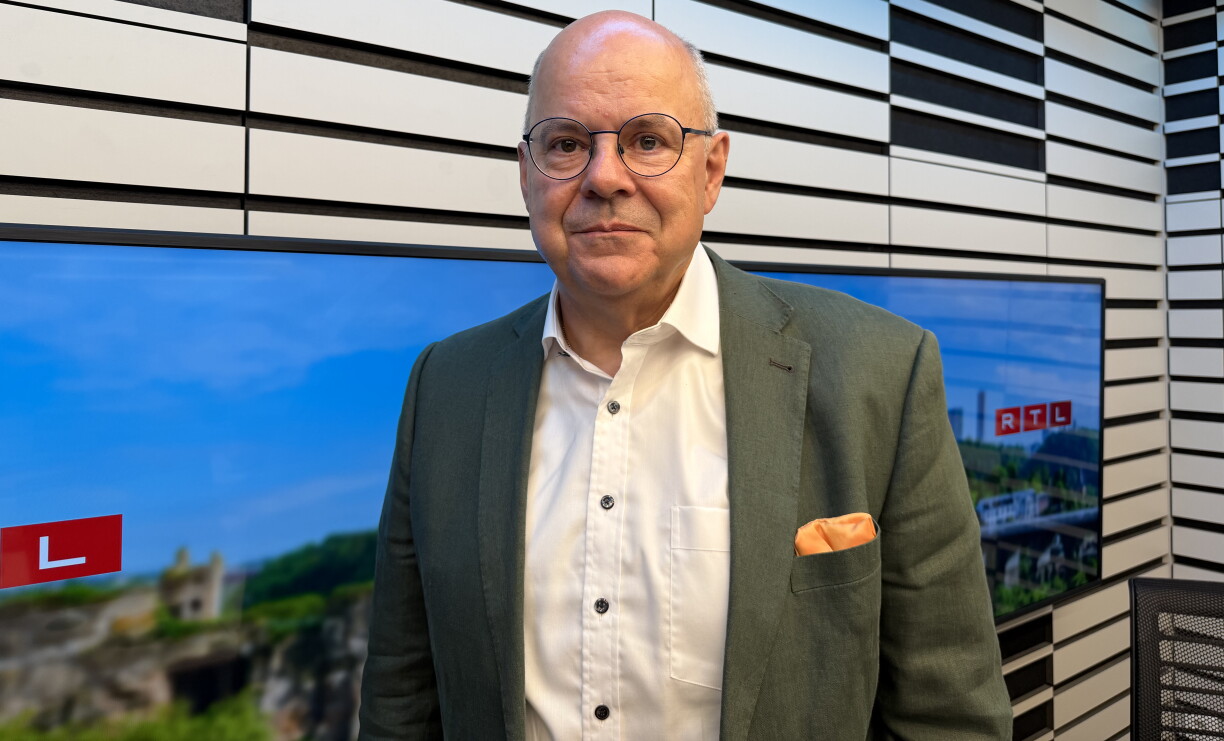
Speaking to RTL Radio on Monday morning, Spautz said the government had hoped to simplify procedures for seasonal workers in time for this year's grape harvest, but the necessary legislation had not completed the parliamentary and institutional process before the summer recess.
The proposed changes had already been set in motion by his predecessor, Georges Mischo, in November last year, according to Spautz. However, several institutional opinions still had to be obtained, including one concerning occupational health, he said.
Spautz stated it was important to wait for these assessments because the reform includes significant changes to the current system. Further amendments will now be discussed in the relevant parliamentary committee in September, with a vote expected in October or November, he said.
"I would also have preferred to have it completed earlier, and that was the government's intention", Spautz said, but the legislative process meant this had not been possible before 15 July, according to him.
For winegrowers, this means the existing rules will remain in place throughout this year's harvest. Asked whether the Inspectorate of Labour and Mines (ITM) might take a more lenient approach to checks given that the reform is already nearing completion, Spautz was clear that the current law still applies.
One of the main changes concerns mandatory occupational health examinations for seasonal workers.
At present, workers are required to undergo an examination through Luxembourg's occupational health system. Under the planned reform, seasonal workers could instead undergo a medical examination in their home country, with the certificate subsequently validated by an occupational health doctor in Luxembourg.
Spautz described this as a "major opening" compared with the existing system. At the same time, he stressed that responsibilities had to be clearly defined in case of a workplace accident.
"As long as nothing happens, everything is fine", he said. "But if there were an accident and the procedures had not been followed properly, then the question would immediately be who was responsible."
Seasonal workers are employed under standard employment contracts rather than working as self-employed people, he added.
The interview also turned to working conditions in the platform economy, including concerns about possible bogus self-employment among delivery drivers working for Wolt.
Before the summer break, Spautz had announced tighter checks following reports that some couriers were not directly employed or covered by social security despite working exclusively for the platform.
He confirmed that the ITM is now examining the arrangements, particularly those involving companies providing drivers to delivery platforms. These firms have been asked to provide information to the ITM, he said.
Spautz declined to give details of the ongoing checks, but said authorities were examining whether employment conditions comply with the law.
"It cannot be the case that people at the bottom of the chain are being exploited in the delivery platform sector", he said, adding that the government did not want working conditions seen elsewhere in Europe to become established in Luxembourg.
Asked about Wolt referring to such intermediaries as "fleet companies" rather than subcontractors, Spautz said the underlying model was effectively the same.
The government is now working with social partners on a clearer legal framework for platform work. Spautz said the aim is to have a draft ready by October and move it through the legislative process shortly afterwards.
The work also forms part of Luxembourg's implementation of the EU Platform Work Directive. Spautz said he was confident that a bill could be submitted around the beginning of November, with a view to completing the process before the end of the year.
He acknowledged that some couriers value the flexibility offered by platform work, but argued that this could not come at the expense of basic employment protections or create unfair competition with other sectors.
The government, he said, does not want to "legalise a grey or black labour market".
Another major issue raised during the interview was the growing number of people who are in work but still struggle to make ends meet.
Spautz identified Luxembourg's housing costs as one of the main causes.
"The biggest problem we have here in Luxembourg is housing", he said, arguing that the high proportion of income spent on accommodation plays a major role in working poverty.
He pointed to the government's poverty action plan and measures aimed at increasing investment in housing and affordable homes. Rent subsidies and other forms of assistance have also been increased, according to Spautz.
However, he cautioned that the problem could not be solved quickly. "As long as we have not solved the housing problem, working poverty will remain a problem in Luxembourg", he said.
The housing shortage is also closely linked to difficulties in the construction sector, which has recorded a net loss of around 4,500 jobs, according to Labour Ministry figures.
Spautz acknowledged the apparent contradiction: Luxembourg needs more housing, yet employment in the sector responsible for building it has declined sharply.
He said the construction market had effectively stalled. Initially, developers faced difficulties obtaining building permits, he said. Now, permits are increasingly available but access to financing remains difficult, while fewer households are in a position to buy homes or flats, according to Spautz.
Government measures announced before the summer could help stabilise the situation, he said, although he again cautioned against expecting an immediate solution.
"They can help calm the situation, but not solve it", Spautz said. "We are not going to solve this from one day to the next."
Spautz also responded to criticism from the Association of Luxembourg Student Unions (ACEL) over inconsistencies between the Labour Code and Social Security Code regarding internships, particularly when it comes to affiliation and contributions.
He said he and Social Security Minister Martine Deprez had already met with ACEL to discuss the issue and find possible solutions.
While the two codes are separate, Spautz acknowledged that the current rules could be made simpler and clearer for students.
The aim, he said, is to remove contradictions and make it easier for young people to take up internships that can help them gain experience and improve their prospects on the labour market.
When asked whether that meant he was satisfied with the existing internship law, Spautz pushed back.
"I didn't say I was satisfied", he stated. Instead, he and Deprez would seek to address the concerns raised by student organisations and make whatever changes proved necessary, Spautz concluded.





