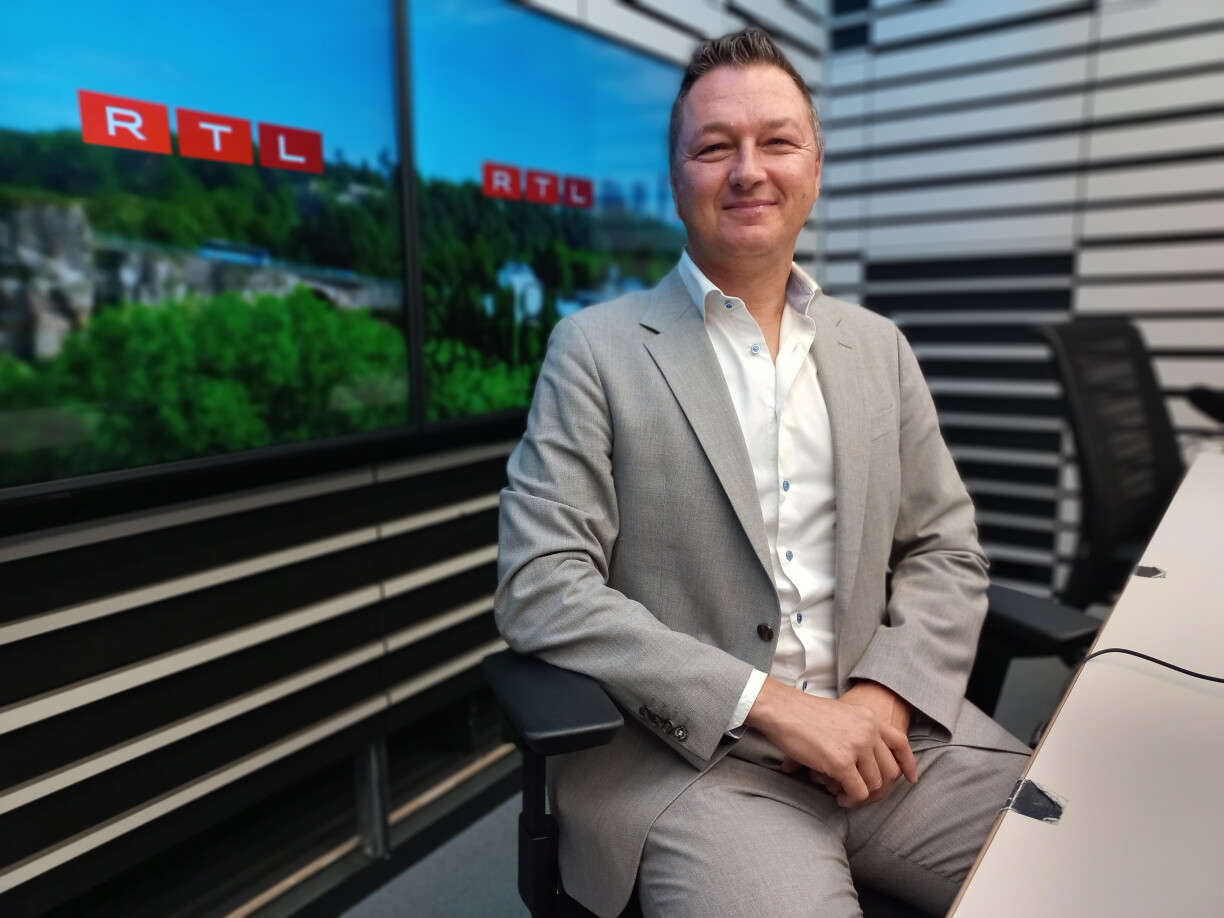
Since taking over as director of the National Health Laboratory (LNS) in May, Thomas Dentzer has made it clear that bringing “calm and stability” to the Dudelange-based institution is a top priority. The LNS, employing 430 staff, is responsible for a wide range of analyses – from autopsies and genetic testing to the kind of virological work that became well known during the Covid-19 crisis.
Dentzer explained that most patients do not interact directly with the LNS. "We are usually in the second line", he said, noting that except for consultations in genetics, most of their work comes via doctors and hospitals rather than directly from patients.
He described the LNS as a "complex organisation" with a long history and acknowledged significant changes over the past decade, in which not all opportunities had been seized quickly enough. Dentzer’s arrival is intended to bring continuity. "That is basically the goal", he stated.
Discussing criticism the LNS faced in recent years for delays in providing results for critical diagnostics, like cancer, Dentzer admitted that the LNS was "somewhat overwhelmed". With demand growing by between five and nine percent annually, he added that "the structure did not keep up".
The analysis process in itself, Dentzer explained, is highly manual and requires significant organisation, for which the laboratory was not always sufficiently prepared. He added that expectations should be realistic, as "This is not like a blood test where you get an SMS result in three hours. It’s simply not possible here".
At the same time, he was clear that improvements are underway in the form of a restructured pathology service, which has decreased the turnaround time from eighteen to twenty days to under ten days.
The same improvement is seen in dermatopathology, where the LNS has reduced the waiting time from up to twenty-five days to fourteen. The goal, Dentzer explains, is to bring this down to under ten by the end of September, and ideally even under eight days.
The LNS holds a monopoly on certain types of analyses in Luxembourg, notably in pathology and genetics.
Regarding pathology, the laboratory receives every single sample removed from a patient in Luxembourg. The doctors analyse it and advise the treating physician on the next therapeutic step.
When it comes to genetics, they perform analyses to determine, for example, cancer risk or to investigate rare diseases, especially in children. These two areas are covered by the LNS's monopoly, he added.
Asked whether this monopoly guarantees quality for patients, Dentzer said the answer is nuanced: "It is both. In a small country, there are not going to be six laboratories doing this, because there would not be enough volume". While he acknowledged that this can be an issue if the LNS doesn't perform well, he adds that this monopoly also means having all data in one place, which is a clear advantage when it comes to public health.
Should the monopoly be removed, Dentzer said the laboratory would need to rethink its approach, but warned this is not a simple solution: not only may costs be different or even higher, but the risk that data is no longer available centrally would make it harder to track diagnoses, especially if samples are sent abroad.
Dentzer emphasised that the priority should be ensuring Luxembourg’s resilience, especially in times of crisis, as demonstrated during the Covid pandemic. He added that in a hypothetical situation where analyses are outsourced to labs abroad, it could put Luxembourg in a difficult situation were borders to be closed.
Beyond diagnostics, the LNS is responsible for forensic medicine in Luxembourg, and performs around one hundred and fifty autopsies each year on behalf of the justice authorities.
Dentzer highlighted recent innovations, such as the introduction of a scanner that allows for non-invasive examination before autopsy, which can, for instance, "detect gunshot wounds or metal objects that might otherwise be missed".
He stressed that this technology complements, rather than replaces, traditional autopsies and helps pathologists to have a clearer picture before beginning their work.
As the new director, Dentzer said his priority is to create a strong, effective team and to focus on analyses that are critical for patients in Luxembourg.
His vision is clear: he does not see the LNS competing with private laboratories. While the laboratory has a good relationship with them and collaborates on some projects, the LNS "should guarantee the best possible service for patients in Luxembourg and deliver services that others cannot provide, either because they are too expensive or too complex".
He also sees the LNS as a "unique selling point" in using the country’s medical data to benefit public health, which would help to advance the national strategy by "bringing together and analysing data for public health and, hopefully, stimulate the economy in partnership with colleagues from the economic and research sectors".
Dentzer’s approach blends innovation with a commitment to patient care and public health and thus signals a new chapter for the LNS as it adapts to the needs of Luxembourg’s growing and changing population.