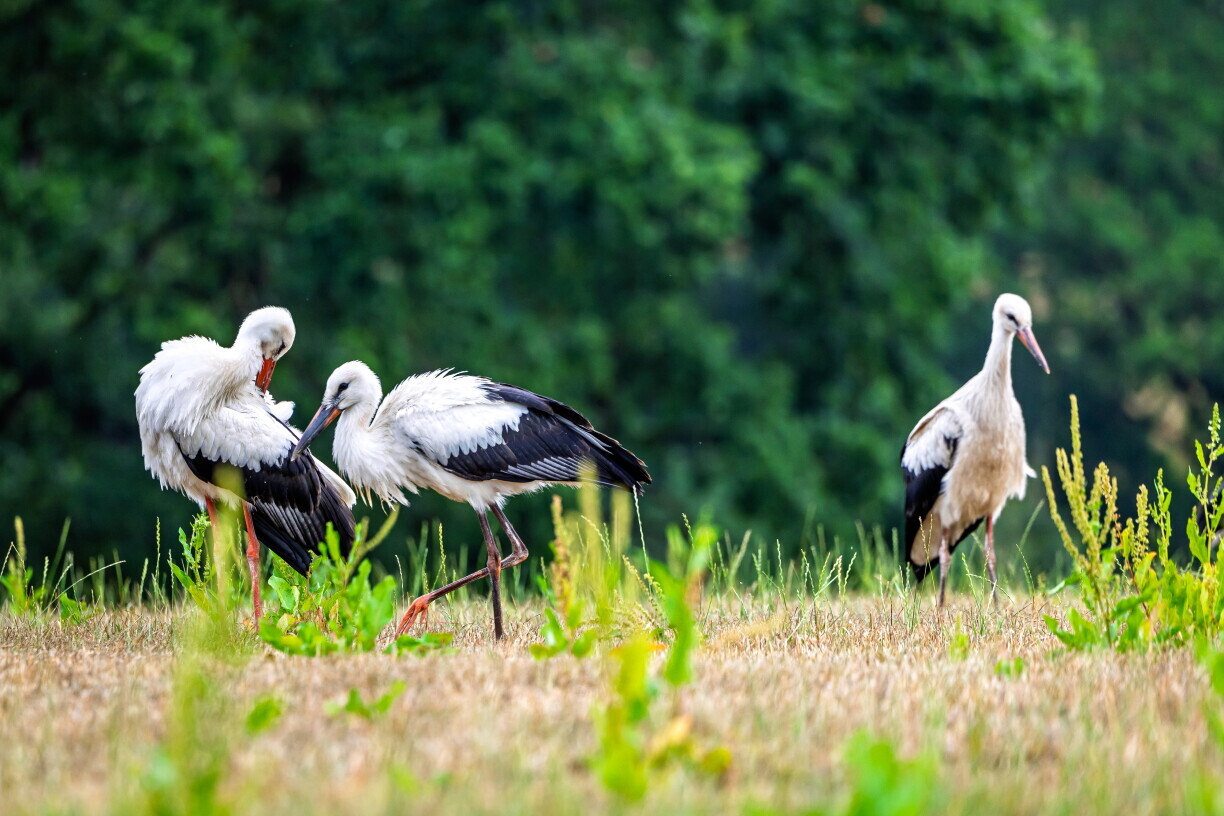
White storks are currently making a notable stopover in Luxembourg, and according to nature photographer Bob Bertemes, the birds seem to be thriving here this year.
Bertemes, who has received numerous stork photos from locals, says the first storks were seen in Pommerloch, but reports have since come in from all over the country. He estimates that more than 100 storks are currently present, calling it an exceptionally large group by local standards.
While those birds are occasionally seen flying through Luxembourg, this year's arrival is both unusually early and unusually numerous.
Bertemes believes this early migration is likely linked to prolonged dry weather, which has made it difficult for storks to find food in their usual habitats.
He explains that white storks follow human activity and prefer wet meadows where they can eat worms, mice, or frogs. However, because the ground has become so dry, worms burrow deeper and frogs disappear as ponds dry out. With less food available, the storks have started their journey south earlier than usual.
Last year, a similar phenomenon occurred, but the storks arrived about two weeks later. The timing of their migration is clearly tied to shifting weather patterns and changing food availability in their summer habitats.
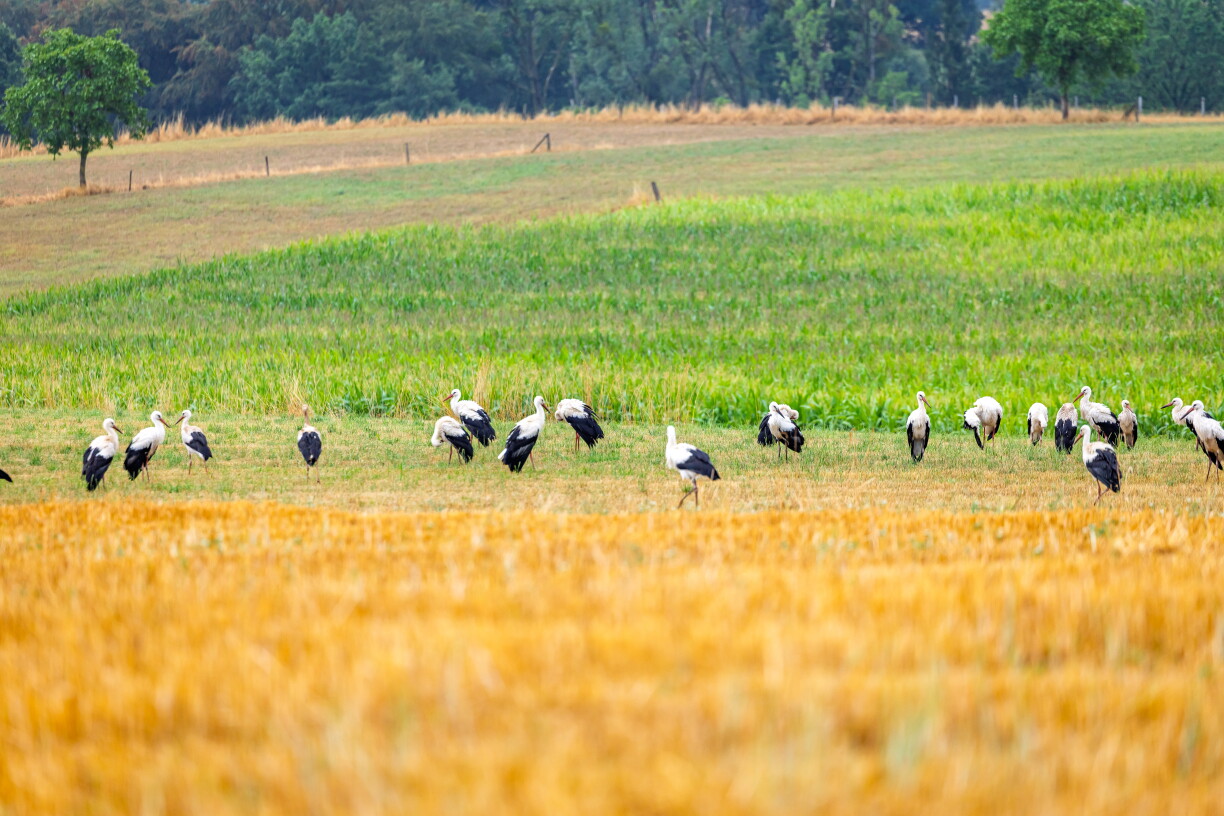
Recent rain, particularly on Monday evening, may have also contributed to the storks' decision to pause in Luxembourg.
Bertemes notes that storks are drawn to areas where farmers are working the fields, hoping to take advantage of freshly turned soil and exposed food sources. Rain can force them to land, he says, as they prefer not to fly in thunderstorms or rain. So, when conditions are right and they find food, they might stay for several days or even weeks before moving on.
How often storks stop during their southward migration depends largely on wind and weather conditions. When the weather is favourable, storks may fly several hundred kilometres at a stretch.
However, climate change means some storks now migrate shorter distances than in the past. Historically, all white storks would spend winter in Africa. Now, if winters are mild, some spend the entire season in Luxembourg or neighbouring regions, Bertemes explains.
Sightings of white storks overwintering in Luxembourg and neighbouring countries have become more common, with some birds barely migrating at all.
Bertemes explains that it is no longer unusual to see a white stork here in winter. Sometimes they just disperse locally rather than flying all the way to Africa.
It's difficult to predict where these birds will go, some might still travel over the Sahara, others could spend the winter in southern France, or even stay here if the weather remains mild. However, Bertemes says that it's too early to say for certain.
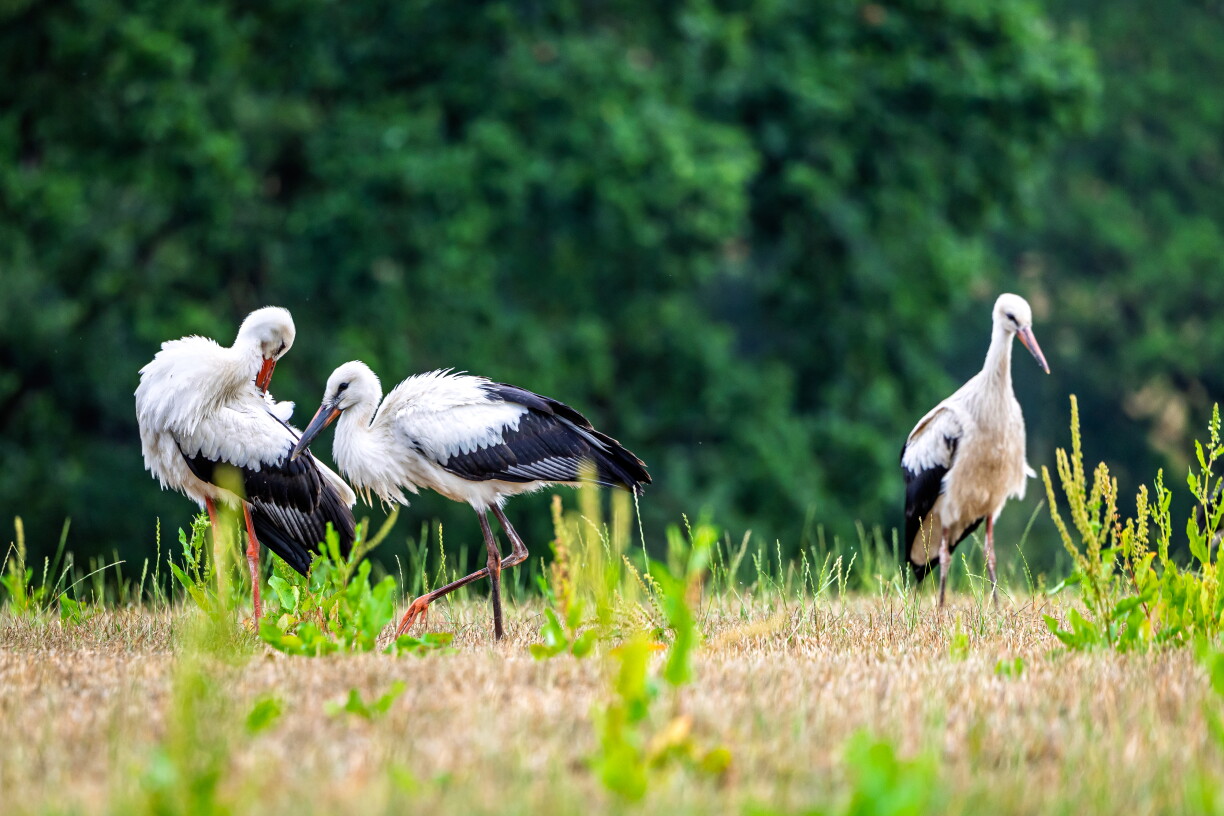
Storks are generally welcomed by the public in Luxembourg. Farmers suffer little to no harm from their presence, as the birds feed mainly on small creatures like worms and mice found in meadows and fields.
In communities where many storks nest on rooftops, the main complaint is the noise from their characteristic bill-clattering, or the size of the nests. However, Bertemes says this is a small price to pay for the joy storks bring.
Bertemes concludes that white storks are considered a symbol of good luck. People are always happy to see them, and one can really feel that enthusiasm in the reactions from the public. "Even among farmers, there's more happiness than annoyance when a stork is spotted in the area."