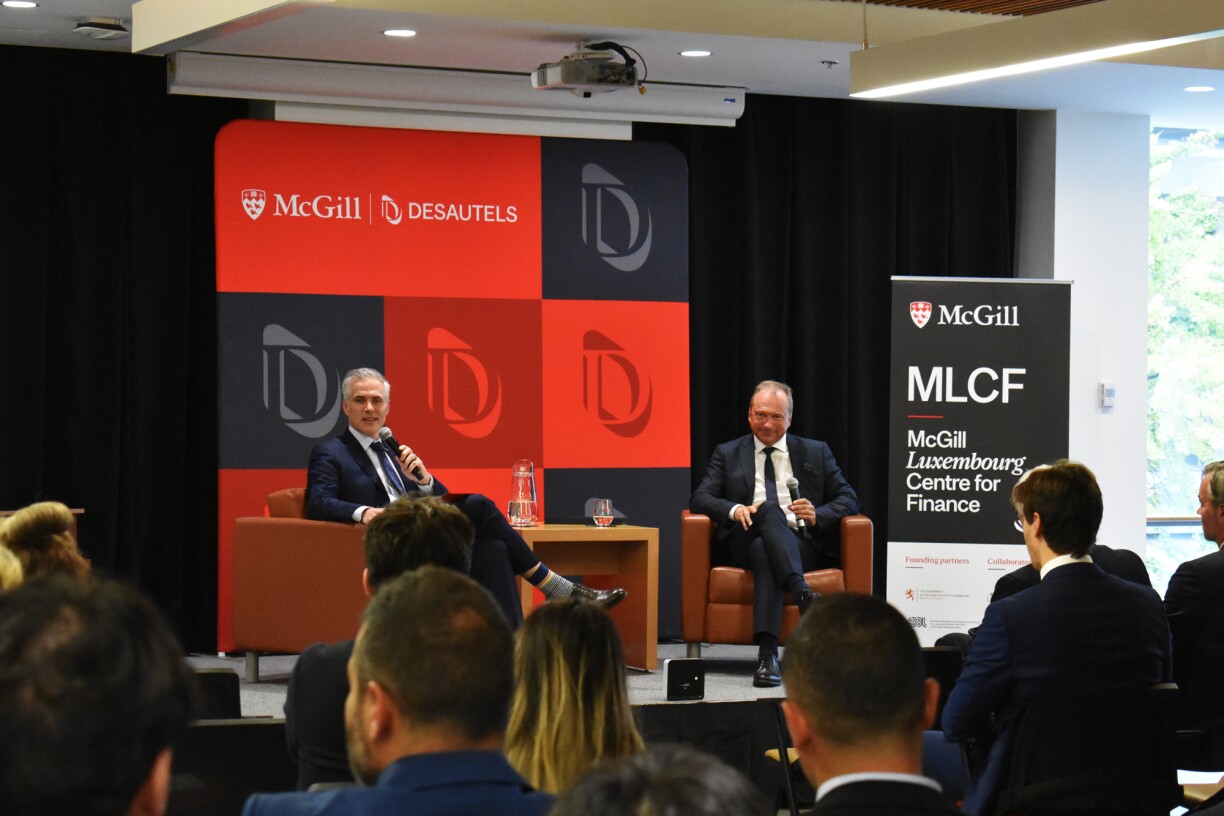
Luxembourg plays a key role in the global financial industry, and to maintain this position in the future, the country is focusing on education, talent development, and international cooperation. A new academic initiative is now being added through the involvement of McGill University, which will offer courses in Luxembourg at the premises of the Luxembourg Chamber of Commerce.
Patrick Augustin, Professor of Finance at McGill University in Montreal, said in conversation with RTL that talent, education, and cooperation with industry are central to the next phase of Luxembourg's financial development. He also serves as director of the McGill Luxembourg Centre for Finance, which plays an important role in strengthening cooperation between Luxembourg and Canada in financial education and training.
Starting in August, Luxembourg will host the Master of Management in Finance programme. According to Augustin, the course is primarily aimed at professionals already working in the financial sector and who wish to further specialise.
He explained that the programme has three main components. The first, he said, is the academic dimension, which provides a broad overview of the different professions within the financial sector.
The second element, which he described as the programme's unique added value, allows students to manage a real investment fund themselves. The third component, according to Augustin, focuses on career development, including personalised career coaching as well as access to the university's alumni network and guest contributions from experts from around the world.
The idea behind the project is clear: Luxembourg is one of Europe's leading financial centres, particularly in the field of investment funds. At the same time, demand for highly qualified professionals continues to grow.
The international master's programme is therefore intended as a targeted investment in talent development.

Augustin explained that the quality of the financial sector ultimately depends on the talent working within it. He emphasised that the programme has been designed specifically for professionals already working in Luxembourg, allowing them to advance their careers without having to study abroad.
At the same time, he said, the international reputation of McGill University is expected to attract new talent to Luxembourg and encourage graduates to pursue careers in the country.
The initiative brings together partners from academia, the financial sector, and public institutions. McGill University, Luxembourg financial actors such as the Luxembourg Bankers' Association (ABBL), and political stakeholders are thus working together to develop new skills in the financial sector.
For Canada, the project additionally represents an opportunity to expand its academic presence in Europe. For Luxembourg, it offers a chance to further strengthen its position as a global financial centre.
Augustin noted that during bilateral discussions between PM Luc Frieden and Canadian PM Mark Carney, investment in education and talent between the two countries was identified as a key strategic priority. He added that the programme not only focuses on education but also aims to develop projects with industry partners, enabling deeper exploration of important economic topics while bringing international experts to Luxembourg.
In the long term, the goal is to build a strong network connecting Luxembourg, Canada, and the global financial industry.
Alongside the master's programme, the McGill Luxembourg Centre for Finance will also organise research projects, conferences, and future training initiatives related to the financial sector.





