Here are five things you should know at the end of this week:
Broken bond – Minister Roth responded unequivocally that the authorisation to trade Israeli government bonds will not be extended beyond its 31 August expiry, explaining that the decision was taken by Luxembourg's Financial Sector Supervisory Commission (CSSF) alone. This was further explained in an RTL interview with Claude Marx, director of the CSSF, who clarified that the decision not to extend the authorisation was based purely on compliance with European regulation, instead of political considerations.
Israeli bonds require authorisation from an EU member state to be offered in the bloc. Ireland withdrew its approval in 2025 under public pressure, after which Luxembourg granted authorisation.
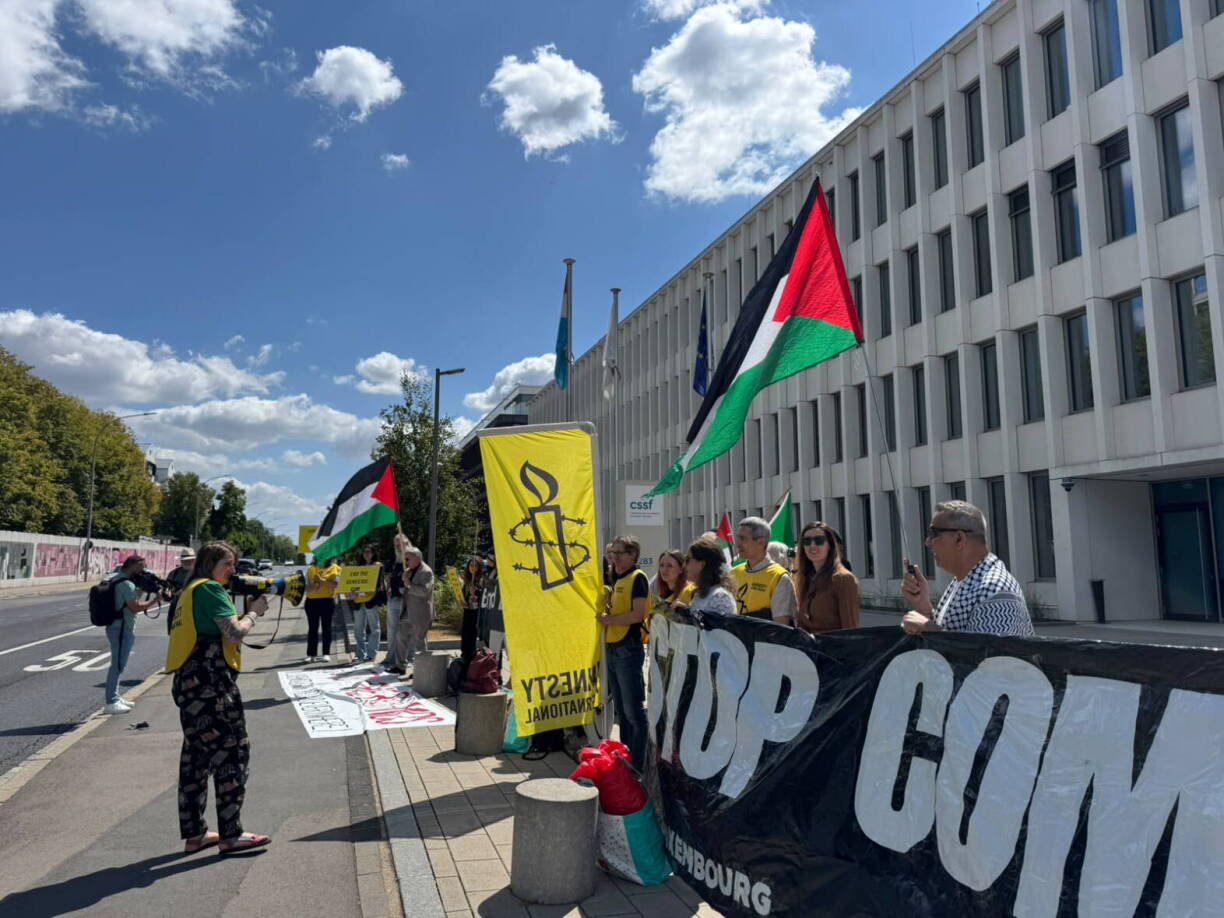
Funding war crimes – Around 50 demonstrators gathered outside the headquarters of Luxembourg's financial regulator (CSSF), demanding Luxembourg end its role in the sale of Israeli government bonds on European markets. David Pereira, Director of Amnesty International Luxembourg, said the organisation's research indicates Israel raises more than €2.4 billion a year through these bonds, with proceeds the Israeli government has openly said sustain operations that Amnesty and other organisations describe as genocide, apartheid, war crimes, and widespread human rights abuses.
Satisfaction with criticism – Foreign Minister Xavier Bettel and Luxembourg Socialist Workers’ Party (LSAP) MP Franz Fayot both welcomed the decision but took aim at the regulator. Bettel noted the CSSF did not consult the government when it originally approved the bonds nor did it do so now. Fayot argued the CSSF should never have approved the bonds in the first place, saying the regulator does not exist in a "vacuum" and pointed to serious violations of international law and opinions from the International Court of Justice.
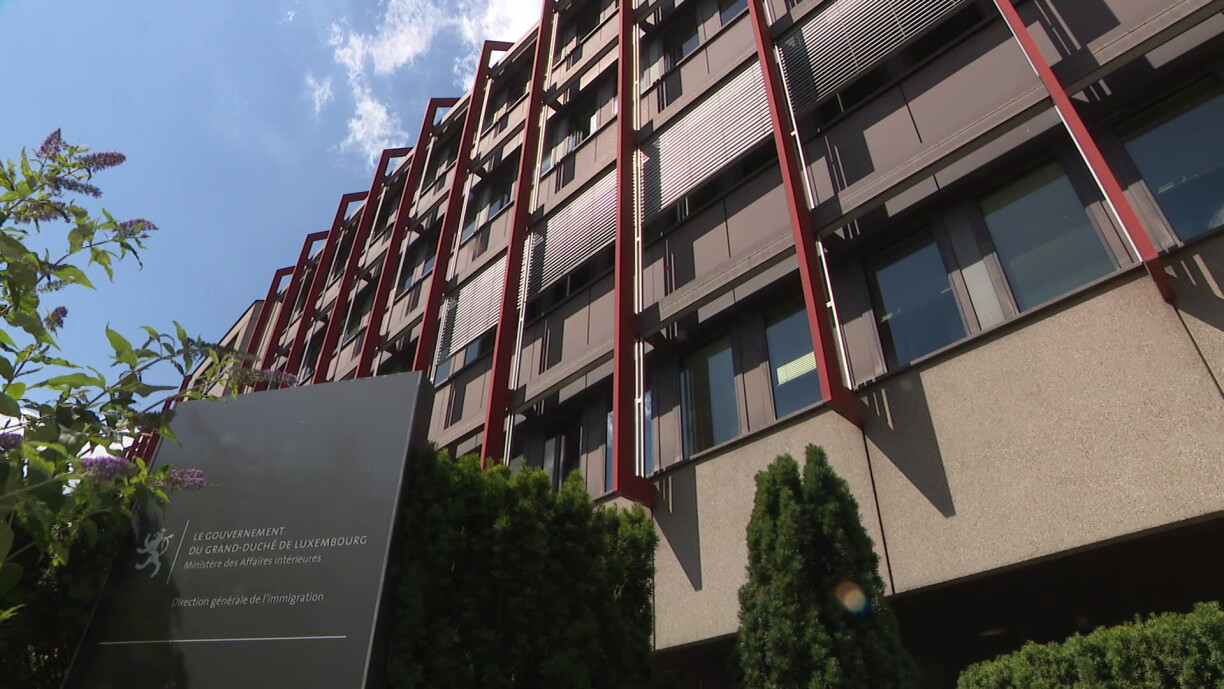
Audit launched –The Ministry for Home Affairs has launched an audit of the Immigration Department with consultancy firm Résultance, conducted independently from and in parallel with the ongoing judicial investigation. The audit will examine governance structures and internal control mechanisms. According to a ministry statement, three staff members were suspended between 4 April and 5 May 2025, with those suspensions lifted on 6 May 2025, though one of the employees has been suspended again since December 2025. Two additional staff members were suspended following police searches.
Meanwhile, Pirate Party MP Marc Goergen wants former minister Jean Asselborn called before the Home Affairs Committee, but the parliamentary majority appears reluctant to act while proceedings are ongoing.
What happened – In early July, the public prosecutor's office confirmed that a wide-ranging judicial investigation, open since summer 2023, into suspected corruption, is ongoing. Simultaneous searches were carried out at two ministries, several municipalities, companies, and private homes, with 27 searches conducted over three years. Authorities estimate around 200 third-country nationals may have entered Luxembourg illegally using forged documents, including fictitious employment contracts and fake diplomas, and subsequently claimed social benefits..
Under fire – This is not the only headline that has raised eyebrows this week at the Home Affairs Ministry as the Minister for Home Affairs Léon Gloden drew ridicule on social media for wearing a bullet-proof vest when he joined a police patrol in the Gare district. In response to a parliamentary question from LSAP MP Dan Biancalana, the minister explained he was merely following police recommendations for a person joining a patrol, but avoided answering why Luxembourg City Mayor Lydie Polfer, who joined the patrol too, did not feel the need to wear a vest.
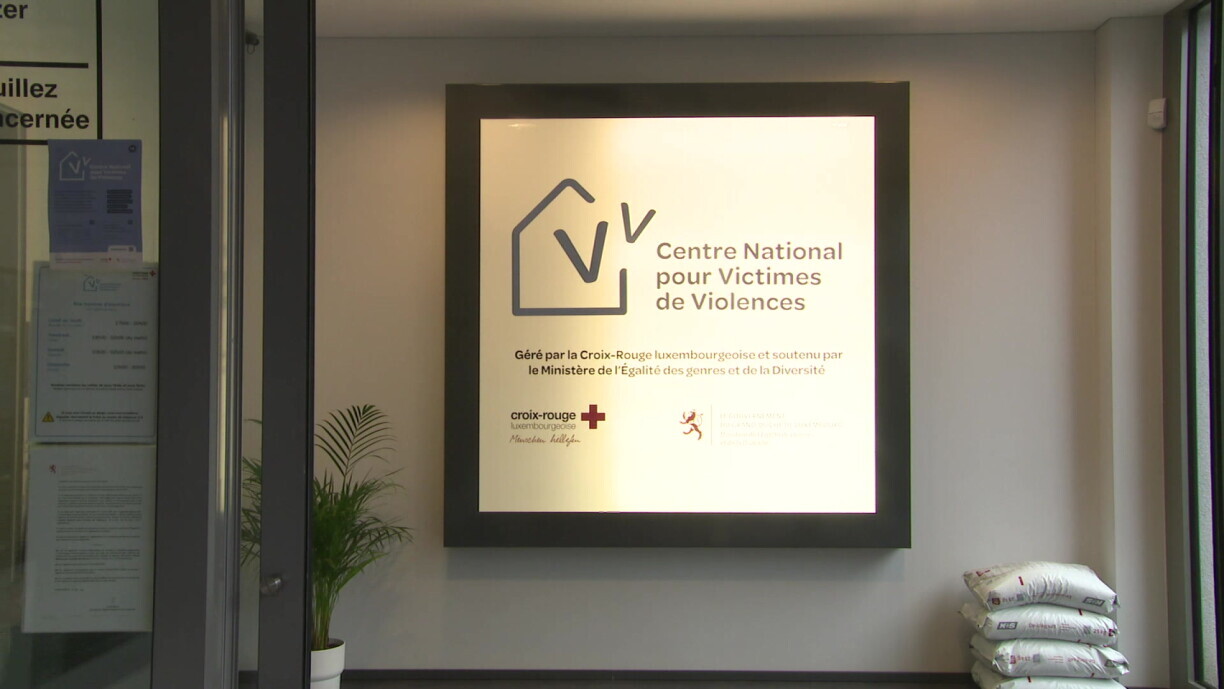
Sharp surge – The CNVV, which provides initial outpatient support to victims of violence, has seen a dramatic increase in cases since expanding its hours. In its first year, the centre supported 426 victims, but in just the last two months, 248 new cases have already been registered, since introducing a 24/7 round-the-clock service. More information on the centre and how to reach out can be found here.
Supporting victims – According to the ministries involved, around 80% of those seeking help at the CNVV have experienced violence within their own families. This includes psychological, physical, or sexual abuse. About half of the victims received support on site. The centre has not yet handled any cases related to violence in the sports sector, with such reports directed to a separate agency.
Red Cross – Launched as a pilot project in late April 2025, the CNVV was established by five ministries under the leadership of the Ministry of Gender Equality and Diversity and is managed by the Luxembourg Red Cross. Initially, the centre operated only during limited hours. The move to a 24/7 service was always planned in order to make sure that victims can access help whenever needed.

Changing course – Burnham took office on Monday after being asked by King Charles III to form a government, following Starmer's resignation. Starmer, who took office in July 2024 after a landslide victory, has been clinging to power for months after a blighted tenure littered with missteps, policy U-turns, scandals and ministerial resignations. He was nearly forced out in March, over his decision to appoint ex-Jeffrey Epstein associate Peter Mandelson as Britain's ambassador to Washington.
In contrast to his predecessors, Burnham decided to forego the classic lectern on Monday at 10 Downing Street's doorstep, choosing to speak freely with journalists, and possibly signaling the change he hopes to bring to Labour and the UK as new PM.
Feel the Burn-ham – Burnham has a lot to prove to the public as well as those sitting on both sides of the aisle, against a tight timeline. On the public front, he inherits a sluggish economy, a cost-of-living crisis, high government borrowing costs, a ballooning welfare bill, and irregular small-boat migration that has fuelled Reform's rise, while unpredictable energy prices driven by the US-Iran war and a volatile Donald Trump add further headwinds.
On the political front, his swift "coronation" without a contest as Labour leader and now prime minister, by virtue of Labour's huge parliamentary majority, has raised questions about how he will achieve his aims, with opposition politicians questioning his mandate and calling for a snap election.
Cogent and conceivable? – For his ten year plan, Burnham has vowed to set people up for success through "early investment, early intervention", along with early moves to ease financial pressure on households. In an interview with The Times, Burnham outlined how he hopes to put an end to a decade of political turmoil, saying "what we've been doing hasn't been working" and pledging to try things "in a different way." After his meeting with King Charles, Burnham pledged to re-industrialise Britain, decentralise and devolve power, as well as end sleeping rough on the streets.
Burnham announced a string of measures, cutting value added tax on consumer electricity bills, and a tax cut for struggling pubs, clubs and live music venues to ease the cost of living crisis.

France – President Emmanuel Macron confirmed France has activated the European Union Civil Protection Mechanism, warning the crisis remains "very intense". Aircraft and helicopters from Portugal, Croatia, the Czech Republic, and Slovakia are expected to join efforts. Around 800 firefighters, backed by gendarmes, soldiers, and firefighting planes, have battled a blaze that erupted Wednesday near Bordeaux and has already destroyed thousands of hectares of pine forest.
More than 20,000 residents and tourists have been evacuated from campsites, holiday lets, and homes, with a local renter describing the scene as like "being in a war zone".
Spain and Italy – Spain and Italy are also grappling with major wildfires, with the Spanish government declaring a national state of emergency in two regions. The most critical situation is west of Madrid, where 10,000 residents have already been forced to leave their homes. Forecasts indicate there will be no rainfall for at least the next ten days, raising concerns about the spread of the fires. Meanwhile, the wildfires on Sicily remain tense, particularly in the Palermo area. Unrelenting high temperatures, sometimes exceeding 40°C, combined with dry conditions and strong winds from Africa continue to fuel the flames.
Climate in crisis – Blazes are breaking out faster because of climate change caused by the burning of oil, coal and gas, with European droughts now more severe, according to a study published Thursday by climatologists from the World Weather Attribution group. Politicians on the front line have been equally direct. After visiting Spain's Guadalajara province on Wednesday, Prime Minister Pedro Sánchez told journalists Spain had already faced 22 major fires this year, four times more than the same period last year, squarely blaming climate change for the increase.
Your Weekly Recap is published every Friday at noon.
Read earlier versions here.