In an update on last year's analysis, which also ranked Luxembourg at the bottom in terms of the share of environmental taxes of total government revenue, Eurostat analysed tax data from 2002 to 2019.
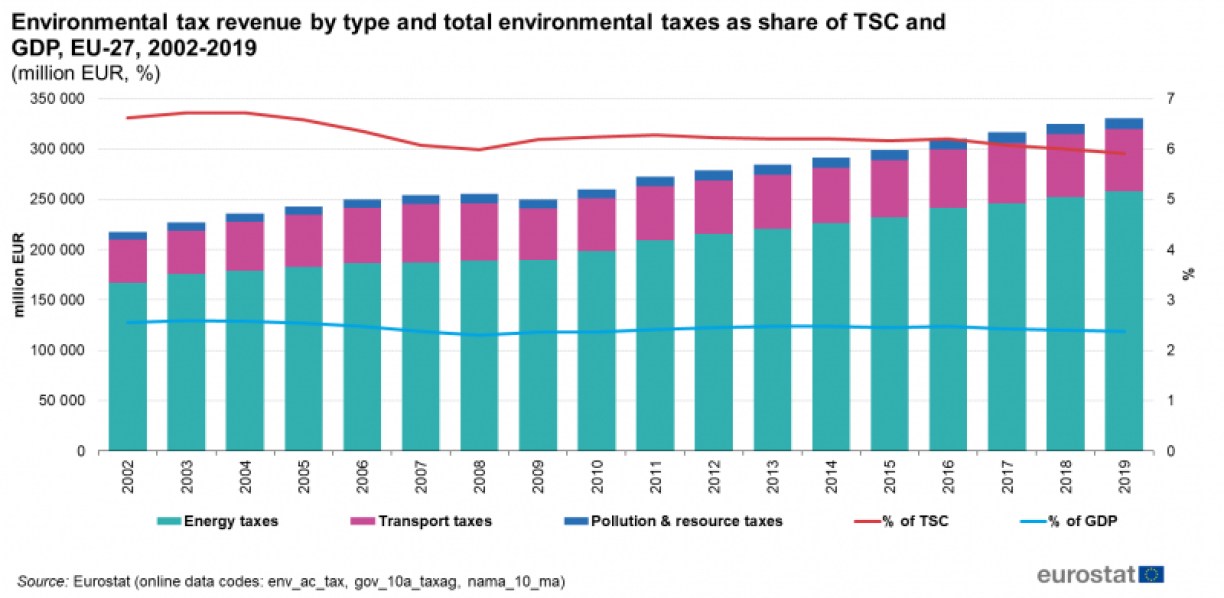
In 2019, governments in the EU collected environmental tax revenue totalling 330.6 billion euros. This represented 5.9% of total EU government revenue from taxes and social contributions.
An environmental tax is any levy charged by government on something that has a proven, specific negative impact on the environment.
The 2019 report found that, while environmental taxes remain substantially higher than when the data series started in 2002, relative to a country's overall wealth measured by its Gross Domestic Product, the environmental tax share has decreased slightly (from 2.6 to 2.4% of GDP).
It also finds that environmental taxes as a share of revenue from taxes and social contributions have also dropped - from 6.6% across the EU in 2002 to 5.9% in 2019.
Eurostat break environmental taxes down into four categories: energy taxes, transport taxes, taxes on pollution and taxes on resources.
Taxes on energy accounted for over half of environmental tax revenue across all EU states in 2019, with Luxembourg taking more than 90% of its environmental tax revenue share from this category.
Transport taxes were the second largest component for all EU states except Estonia and Lithuania.
The other two tax types - pollution and resources - accounted for a very small portion of the total share. In most EU countries these types were introduced later than energy or transport taxes. Some countries, including Germany, have no taxes of this type.
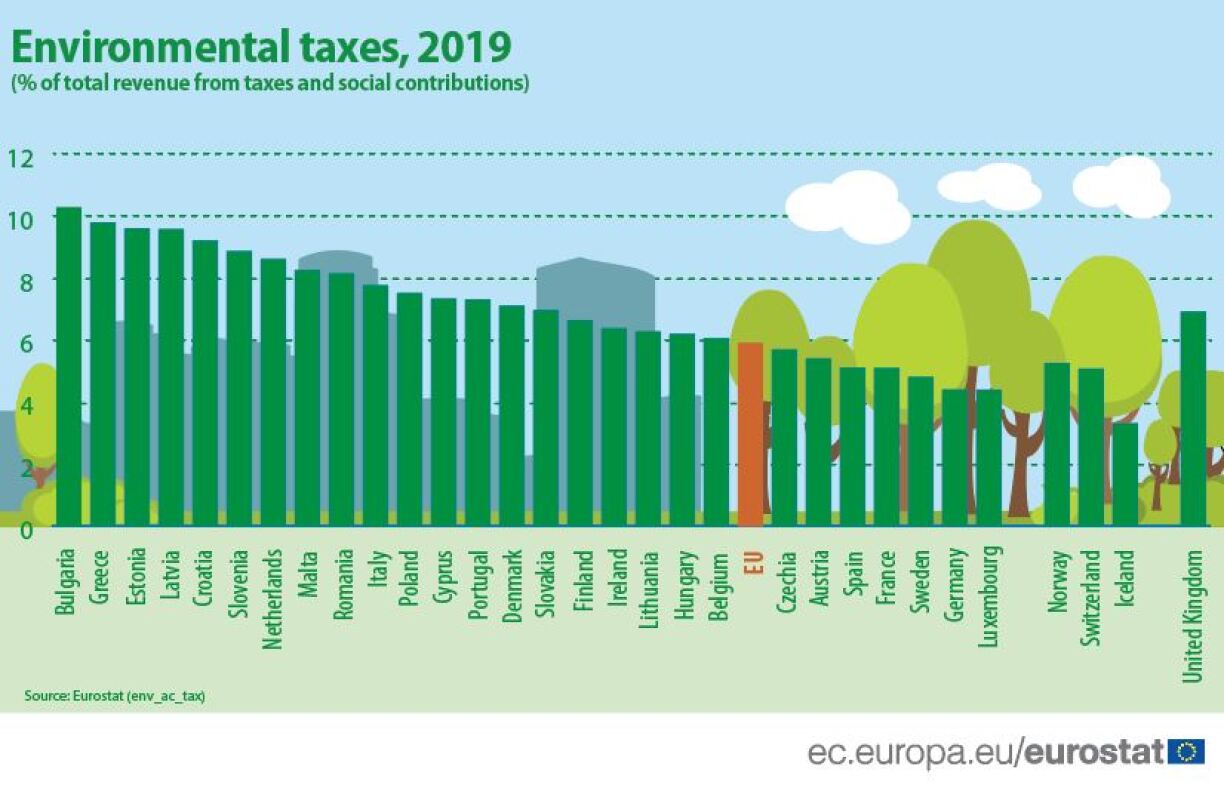
Both Luxembourg and Germany recorded just 4.4% of their government revenue from environmental taxes in 2019. This is the same proportion for Luxembourg as last year - indicating a lack of government progress on the issue while its attention has been focused on the pandemic.
In comparison, the country with the highest share - Bulgaria - took 10.3% of its revenue through such measures.
Luxembourg also stands out for having the largest share of energy tax revenue collected from non-residents, at 61%. This is primarily due to non-residents, such as cross-border workers and fuel tourists, purchasing petrol and diesel within its territory.
200,721 cross-border workers employed in the Grand Duchy in 2019
The only other country where non-residents make up a substantial proportion of the energy tax take is Malta, at 35%.
After an initial delay, Luxembourg's new CO2 tax came into force on 1 January this year. The new carbon tax should have an impact on Luxembourg's environmental tax share. At 20 euros per tonne of carbon usage, it will also affect domestic energy bills. Households can expect an increase of between 150 and 200 euros per year, according to government estimates.





