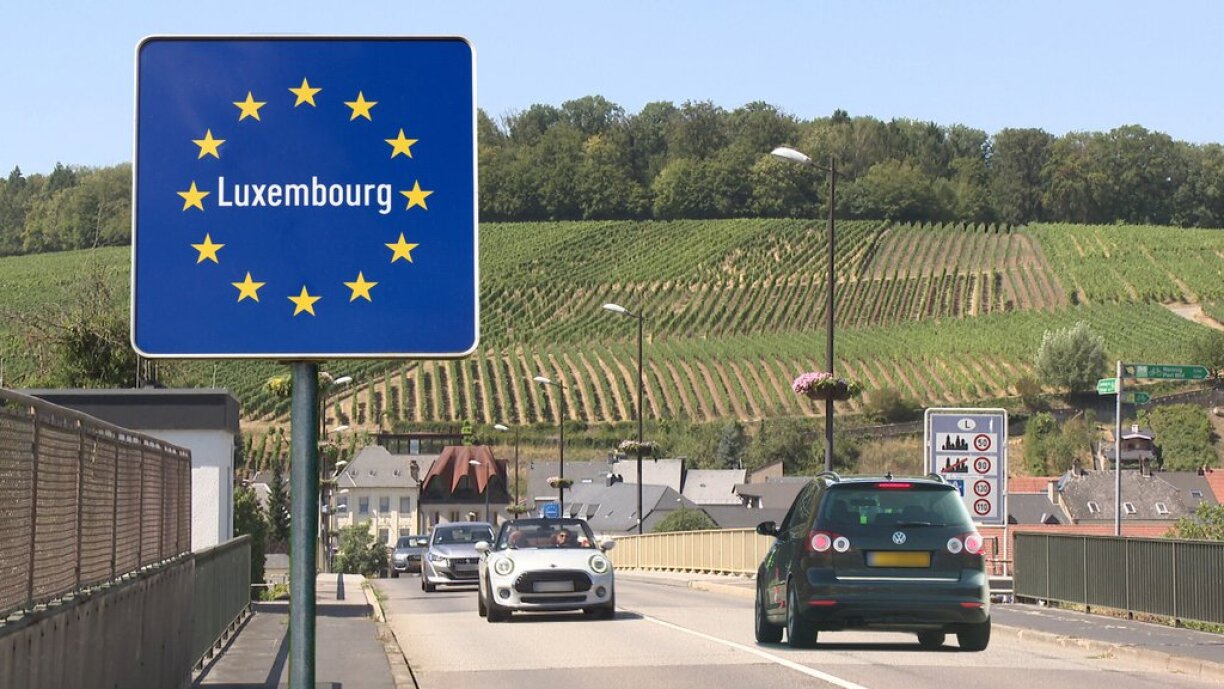
Due to new EU rules, Luxembourg may have to pay €200 million in unemployment benefits to cross-border workers.
Under the forthcoming regulations, the EU country in which an employee last worked will be responsible for paying that person’s unemployment benefits. However, it remains difficult to determine the exact amount Luxembourg will ultimately have to bear.
Currently, Luxembourg only contributes part of the benefits during the first three months for cross-border workers residing in France who become unemployed. The relevant EU directive, however, stipulates that in the future, the member state where the employee was last employed will be required to pay the full unemployment benefits, provided the employee meets the conditions in effect in that country. This means Luxembourg will have to cover all unemployment benefits for cross-border workers coming from its three neighbouring countries.
A provisional agreement to this effect was reached last Wednesday following negotiations between the Council and the European Parliament. The news was first reported by the newspaper Luxemburger Wort.
Minister of Labour Marc Spautz does not believe the development can still be stopped. He first pointed out that without its cross-border workers, Luxembourg would never have achieved its current GDP or the level of benefits it provides. In Spautz’s view, the change is inevitable: "The only question that remains is how clear the vote will end up being." He noted that the vote does not need to be unanimous and that a simple majority is sufficient. Spautz expects there will be a majority in favour of the measure at the level of the European Commission, among individual EU governments, and finally in the European Parliament.
The vote in the European Parliament is expected to take place in July, or by October at the latest. It will be followed by a transitional period lasting seven years for Luxembourg. This extended transition was granted to the Grand Duchy because, with its 220,000 cross-border workers, it will be more affected by the change than any other member state.
How much Luxembourg will ultimately have to pay is practically impossible to predict, as it depends on the evolution of the unemployment rate. According to Spautz, if the rate remains stable, the cost would be around €200 million – though he added that he hopes unemployment will decline.
In any case, the minister stressed that efforts to negotiate bilateral agreements with Luxembourg’s three neighbouring countries must begin immediately. According to Spautz, such agreements are essential to stay up to date, prevent abuse of the system, and ensure that no one falls through the cracks due to being unregistered in any country. To achieve this, Luxembourg will need to agree on common criteria with France, Belgium, and Germany, Spautz said. At the same time, he noted that the country will have to reorganise its employment administration to handle these files in the future.
This will require an increase in staff at the National Employment Agency (ADEM), alongside advancing the digitalisation of procedures. Spautz believes this will also simplify future exchanges with neighbouring countries.
When asked whether ADEM would prioritise offering people jobs in Luxembourg, Minister Spautz replied that a broader perspective is needed – specifically that of the Greater Region. In his view, this is precisely why a bilateral approach is necessary: to assess how such prioritisation could be implemented at the level of the Greater Region.
Spautz added that it is important to remember that an increasing number of Luxembourg nationals live on the other side of the border while retaining their jobs in Luxembourg, as do some Portuguese nationals who relocate to the Greater Region specifically to work in the Grand Duchy. This, in Spautz’s view, highlights that the issue of housing will also need to be addressed.