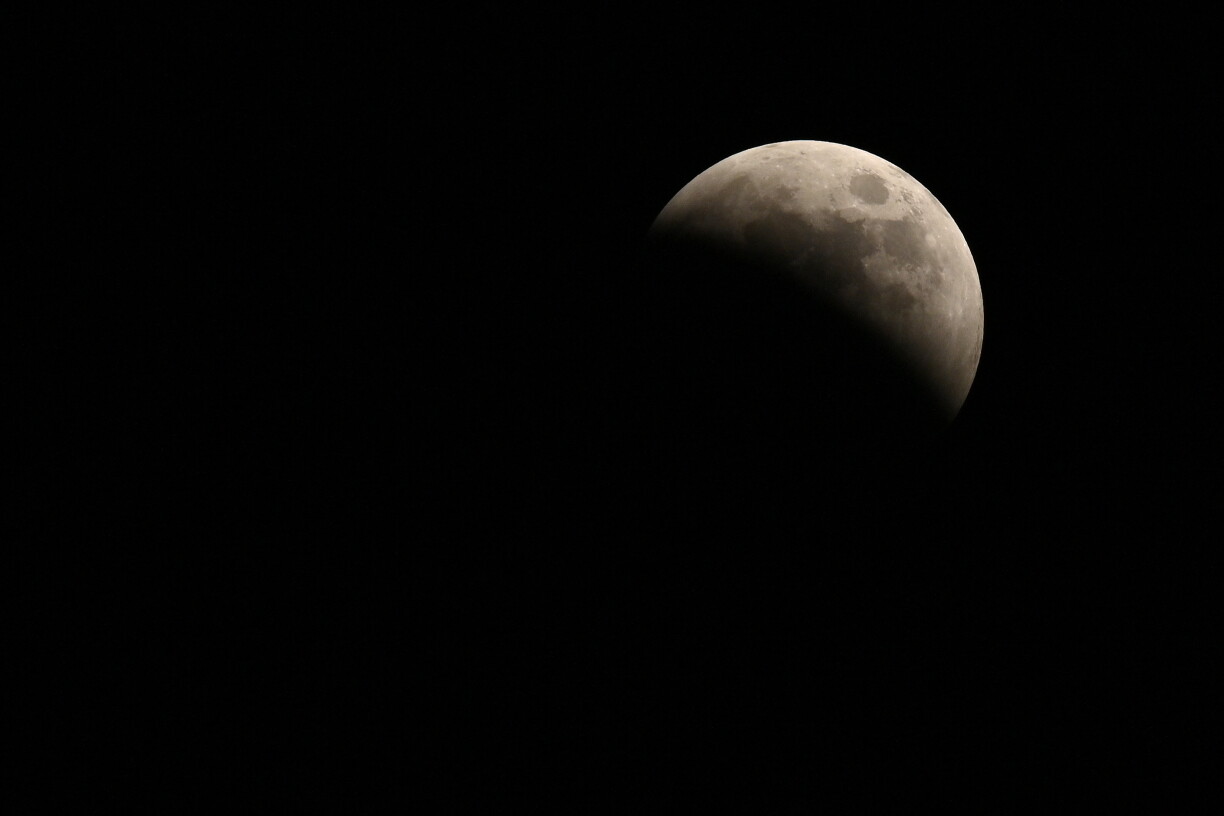
On 28 August, when the full moon will begin to sink towards the horizon, a partial lunar eclipse is set to unfold. From 4.34am, the Earth's shadow will slide across the moon from left to right, blanketing most of it by 6.13am. The show actually gets under way a little earlier, at around 3.30am, when the lunar disk first slips into the Earth's fainter outer shadow, known as the penumbra.
The eclipse will be visible across much of Europe, weather permitting, and the further west you happen to be, the longer you will have to enjoy it. A small sliver of the moon will remain visible on the upper right, though it will not take on the deep red hue seen during a total eclipse. Over on the American continent, however, sky-watchers will get to see the whole spectacle from start to finish.
Lunar eclipses happen when the full moon lines up precisely with the Earth and the Sun. From the moon's perspective, the Earth passes directly in front of the Sun, pulling the lunar surface into shadow and dimming it. During a total lunar eclipse, even the stars that are normally drowned out by the moon's glare briefly reappear around it. The next total lunar eclipse is pencilled in for New Year's Eve 2028.





