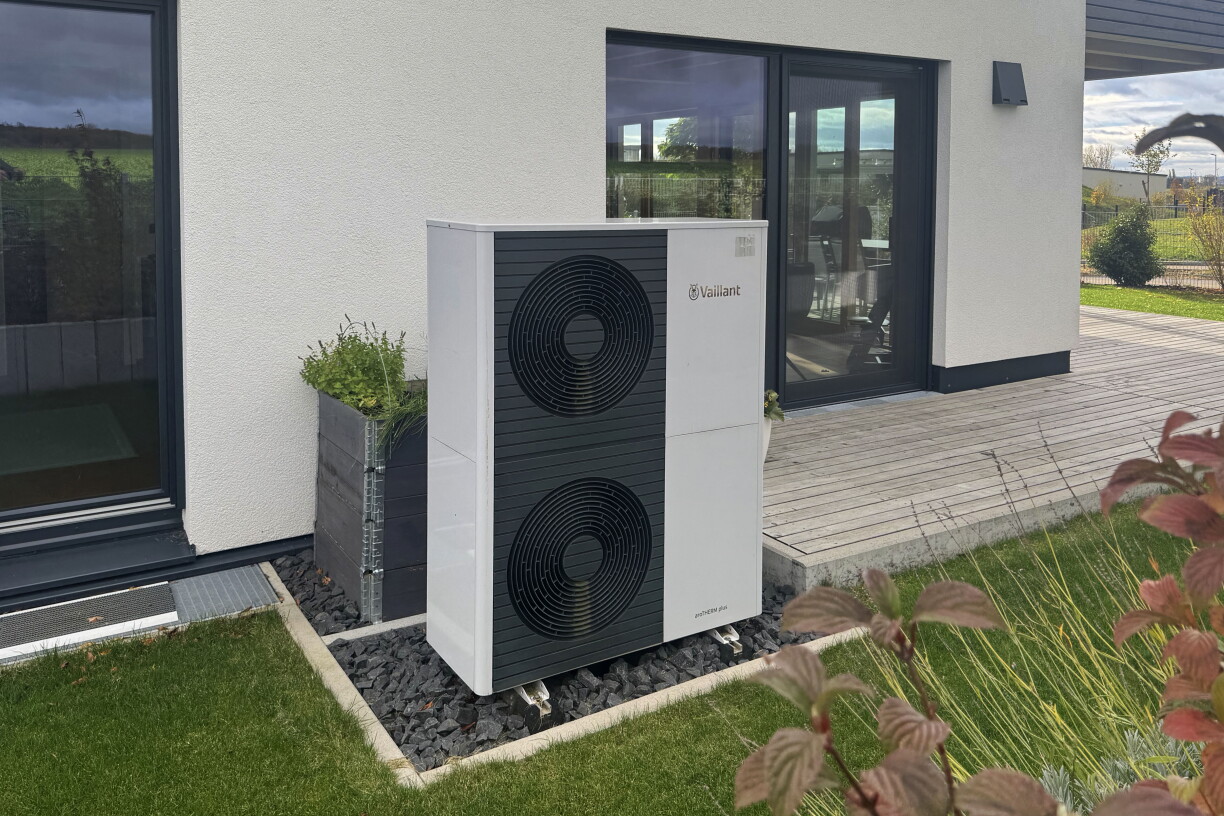
Heat pumps are widely regarded as a more cost-effective solution compared to gas or oil heating systems. However, the move away from fossil fuels continues to be expensive and often complicated, especially for private households looking to make the switch.
Despite the hurdles, Paul Felten, President of the Federation of Energy Advisers, believes that switching to a heat pump is sensible in almost every case.
He estimates that up to 90% of homes in Luxembourg could be equipped with a heat pump, and that such systems are more economical and efficient than gas or oil heaters.
However, many homeowners encounter large regulatory barriers during the installation process.
Felten shares: "Installing a heat pump is almost impossible because municipal regulations are so rigid and senseless that it feels as though obstacles are deliberately put in the way of anyone trying to do something positive for the climate".
Another technical challenge is insulation, but Felten points out that this is not necessarily a prerequisite. He explains that ideally the floor above the basement and perhaps the attic floor or the roof get insulated.
These measures are often the easiest to implement. Facades are more complex, but it is not essential to insulate the facade for a heat pump to function, according to Felten.
In reality, homeowners still face numerous open questions.
Even when technical issues are resolved and regulations followed, financing a heat pump remains a major challenge for many. RTL readers share that the day-to-day costs of operating a heat pump can vary significantly.
"If you are not allowed to insulate the façade on the outside and therefore have to insulate from the inside, you often run into problems with moisture and the existing roof", one reader explains.
They added, "with a listed building, you are not allowed to do anything on the outside, and even inside it quickly becomes complicated because of the many requirements".
One concerned reader pointed to the impact of rising electricity prices, saying that running a heat pump had become very expensive since power prices had soared.
The reader asked what the government planned to do to support those who had invested in such systems, including people who had done so five or ten years ago.
While it was essential to focus on the environment, the reader argued, such an investment also had to pay off financially, adding that the aim was to save energy and money, not to end up paying more than before.
The reader called for a special tariff for electricity used for heating, similar to the system in place for heating fuel.
For a single-family house, the installation costs of a heat pump typically range between €40,000 and €50,000, according to Felten. At the same time, Felten highlights that subsidies are currently higher than ever before, offering more support to those considering the investment.
Felten reported only positive results after switching a 300 m² house from the 1980s, with no particular insulation, to a heat pump.
Whereas the household used to burn a good 3,000 m³ of gas a year with a condensing boiler, it now needed just 8,000 kWh of electricity, Felten says.
In terms of energy, that amounted to around a third of previous consumption, and in terms of cost, a saving of a third.