Dudelange marked the tenth anniversary of its reception centre for applicants for international protection on Friday, celebrating what those involved describe as a successful example of cooperation between authorities, residents, and volunteers.
The facility opened in March 2016 on the former Arbed site, in cooperation between Dudelange, the National Reception Office (ONA), and the Luxembourg Red Cross. The containers used for the centre had previously served as a clinic and were originally intended to remain in use for eight years. Ten years later, they are still housing refugees.
Mayor Dan Biancalana of the Luxembourg Socialist Workers' Party (LSAP) attributes the centre's success to close cooperation between the different partners. He said international solidarity was not simply an empty phrase in Dudelange, but something put into practice in everyday life.
Good communication with local residents also played an important role from the outset.
"Before the centre opened, we organised open days and discussion evenings with people from Dudelange, and we put out a call for volunteers", Biancalana said. "There were a number of different things we put in place."
He also thanked local residents, school staff, and associations for helping make everyday life between refugees and the wider community work smoothly.
Volunteers continue to play a central role, according to Marc Wagener, the new director general of the Luxembourg Red Cross.
"We work with a great many volunteers here", he said. "They help with everything from homework and cooking classes to activities and languages, and I think that really makes the difference."
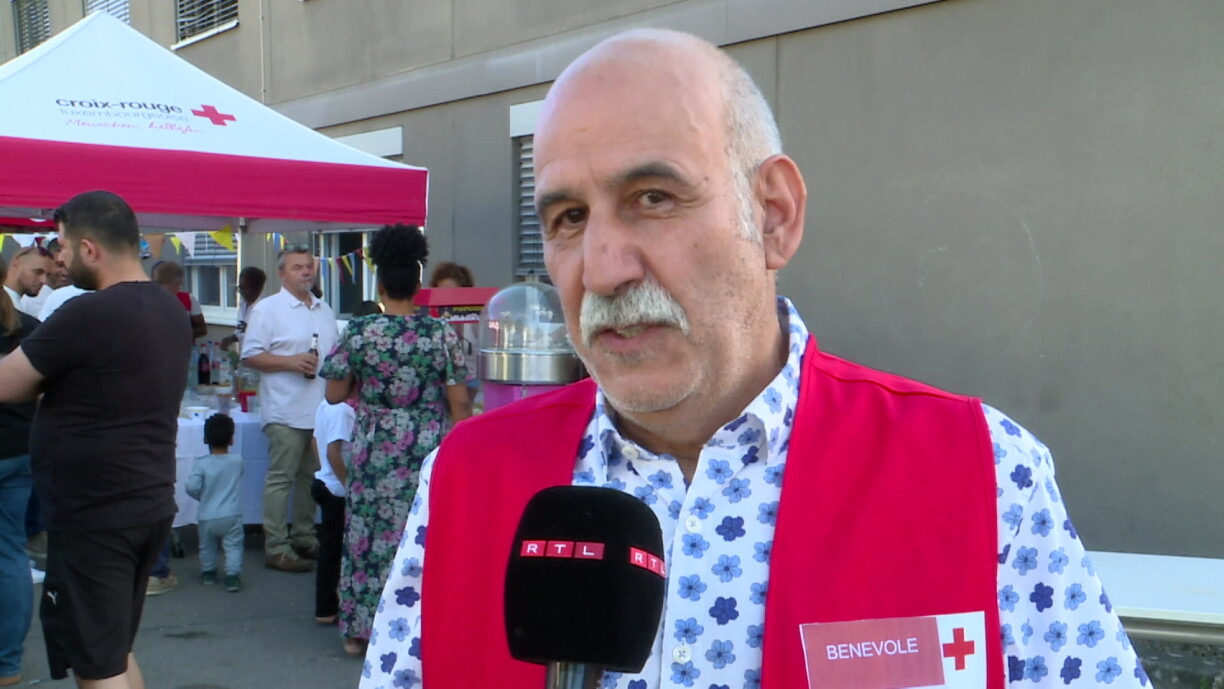
Among them is Victor Yazdani, who has been volunteering at the centre for the past ten years. Yazdani said he has lived in Luxembourg for 41 years and arrived in the country as a refugee himself from Iran.
Yazdani explained that since he also worked for the municipality of Dudelange for 27 years, he was asked to get involved when the centre opened because of his own experience and his ability to communicate with some of the residents. He said he remained very happy to be able to help people arriving from different countries.
Minister for Family Affairs, Solidarity, Living Together, and Reception of Refugees Max Hahn stressed that reception centres should be viewed as a stepping stone rather than permanent accommodation.
"This is not permanent housing for people, but a temporary place to live", Hahn said.
"From the first day, people should be encouraged and shown how they can learn languages, become familiar with the country's traditions and culture, and then move on with their studies or enter the labour market as quickly as possible", the minister stated.
He also warned that Luxembourg remains under considerable pressure when it comes to receiving refugees. According to Hahn, large numbers of Ukrainians are currently arriving in the country as a direct consequence of the heavy Russian bombardments of recent weeks.
Refugees may already have endured a long journey by the time they reach Europe, Hahn added, but arriving in Luxembourg does not mean that journey is over.