At Yolande Coop, the focus is not only on products or services. Above all, the cooperative places inclusion at the centre of its work. Since 2007, it has worked with people with intellectual disabilities, offering them professional opportunities in an adapted working environment.
In its workshops in Betzdorf and Mondorf, as well as at the Butterfly Garden in Grevenmacher, the cooperative produces handmade and local products. These range from soaps to jams, sauces, bread, and pastries. The focus is not on mass production, but on quality, craftsmanship, and the organisation's social mission.
Maud Hansen, director of Yolande Coop, explained that the main aim is to give people with disabilities, more specifically intellectual disabilities, the chance to work, learn a profession, and ideally move on to the regular labour market later on.
Hansen said that through its eight activities, the cooperative covers a wide range of professional fields, giving workers the opportunity to discover what they enjoy, where their strengths lie, and how they can develop their skills.
The cooperative belongs to the Elisabeth network, which is active in the social sector in Luxembourg, and employs more than 100 people. For them, the work provides not only a task, but real training and a daily structure.
In Betzdorf, there is also the CPP, where young people with disabilities can continue their training after regular school, according to Hansen. As part of this, they also complete internships with Yolande Coop, she said.
Hansen explained that during these placements, they discover the different activities offered by the cooperative. Over time, it becomes clearer what suits them, what they enjoy, whether they prefer more physical work or more precise manual tasks, and which workshop they may later join with a permanent employment contract, she said.
Yolande Coop shows how economic activity and social responsibility can go hand in hand, while emphasising that behind every product, there are people.


One of Yolande Coop's best-known projects is the Päiperleksgaart (Butterfly Garden) in Grevenmacher. The tropical garden has been managed by the cooperative since 2011 and also functions as an inclusion workshop.
Today, the Butterfly Garden is not only a tourist attraction, but also an inclusive workplace. In the tropical hall, which covers more than 600 square metres, hundreds of butterflies from different countries fly freely. The garden is also home to chameleons, turtles, and tropical plants.
For the employees, this means regular contact with visitors and a great deal of responsibility in their daily work. Visitors are offered an experience, while employees can develop their skills. The site brings together not only nature and tourism, but also social integration and work.
Sandra Thibold, who is in charge of the garden, explained that the tasks include feeding the animals, keeping the garden clean for visitors, making sure the plants are present and in bloom, and carrying out biological pest control.
Staff also look after the butterflies, hang up the chrysalises so that they can hatch, manage the garden's own production, and care for the other animals, according to Thibold.
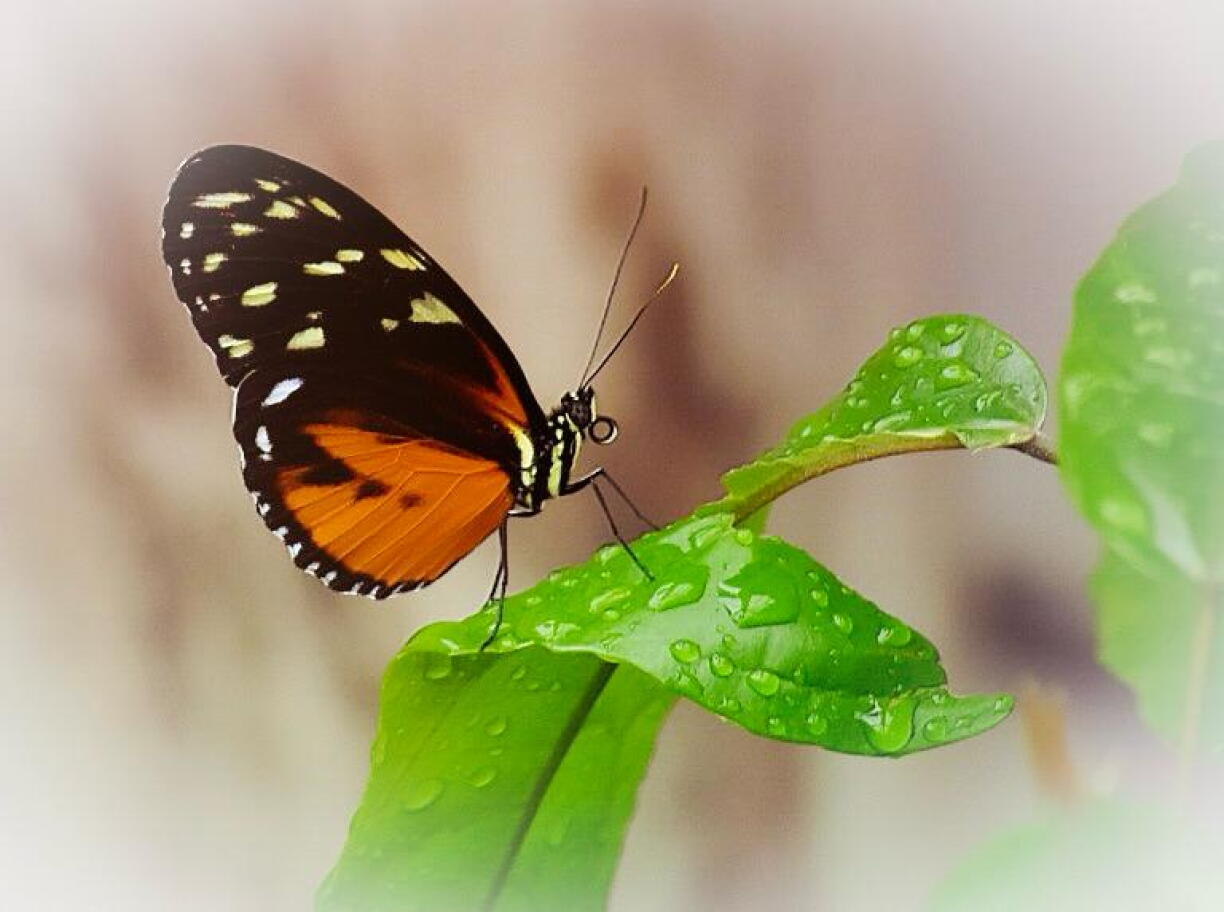
Hundreds of butterflies live in the garden's tropical climate. Many have vivid colours or striking patterns. Some butterflies live for only a few weeks.
Around 20 to 25% of the butterflies are bred on site, while the others come from countries such as Costa Rica and the Philippines. According to Thibold, the garden supports small families through a global programme.
Thibold explained that these families breed the butterflies at home. Once the chrysalis stage is reached, following the egg and caterpillar stages, the chrysalises are collected, packed in special boxes, and sent to butterfly gardens around the world, she said.
When they arrive in Grevenmacher, the chrysalises are hung up immediately by the team, Thibold said, adding that the butterflies then hatch before being released into the garden.


Every year, thousands of people come to Grevenmacher to discover this tropical world. Many visitors soon realise that the site is about more than exotic butterflies.
Hansen noted that the garden is also home to chameleons, geckos, different types of birds, fish, and turtles, meaning there is a great deal to see and discover.
She explained that information panels are placed throughout the garden, with visitors also able to use a free audio guide by scanning QR codes at the entrance or around the site. The guide offers information in four languages, helping visitors enjoy a more complete experience, Hansen said.
Between palm trees, banana plants, and colourful flowers, the butterflies fly freely. For many visitors, this is a special experience. The butterflies sometimes fly very close to people or even land on their shoulders or hands. Because they move freely through the space, visitors can observe them from very close up.
According to Hansen, the garden usually aims to have around 500 butterflies flying at any given time, ensuring both variety and activity. She made clear that this also depends somewhat on the weather, as the brighter and sunnier it is, the more the butterflies tend to fly. When the weather is greyer and darker, they are more likely to sit still, she explained.
In a special area of the garden, visitors can observe the different stages of development, from caterpillar to chrysalis to fully formed butterfly. For many people, it is the first time they see this process in real life.
The garden also shows how delicate these animals are and how important climate, plants, and habitat are for their survival.
Hansen explained further that tropical conditions must be maintained at all times, with temperature of around 28°C and humidity of 70 to 80%, as the butterflies would otherwise not survive.
Alongside the butterflies, visitors can also discover tropical plants from different continents. Some bear exotic fruits, while others have enormous leaves or unusual flowers that are not normally found in Luxembourg.
In this way, the Butterfly Garden also shows how sensitive such ecosystems are. Visitors learn how strongly animals and plants depend on the climate, and why nature conservation matters.







