Webb has transformed astronomy by revealing distant objects in unprecedented detail, but NASA’s latest space telescope has been built around a very different idea. The Nancy Grace Roman Space Telescope will search enormous regions of space for patterns, changes and rare events that a narrower view would struggle to reveal.
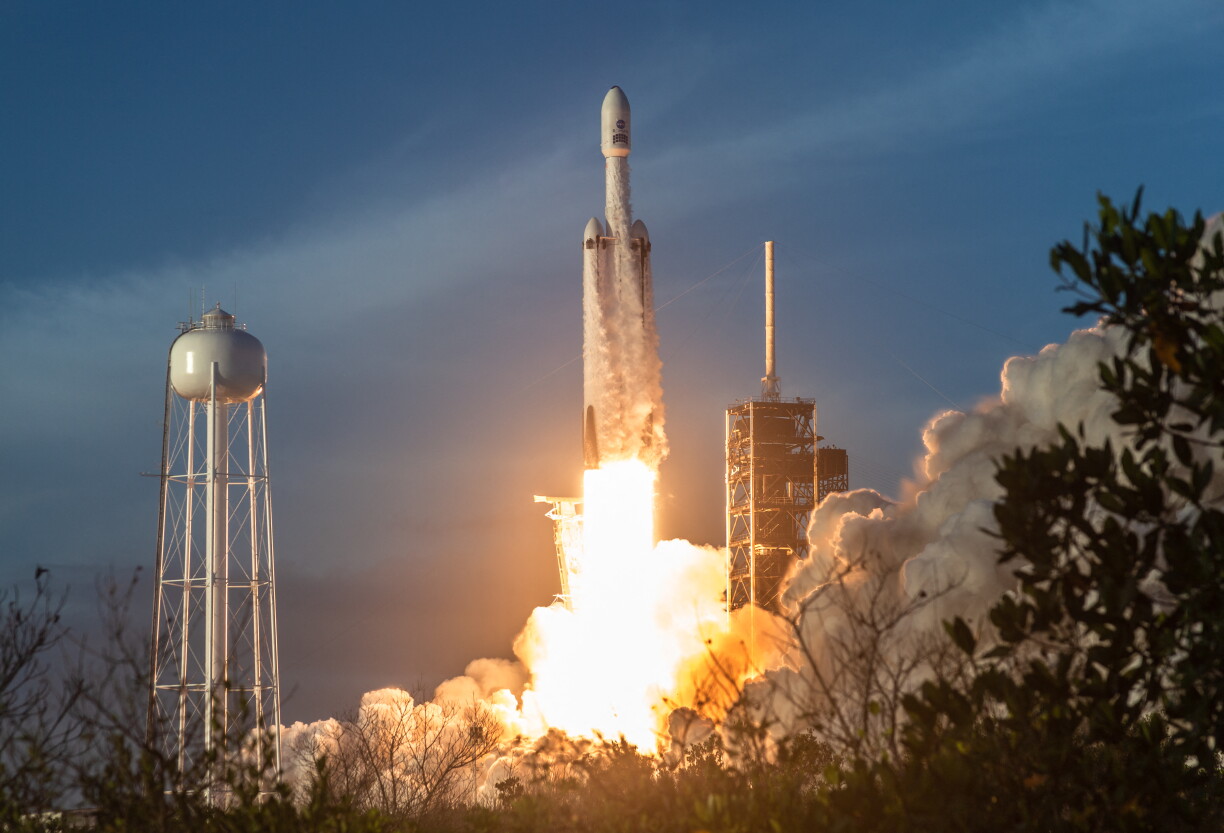
NASA’s Nancy Grace Roman Space Telescope, usually known simply as 'Roman', successfully launched on 30 August and is now beginning a three-month commissioning phase before its scientific work begins. Although often described as a successor to Hubble and the James Webb Space Telescope, Roman was designed for a fundamentally different kind of astronomy.
Webb was designed to examine carefully selected objects in extraordinary detail whereas Roman will observe enormous areas of sky at once, revealing patterns that only emerge when millions of stars and galaxies are studied together.
Its primary mirror measures 2.4m across, exactly the same diameter as Hubble’s and considerably smaller than Webb’s 6.5m mirror. But Roman’s real advantage lies behind that mirror: a roughly 300-megapixel Wide Field Instrument made from 18 large detectors.
Its images will offer detail comparable to Hubble’s at near-infrared wavelengths, but across a field of view at least 100 times larger.
This combination will allow Roman to survey the sky up to 1,000 times faster than Hubble. Over its five-year primary mission, the observatory could measure light from a billion galaxies and generate as much as 20 petabytes of data.
The telescope is named after Nancy Grace Roman, NASA’s first chief astronomer and the first woman to hold an executive position at the agency. Often called the 'mother of Hubble', she helped convince NASA and the US Congress that placing powerful observatories above Earth’s atmosphere would transform astronomy. A vision that later proved correct.
Through its wide-field surveys, Roman will investigate two of the greatest mysteries in modern physics: dark matter and dark energy. Together, these invisible components appear to account for approximately 95% of the contents of the Universe, yet scientists do not know what either of them actually is.
Dark matter cannot be seen because it does not emit or reflect light, but its gravity affects stars, galaxies and the light travelling past it. Roman will measure weak gravitational lensing, the tiny distortions in distant galaxies caused by foreground matter, to map how dark matter is distributed across the Universe.
Dark energy is the name given to whatever is causing the expansion of the Universe to accelerate, even though the gravity of matter should be slowing that expansion down. Roman will examine how quickly the cosmos expanded at different times by measuring the distances to exploding stars and mapping how galaxies are distributed across space. This could reveal whether dark energy has remained constant or changed as the Universe evolved.
Roman will also transform the search for exoplanets using gravitational microlensing. This phenomenon occurs when a foreground star aligns closely with a more distant background star relative to Earth, and its gravity magnifies the background starlight. A planet orbiting the nearer star can create a brief additional spike, revealing its presence even thousands of light-years away.
Roman is expected to find more than a thousand planets through microlensing, while the same survey could identify around 100,000 more as they transit their stars. By observing large areas of sky, Roman will also capture short-lived events such as supernovae, neutron-star collisions and stars being torn apart by black holes.
Although Roman is led by NASA, Europe has made important contributions to the mission. The European Space Agency supplied detectors for the Coronagraph Instrument, batteries and star trackers, and will help download the mission’s data through its deep-space network, including a new 35m antenna at New Norcia in Australia.
Roman will complement ESA’s Euclid telescope, which maps a larger area of sky while Roman observes smaller regions in greater depth and detail. Together, their observations will strengthen research into dark matter, dark energy and the evolution of the Universe.
An equally important feature is Roman’s open-data policy. Once processed, its observations will be released without a proprietary period, allowing scientists around the world to explore the same archive and reuse data for questions far beyond the original purpose of each survey.
Hubble changed our view of the Universe through its portraits, while Webb is revealing selected objects with unprecedented depth. Roman will add the wider context, showing how those objects fit together, how common they are and how they change.
The next revolution in astronomy may come not from looking more closely, but from finally seeing the bigger picture.





