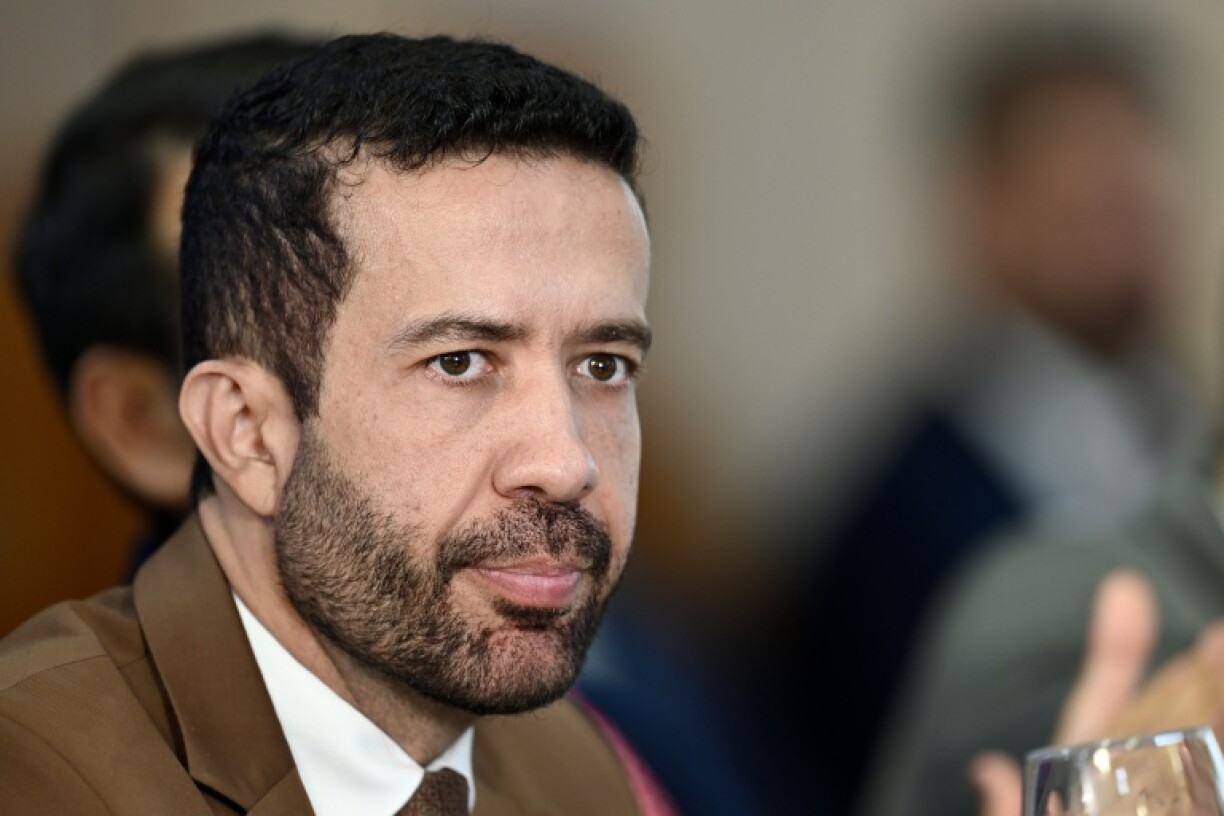
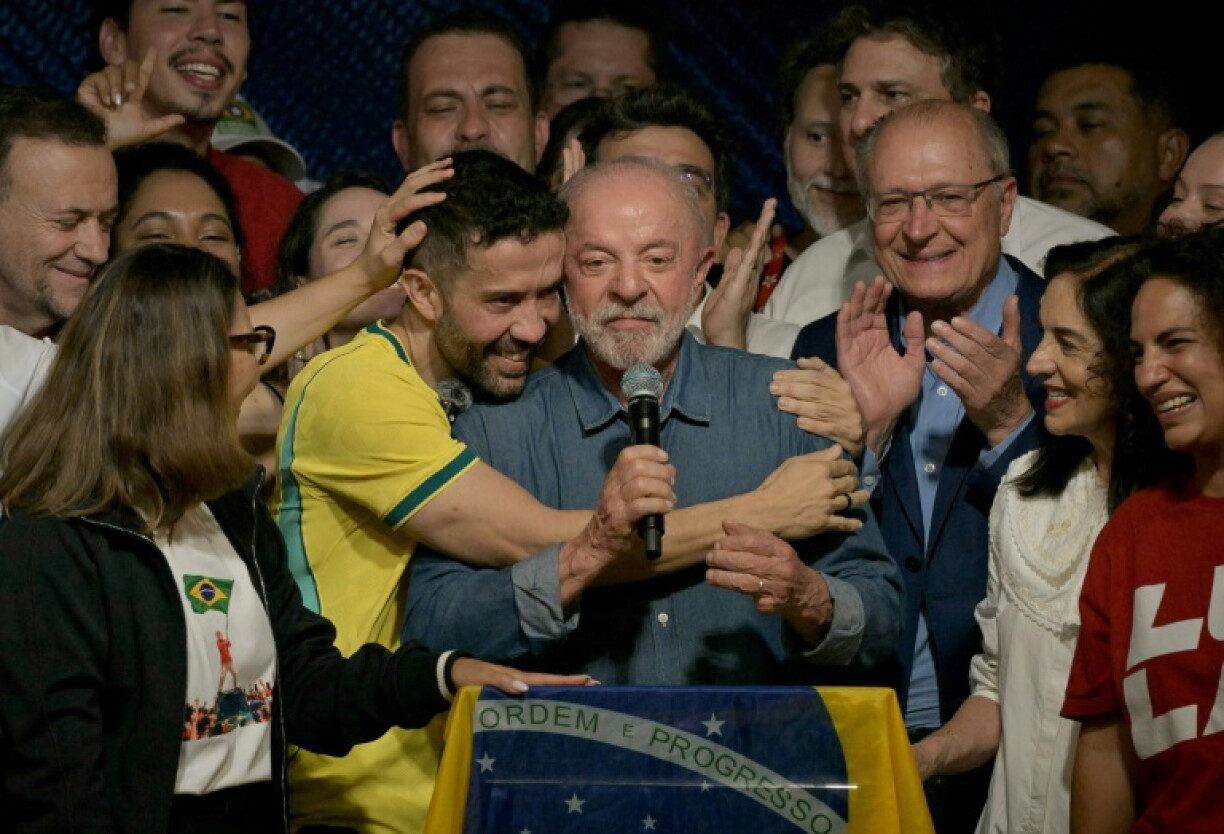
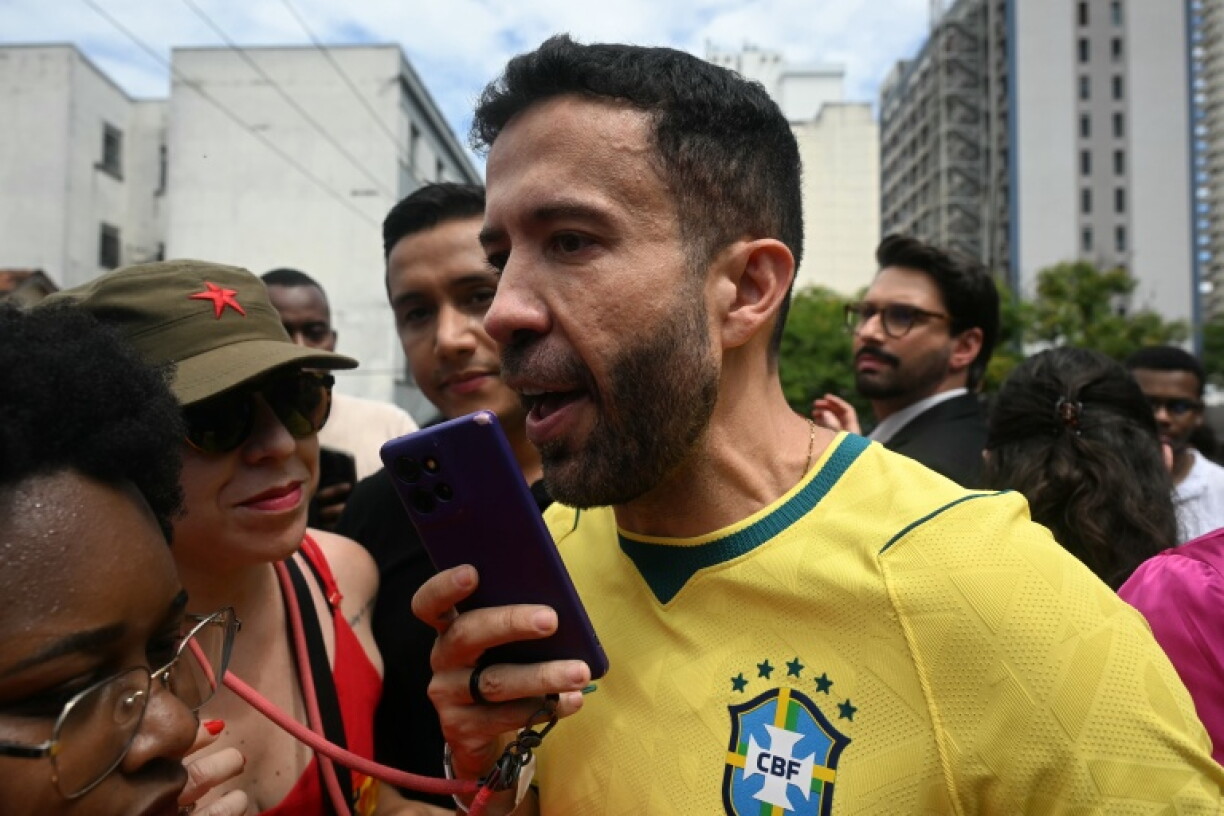
Behind the reelection victory of Brazil's Luiz Inacio Lula da Silva was a fierce online battle, with the leftist president's camp led by 42-year-old lawmaker Andre Janones.
Creator of the "Lula's Army" WhatsApp group, Janones posted daily content bashing right-wing candidate Flavio Bolsonaro and his allies -- calling it "visual ammunition" for his fellow "soldiers" to share on their own social media feeds
Between the first round on October 4 and the October 25 runoff, the channel's followers ballooned from 60,000 to almost 11 million.
The lawmaker from Minas Gerais state has not shied away from describing his strategy against the far-right as "ethically dubious."
"I know how to outsmart the algorithms and defeat the far right anywhere," he said in an interview.
Janones spoke to AFP at his apartment in Brasilia after returning from an international tour with Lula that included a stop at the COP31 climate summit in Turkey.
Below are excerpts from the interview, edited for clarity:
Question: Why have you described your strategies as "ethically dubious?"
Answer: I usually use the metaphor of a low blow below the belt. They (the far-right) hit below the belt. I am not claiming we should hit below the belt, but rather at the belt, right at the limit.
Q: For example?
A: In the 2022 campaign, (the far-right candidate) Jair Bolsonaro claimed that Lula was going to appoint someone involved in corruption as a minister. I started a livestream and said that Bolsonaro could appoint Fernando Collor (a former president convicted of corruption) as a minister. And I showed videos, photos of Collor supporting Bolsonaro. For some people that is ethically dubious; for me it isn’t. They say: "He wasn't going to appoint him, and you know that." But I didn't create a fake fact; I said he could do it, that it was a possibility. It's subtle.
Q: Do you see a risk of spreading disinformation?
A: When I talk about building narratives, people confuse that with building a lie. One example: If we let the far right set the tone for how COP went, they will look at Lula walking around with 30 journalists behind him and say it was a failure, that there were only a handful of people there. That's a narrative. When the other side sets the agenda, you only have two options: draw or lose. I get ahead of them and say: Lula is here like a pop star; he can’t even move. There was a flood of reporters, a global mobilization.
Q: You're also accused of being violent because you give orders using warlike language.
A: Lula's Army had a violent way of transmitting messages of peace. It’s the way the algorithm understands things. It's the way Meta and the other big tech companies program the algorithm. Today we play by their rules.
Q: Did you study this in some book?
A: I'm self-taught. I've never read a book on the subject. I bought a book everyone says I have to read. It’s still in its wrapper. Everything comes from observation. I’ve known about this for more than 10 years.
Q: Do you feel that your affinity with social networks has to do with your working-class background?
A: One of the main reasons I have this direct connection with ordinary people is that I'm a legitimate representative of the common man. Until recently I was embarrassed to say this: In 2019 I took office as a federal congressman without knowing what left and right were. I was never able to afford the luxury of studying something I wouldn’t need the very next day. But in the end that turned out to be a positive thing, because the ordinary person doesn’t know what left and right are.
Q: Was that kind of sensitivity missing in the progressive camp?
A: Where did the progressive camp fail? In elitism, in intellectual arrogance, in believing that democracy is for those who are intellectualized. In criticizing (conservative voters) in a derogatory way. What we did here in Brazil was to digitize the left-wing voter. But it's not the intellectual. I’m talking about that left-wing voter who doesn’t know what left and right are.
Q: In which countries would you like to implement your strategies?
A: I don't have in-depth knowledge of the global political landscape, but I do understand the strength of the far right. It's like a recipe: Their way of acting is very similar anywhere in the world. I think in Europe and South America it's urgent for the progressive camp to understand the world of social media so it can defeat the far-right threat.
jss/des/mjf