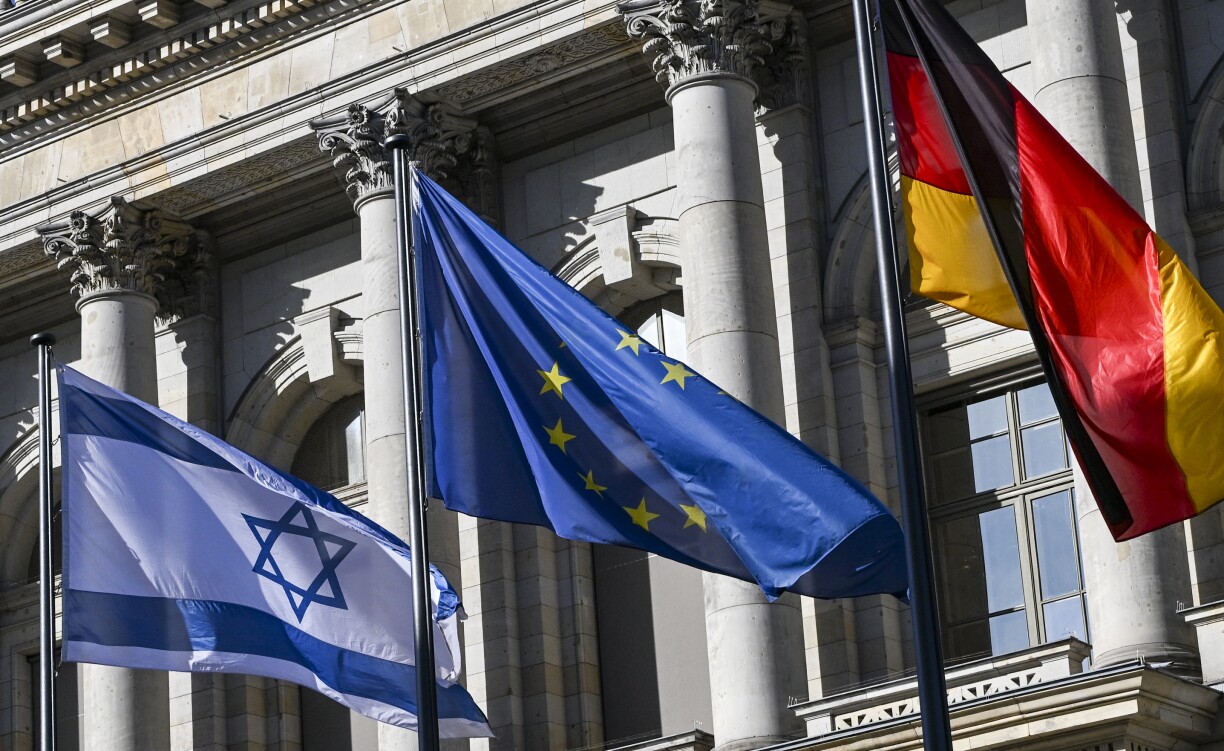
Spain and Ireland had put the issue of halting the June 2000 agreement back on the table at a meeting of EU foreign ministers in Luxembourg.
German Foreign Minister Johann Wadephul called the proposal "inappropriate".
"We have to talk with Israel about the critical issues," he said at the start of the meeting, adding: "That has to be done in a critical, constructive dialogue with Israel."
Italian counterpart Antonio Tajani pushed back as well, saying that "no decision will be taken today".
Attitudes towards Israel among EU member states, already hardened over its conduct in the war in Gaza, have stiffened further after the Israeli invasion of Lebanon and a new law on the death penalty for Palestinians in the occupied West Bank.
"We need to act. We need to make sure that our fundamental values are protected," Irish Foreign Minister Helen McEntee said.
Facing alarm at the civilian toll exacted in the Gaza war, the EU last year already put on the table a raft of potential measures to punish Israel, including cutting trade ties or sanctioning government ministers.
But so far none of the steps laid out by Brussels has garnered enough support from member states to be put into action.
Suspending the entirety of the EU's cooperation agreement requires unanimity among the bloc's 27 countries and would almost certainly be blocked by allies of Israel.
More feasible could be suspending the part of the deal facilitating closer trade ties, a move that only requires support from a weighted majority of EU countries.
But that would require a shift in position from EU heavyweights Germany or Italy.
Rome had appeared to signal it could be open for a tougher line on Israel after it suspended a defence agreement.
But EU officials and diplomats said it seemed countries were reticent to move -- especially after a ceasefire was agreed in Lebanon.
Meanwhile, there were efforts to impose smaller measures instead.
France and Sweden re-upped an earlier call from some other EU countries for the bloc to consider halting the import of goods from Israeli settlements in the occupied West Bank, which are considered illegal under international law.
A separate proposal for sanctions on "extremist" Israeli settlers in the West Bank had been vetoed by Hungary for months.
But the recent ouster of staunch Israel backer Viktor Orban in Hungarian elections has raised hopes among other EU countries that those could soon go into force.