Don’t you agree that we learn history better when we experience it in a more “live” and interactive way?
Below is a selection of places to visit with children, where they can experience and learn first-hand how life was in previous centuries. After all, understanding the past helps us in the present and prepares us for the future.
A fantastic experience for the whole family, this open-air museum is a dream-like reconstructed village where everything comes to life and visitors can actively take part. Passionate volunteers revive traditional crafts and professions from earlier times.
At the heart of the village, more than 80 traditional trades are demonstrated in authentic, real-life settings: blacksmiths, carpenters, clog makers, bakers, and farmers all share their craft with enthusiasm and a strong focus on teaching.
Demonstrations take place throughout the day, offering insight into traditional techniques, period tools, and the skills that sustained the villages of Lorraine and the Meuse region in bygone days. Children and adults can take part in many activities, try tools, and explore the old houses.
A particular highlight is the small pond, especially in spring when it is full of frogs – something children tend to love.
Based on personal experience, it makes for a full-day outing filled with fun and discovery. The site also offers pleasant natural surroundings, as well as food, drinks, and toilet facilities.
Les Vieux Métiers d’Azannes-et-Soumazanne
Address: Domaine des Roises - Village des Vieux Métiers - 55150 Azannes
Alsace is a very popular destination for families and residents of Luxembourg, and the Écomusée d’Alsace should not be missed.
It is the largest open-air museum in France.
While walking through the site, visitors may encounter people dressed in traditional Alsatian clothing carrying out everyday tasks from the past, such as weaving baskets or feeding farm animals.
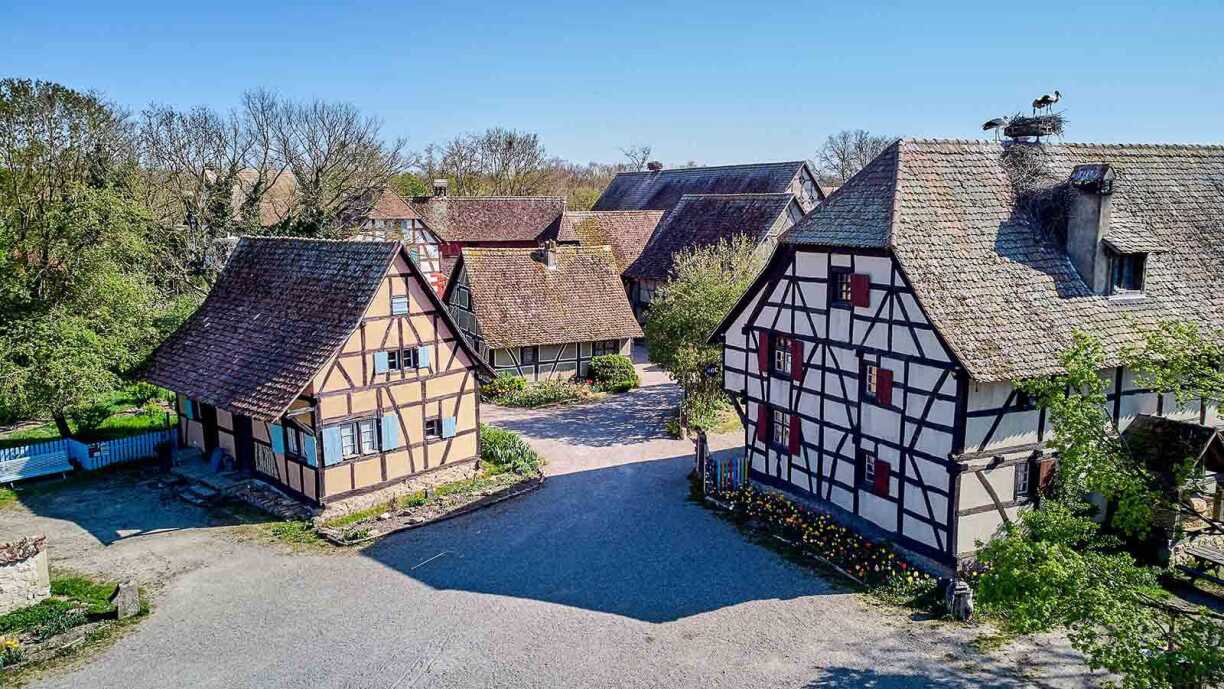
There is plenty to explore, including traditional half-timbered houses, fortified towers, and Renaissance and medieval buildings.
Families can also take part in interactive experiences:
The entire museum is designed to be explored on foot and is highly recommended on a sunny day.
Detailed info:
Écomusée d’Alsace: France’s largest open-air museum
A charming museum featuring around ten half-timbered houses waiting to be discovered: a town hall typical of Protestant communities, a school, a bakehouse, and workshops belonging to a broom maker, weaver, blacksmith, and shoemaker.
Particularly interesting is a house furnished as it would have been when it was first built around 1850, alongside its neighbour, which is furnished with the belongings of its last inhabitants in the style of the 1950s.
The large four-sided farmstead – one of the largest buildings in an open-air museum in the German-speaking world – houses permanent and special exhibitions on the lives of our ancestors from around 1850 to 1970. Visitors can see ornate stoves and fireplace panels, exhibits on viticulture and schnapps production, laundry, and personal hygiene, as well as living quarters from different eras. There are also shop-lined streets recreating small-town life in the 20th century.
In spring, visitors may even spot a falcon nesting in a crevice in the wall.
An extra tip: a traditional Christmas market usually takes place during the festive period.
Freilichtmuseum Roscheider Hof
At the Domaine de la Bataille de Waterloo, visitors are immersed in history, with the highlight being the reenactment of the Battle of Waterloo, which comes to life every summer.
In 2026, it will take place on 27 and 28 June.
Hundreds of volunteers take part in the event, bringing history back to the battlefield. Approximately 2,000 soldiers, 100 horses, and 25 cannons are represented.
Waterloo1815 – Domaine de la bataille de Waterloo 1815
A wonderful destination for families with children, offering hands-on experiences of traditional rural life.
Accompanied by an instructor, visitors can choose from around ten different activities to rediscover nature and traditional skills from northern Luxembourg. Children can try wool weaving, making beeswax candles, blacksmithing, or building wooden objects in the sawmill.
Horse-drawn carriage rides are also a highlight, as is the mini-farm.
En famille – Robbesscheier | Nature for your senses
The Roman Villa Borg offers numerous events that allow visitors to experience Roman life first-hand.
For example, on 25 April from 10:00 to 18:00, children can experience Roman school life. Under expert guidance, they can immerse themselves in the daily life of Roman pupils, learning about materials such as wax tablets and styluses, as well as daily routines and lessons. Visitors can actively take part in classes and try out materials.
Another feature includes demonstrations of Roman hairstyles, ointments, perfumes, cosmetics, and bathing practices.
These special events are included in the villa’s admission price, although a small materials fee may apply.
Archaeological Park Roman Villa Borg
The historic bell foundry in Saarburg is a highlight and a perfect day-trip destination close to Luxembourg.
It feels like something out of a fairytale, and while it is worth visiting year-round, the best time is during the Victorian Christmas Market.
At this time, visitors may even spot characters reminiscent of Dickensian tales wandering the streets.
The market recreates an atmosphere from around 1900, with warm lighting, festive decorations, and exhibitors dressed in historically inspired costumes. Steampunk elements add a creative twist, with shimmering gears, copper details, and imaginative design touches.
Entertainment includes magic shows, carol singing, and walking performances that draw visitors into the experience. A themed photo studio offers Victorian costumes and steampunk accessories for memorable keepsake photos.
Culinary offerings include British-inspired specialities and seasonal drinks.
In 2026, the market will take place on 12 and 13 December (Saturday 11am to 8pm, Sunday 11am to 6pm).
Kulturgießerei Saarburg – socio-cultural centre in the tri-border region