The era when average earners could dream of buying a detached house in Luxembourg seems to be a thing of the past. Repeated crises have undermined the Grand Duchy's traditional approach to housing, as seen in the current gridlock affecting off-plan sales (VEFA), despite several rounds of government support in recent years.
New-build projects in particular continue to stagnate, with no end to the crisis in sight.
While public policy and rampant speculation are frequently blamed for the housing crisis, far fewer conversations focus on how homes are actually built. Given that a dramatic drop in housing prices is seen as both unlikely and economically undesirable – especially amid rising construction costs, high interest rates, and geopolitical instability – Luxembourg must look for other solutions.
Housing Minister Claude Meisch recently mentioned plans to reform the VEFA system, though no concrete proposals have been made, with the tripartite negotiations taking priority. Meanwhile, numerous figures in the sector have begun exploring new ways to deliver affordable housing.
In architectural circles, calls to rethink construction in Luxembourg are not new – with densification and building upwards among the main avenues being considered.
A key challenge remains Luxembourg's deeply ingrained attachment to detached homes and spacious plots. "Everyone agrees on the need for new housing – just not in their own backyard", says Céline Zimmer, architect and founder of Eist neit Wunnen, highlighting the country's strong sense of individualism when it comes to residential development.
This is a national issue, she argues, as Luxembourg's attractiveness and overall economic health are at stake.
To maintain its welfare state, Luxembourg must continue to grow economically and demographically, a point underscored by the country’s looming pension concerns. Christoph Lang, architect and partner at Artbuild, puts it bluntly: "Living between four walls and a 10-are plot with a view of the forest is now unaffordable."
For Lang, there is no alternative. "Everything must be densified", he argues, including the spaces between existing buildings. Yet, he acknowledges, denser development alone will not solve the housing crisis.
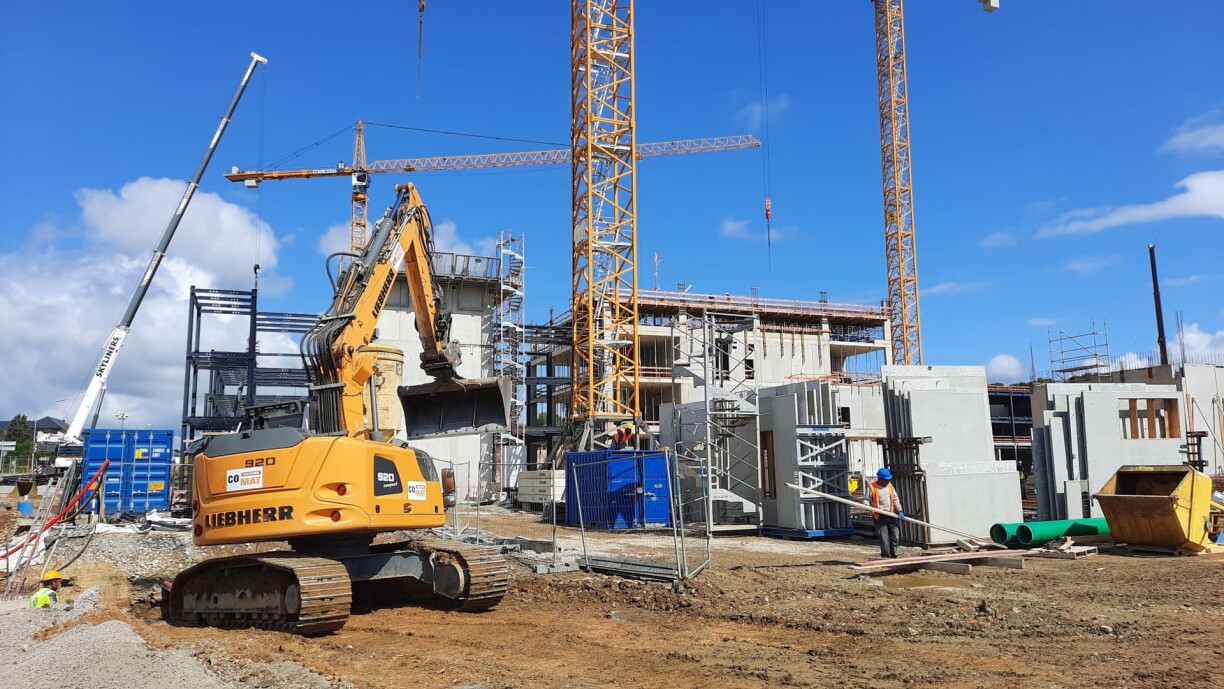
Elsewhere in Europe, timber construction is gaining ground, but as Lang notes, this is not always the cheapest option due to fluctuating material markets. He points to off-site construction as a promising alternative, potentially saving significant time and money by assembling components in controlled environments, with fewer delays and greater efficiency.
"Every day saved on site is money saved", Lang emphasises, adding that controlled conditions also offer technical advantages.
However, this method has yet to become mainstream in Luxembourg, where the market still prefers classic, often luxury-oriented standards. Both architects argue that current conditions require a fundamental rethink of how housing is developed.
"We know that demographic growth is necessary, but we don't want the change that comes with it", notes Zimmer.
She further advocates for the development of housing cooperatives, a model based on shared ownership and democratic management. A pilot cooperative project is already planned for Belval in the coming years.
One obvious solution, Zimmer notes, is to promote smaller homes in a market where high prices persist. But to make any of these alternatives viable in a country with a longstanding preference for uniform, spacious housing, "a change in mentality is essential", she insists.





