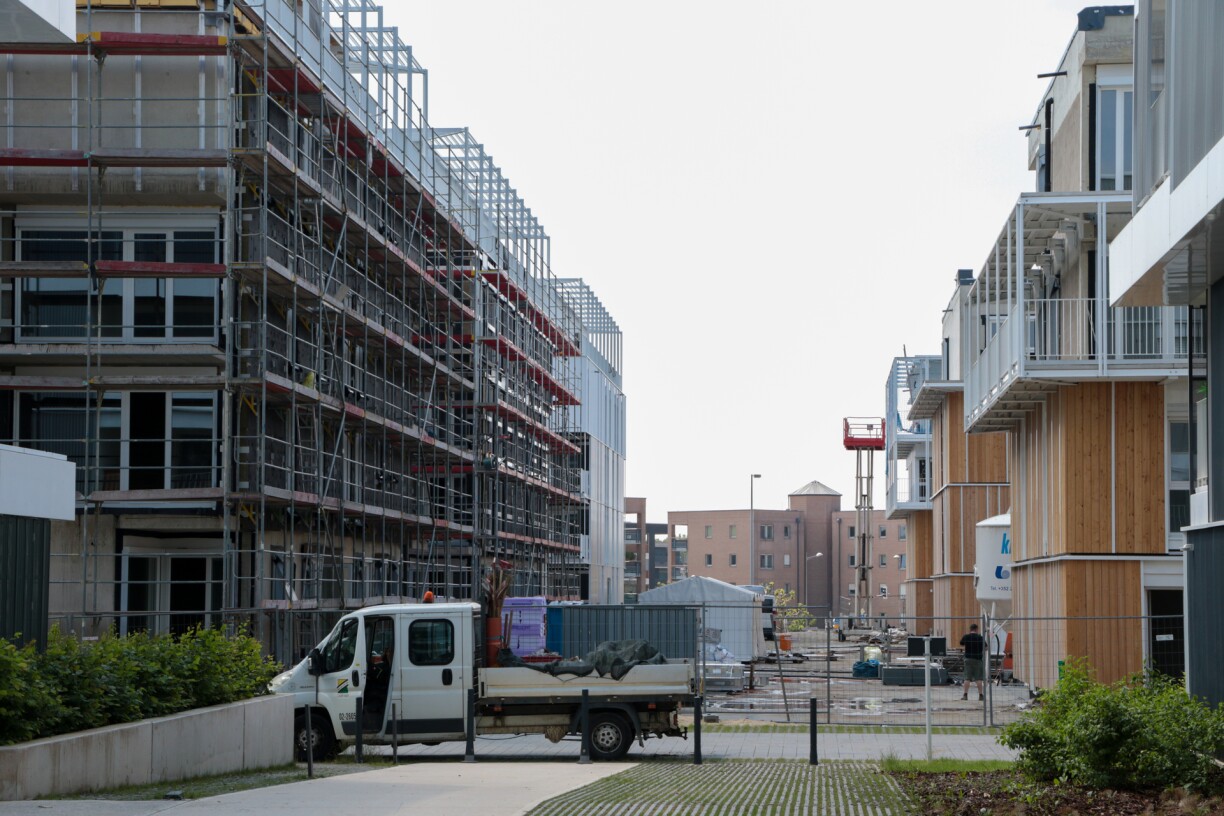
In the context of ever-increasing housing prices in Luxembourg, the Housing Pact 2.0 is should allow municipalities, with the government's support, to create a lot more affordable housing in future. The draft bill, introduced in August 2020, will be voted on this Wednesday.
The first version of the Pact failed to create sufficient affordable housing, when everyone agrees this is the biggest challenge the country faces, wrote the Housing Commission in its report on 8 July.
Affordable housing is, by far, the main concern of Luxembourgers, as our mid-June survey showed yet again. 81% of voters cited this as their top issue. Around three quarters estimate that nothing or little has been done so far. This is water to the mill for the main opposition party CSV, which demands faster construction of affordable housing.But the new law is lacking in ambition, says Wunnrecht, asking the government to "enact an emergency housing plan without delay". The collective is made up of around twenty associations and syndicates. Its slogan "un toit est un droit" (a roof is a right) could be heard during a demonstration it organised at the end of March.
Its specific demands include the creation of "a minimum of 4,000 additional affordable housing units by the end of 2022", on top of any projects already in planning or construction, and to "quickly mobilise vacant housing and plots".
In light of the latest version of the law, Prime Minister Xavier Bettel had expressed his support for a tax on empty housing in late June. This had not escaped Jean Larock, spokesperson of the Wunnrecht collective: "That's very good! But you have to do it and not just say it." All the more because according to him, the government "truly has the means" to obtain a considerable amount of housing and make it available for urgent needs.
The collective suggests taxing vacant housing "gradually, and progressively, with prohibitive rates", with the aim of forcing speculators to sell or rent out their properties. Another proposed solution to the housing crisis is to create homes "rapidly, on a national scale" and to tax vacant plots to force owners to release them for construction.
Even beyond the Housing Pact, urgent measures are needed to get access to empty buildings and properties, as "people are in the street today and cannot wait", says Jean Larock, a spokesperson for the collective.
The housing law insufficiently accounts for the urgency of the situation, with more and more unhoused or badly housed people in the country, according to Wunnrecht.
The collective estimates the number of vacant properties at around 3,000 to 4,000, adding that the lack of precise data is a problem in itself: "There is no precise accounting of unoccupied properties, this is a real problem."
Another blind spot is that "there is a lot of discrimination in the access to housing in Luxembourg". Wunnrecht has a number of immigrant associations among its collective.
The Housing Pact 2.0 needs an in-depth review to ensure it meets "the real needs of the population", says Wunnrecht. The collective regrets that the government has chosen to reduce the proposed percentage of land for development to be reserved for the construction of lower cost housing. In fact, "even the initially suggested percentage was insufficient and should have been increased!"





