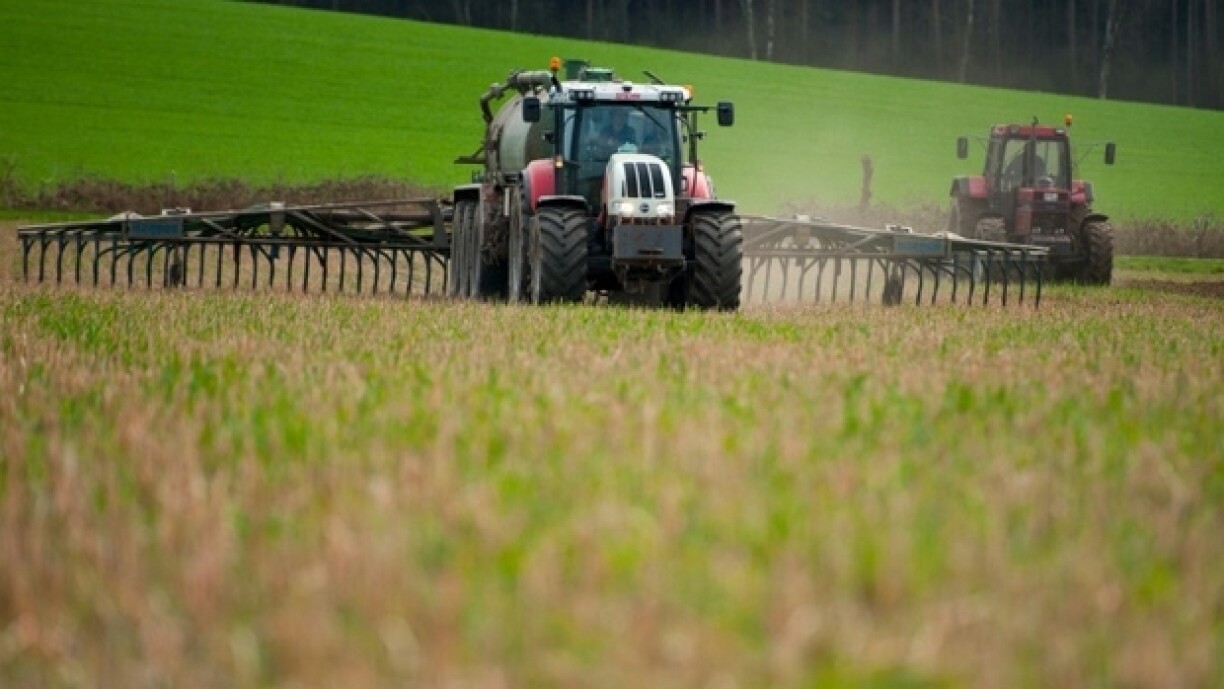
From Sunday onwards, EU agricultural ministers will assemble in Koblenz to discuss European subsidy policies. Since 2018, the EU commission has been working on reforming GAP ( "good agricultural practice", which sets certain standards for on-farm and post-production processes to guarantee the production of healthy and safe produce, both food and non-food).
The aim is to create better common agricultural policies that focus not only on climate and environmental protection but also highlight product quality. However, progress has been lackadaisical, with questions and negotiations around financing and distribution slowing down the process.
Now, the current GAP program is to be extended to 2023 to allow farmers to set themselves up accordingly.
With a budget of 58 billion Euro per year, agriculture is by far the EU's greatest expense. Farmers are to receive the most of it, depending on the size of their land, and so far subsidies are not tied to fulfilling certain conditions. This is likely to change once the EU's Green Deal comes into effect.
Since Germany currently has the EU presidency, the roughly 400 civil society-oriented organisations from 12 member states addressed German agricultural minister Julia Klöckner in an open letter to demand a radical reform of the status quo. Luxembourgish collective "Meng Landwirtschaft", which consists of 22 organisations, is amongst them.
Agricultural policy makes up one third of the EU budget, and according to Matthieu Wittmann of "Natur an Ëmwelt" ("nature and environment"), this is a time for radical change.
"It's not enough to treat the symptoms or to make a few slight adjustments. Fundamental change needs to happen to protect our natural environment and our ecosystems, and money needs to be distributed in a way that supports small and medium companies as much as the big ones."
He continues to say that it tends to be smaller businesses that struggle in terms of productivity, which is where intervention is necessary, and that it doesn't do to reduce a business to the size of it's land.
"Farmers should be supported in a way that benefits their environment and the local biodiversity; in a way that puts a stop to climate change. There needs to be more financial support to help farmers transition towards a sustainable production process."
Contemporary agricultural policies and the current rate of food production has already done a great amount of damage to our soil and biodiversity, and according to Mathieu Wittmann, the EU's budget should be used to restore and strengthen the earth.
"These are demands that we've had from the beginning: to create more space for nature to recover. And businesses should be rewarded for making this space. 10-14% of land should really be left to the insects and birds."
In tandem with the letter, demonstrations will be held in Koblenz on Sunday, with a number of German organisations, representing the 400-strong movement as a whole, scheduled to take to the streets.





