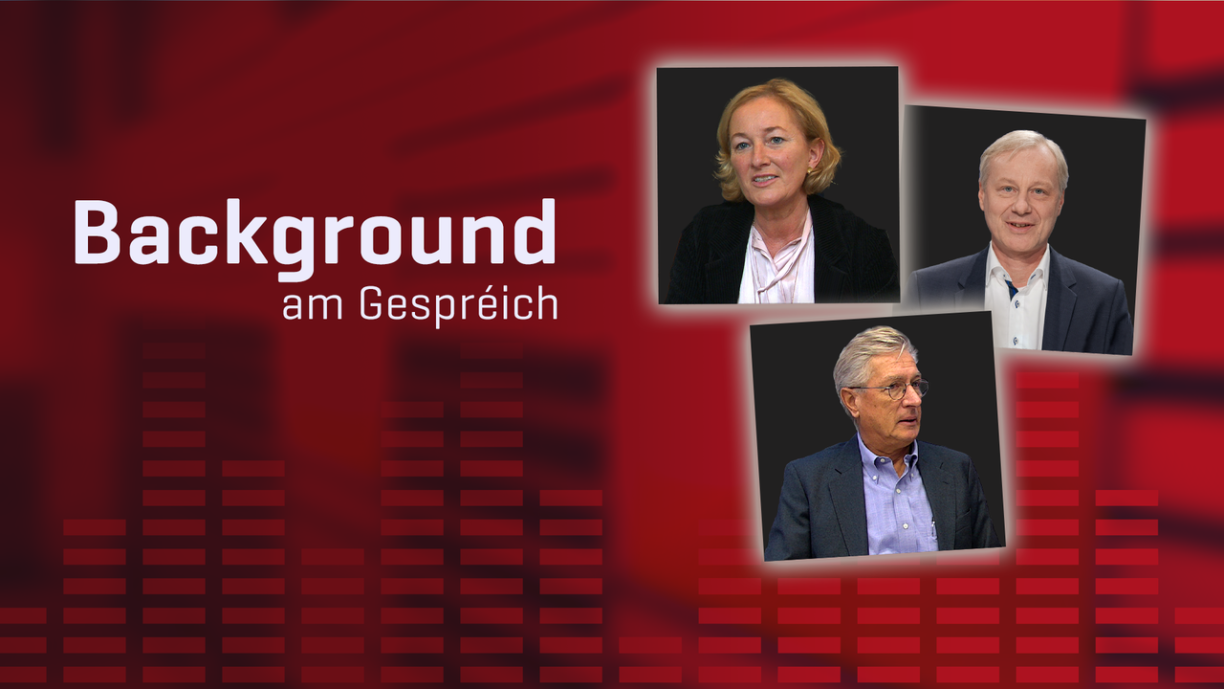
During the debate, it was announced that an agreement had been reached between the private medical centre in Potaschberg/Grevenmacher and the Centre Hospitalier de Luxembourg (CHL).
The centre, which also offers MRI scans, had opened its doors without a legal framework in place, which led to month-long discussions. Minister of Health Paulette Lenert stressed that it was necessary to create a legal framework for the pilot project and clarify the funding and quality assurance. For this reason, the Ministry wrote Draft Bill 8009 on outpatient care. While Dr Alain Schmit welcomed the announcement as "good news for patients," he argued that the convention should first be thoroughly reviewed. The AMMD is concerned that the new law will prohibit further private initiatives by doctors. In response, the Minister explicitly disputed this, emphasising that the Potaschberg medical centre will "certainly not be the last project of this kind." According to Lenert, many people are already interested in taking such initiatives.
The payment of the emergency service (on site) and the on-call duties of doctors have also been a point of contention in the last few weeks. There, too, an agreement was eventually reached. However, the Minister regrets that this agreement was reached between the hospital federation and the ministry, while the AMMD chose not to support it.
The president of the hospital federation, Dr Philippe Turk, welcomes the fact that doctors who provide emergency services and on-call duties in Luxembourg's hospitals will be paid for their services, and this retroactively to 1 June.
It is one thing not to agree on a rate but hearing that one would now be excluded is "outrageous," according to the president of the AMMD. "An entire profession is being excluded," Dr Schmit lamented. The Minister of Health responded that negotiations "could not have dragged on forever," noting that they had been ongoing since the summer of 20/21. The government presented a budget, and the AMMD informed the ministry in writing on the day of the quadripartite that they would not accept the proposed rates. As minister, "it was time to act," according to Lenert.
Meanwhile, Dr Turk pointed out that the medical councils from the country's hospitals, and thus the doctors, were involved in the negotiations. As such, Dr Turk believes that it is wrong to claim that an entire profession was excluded.
Staff shortages have long been a problem throughout the health sector. But Lenert admitted that the ministry does not have concrete figures on the issue.
Many doctors are on their last legs, according to Dr Schmit. The President of the AMMD explained that patients are becoming increasingly aggressive, because doctors have too little time for them, and they have to wait a long time for their appointments.
Dr Turk also acknowledged that there is a chronic shortage of doctors throughout Europe. However, he argued that there is no need to panic because urgent MRIs and procedures are still being performed. An important aspect of this issue, according to Dr Turk, is how appealing it is for younger generations to work as medical professionals and in hospitals
Access to care, especially at GPs, should be guaranteed.
In this sense, the AMMD proposes that doctors should have the option to build new structures outside of hospitals, such as the one in Potaschberg. But these initiatives have to come from the doctors themselves rather than being "dictated from the top down by the state or by a minister." Lenert argued that this is precisely why the ministry wrote Draft Bill 8009 on outpatient care. She pointed out that the pilot project in Potaschberg was also started by private doctors. Other initiatives may now arise in collaboration with hospitals and in accordance with the law, the Minister explained. However, she regrets that the AMMD was "no longer willing to cooperate."
The AMMD complains that everything is wrong, and everything is a disaster, but during the discussions in the context of the health roundtable (Gesondheetsdësch), the association submitted hardly any proposals of its own, Dr Turk said. The hospital federation's president argued that certain medical specialties would have to remain in hospitals in order to assemble a team capable of acquiring the essential specialised knowledge. "Hospitals must not be weakened," Dr Turk stressed. The AMMD naturally rejects the criticism, and Dr Schmit claimed that the association "wanted to cooperate" and did make concrete proposals.





