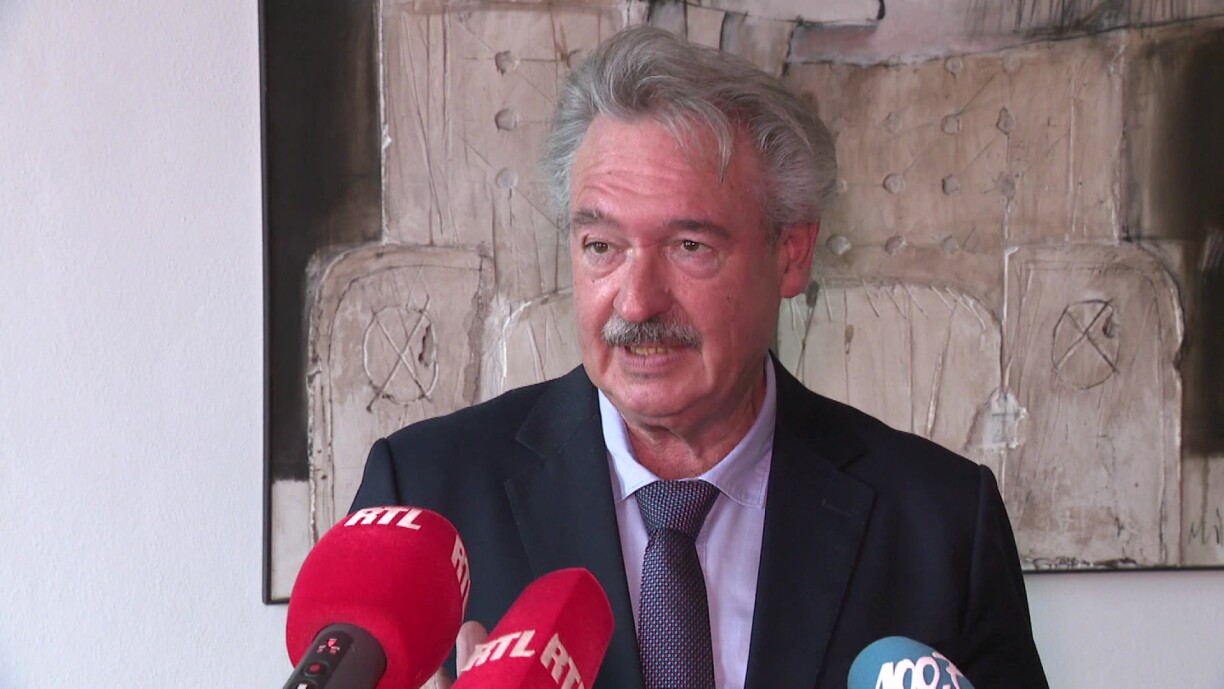
Asselborn stressed that if there is still something as "common sense and rational thinking", it should still be possible to come to an agreement.
The trade agreement worth billions between the EU and the UK is seemingly in danger of falling apart due to a comparatively minor area of commerce. According to Claude Wiseler, MP from the Christian Social People's Party (CSV) and vice-president of the Parliamentary Commission on Foreign Affairs, the fishing industry remains the main sticking point.
Wiseler explained that both the EU and the UK are unwilling to yield any ground at all on this issue. The CSV MP stated that while he understands that this issue is of great importance to those involved, he personally still feels that the fishing industry is one of many issues. Considering the importance of the agreement, Wiseler hopes that the problem can still be resolved.
Asselborn explained the numbers behind the issue: The EU catches fish worth €650 million per year in British waters, while the UK catches fish worth €150 million in EU waters. A clear difference, Asselborn pointed out, and for that reason the EU proposed to reduce their fishing activities by 20%. The UK, on the other hand, insists on a 60% decrease.
However, there is more to it than just numbers, the Minister explained. €650 million might sound like a significant amount at first, but the entire agreement's value of hundreds of billions of euros dwarfs this sum by comparison. Asselborn stated that for this reason, he believes that the issue is more of an emotional one and he hopes that the EU does not intend to die on that hill.
Another big problem is the question of whether it is even technically still possible for the European Parliament to pass the agreement. Wiseler admitted that this will be a "big problem" and a number of deadlines have already run out. The MP explained that the European Parliament initially set a deadline for 20 December, not simply for the sake of setting a deadline, but because the European Parliament has to adhere to a strict internal procedure to pass the agreement. Initially, the plan was to vote on the agreement on 28 December. However, Wiseler continued, everything has now become increasingly complicated and he hopes that a solution can still be found.
Asselborn made it clear that he still believes that both sides can come to an agreement. He stated that in his eyes, it was part of the UK's strategy to ignore the 20 December deadline. The Minister also pointed out that both the European Parliament's President for Foreign Affairs, David McAllister, and the EU's chief negotiator Michel Barnier stressed that negotiations will continue. The UK has also hinted that the negotiations could continue even after Christmas and has not completely ruled out the possibility of an agreement.
Asselborn concluded by stating that there are also options that would allow the agreement to come into force temporarily even without the ratification of the European Parliament, which could then take place at a later date. However, Asselborn stressed that he hopes that it will not come to that.





