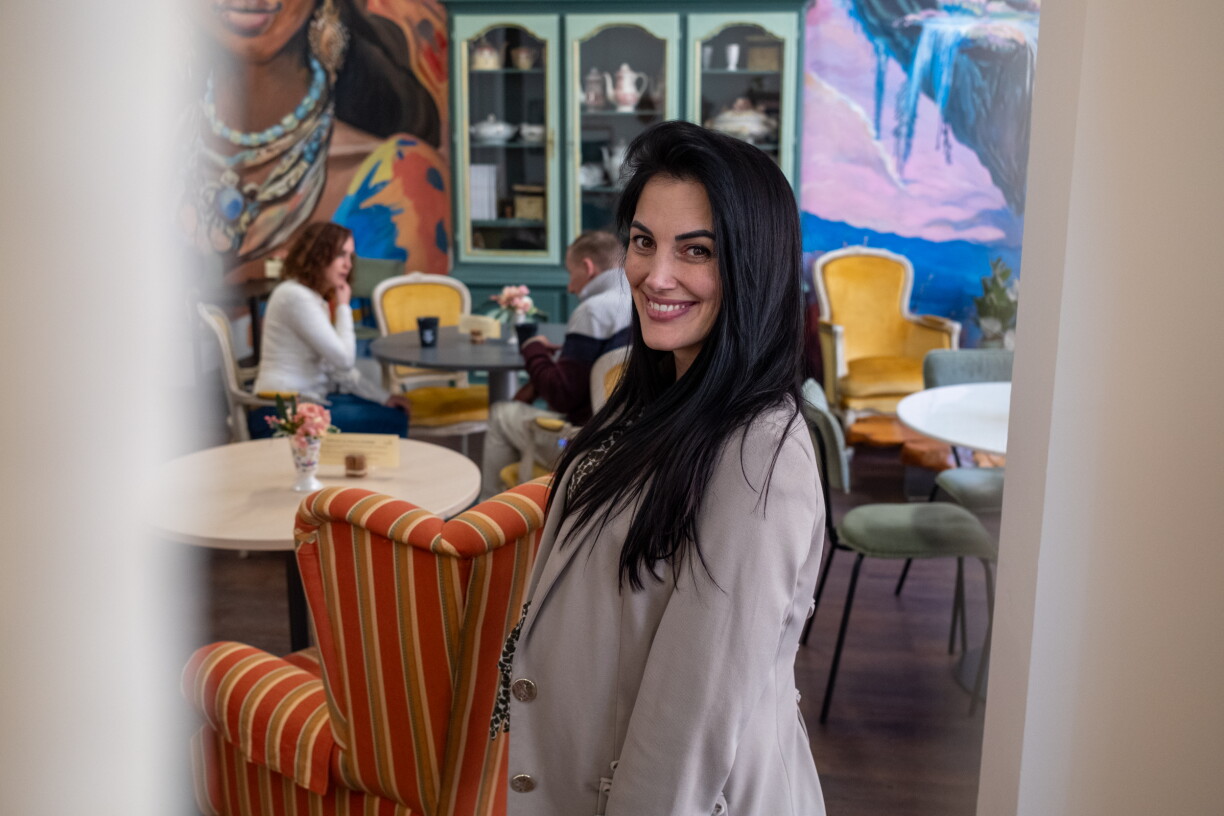
Recently, RTL journalist Christophe Hochard visited the "Maison Sourrire" on Esch's Rue de l'Alzette, where Laurini greeted him with a smile, as befitting the charity's name.
In 2019, Laurini founded the charity, which offers a starting point for people in need. In February 2026, the charity launched its first shelter in Esch-sur-Alzette. "In this house, we offer socio-professional integration for people suffering from trauma," she explained.
Now 38, Laurini grew up just over the border in Volmerange-les-Mines. She studied psychology and psychotherapy at the University of Metz, choosing her career for very personal reasons. When Laurini was 3 years old, her mother became severely ill, suffering from psychosis and manic depression. At the time, the support available was nothing like the services on offer today, and treatment was lacking. "Having a mother with neuropsychiatric troubles can leave a person feeling extremely alone," she admitted. "But I always told myself, when I grow up I will change this."
Nowadays Laurini offers support to children, but also to teenagers and adults. Her first employer was the Luxembourg Red Cross, where she worked across multiple services.


The Maison Sourrire aims to help people find work, among other things. "Our project is split into five different services. We have the hospitality sector, the cleaning service, administrative services, workshops, and logistics. Using these services, we can help people to integrate if they do not speak the language, if they have children with special needs, if they struggle with anxiety, or former addicts who have regained some stability. In order to maintain stability, they need regular work."
Laurini's current project is supported by the Ministry of Family and the European Social Fund.
Many values have been lost in our society, such as respect or time. "Most people sit behind their screens or have their noses in their phones. Talking to each other on the street is almost impossible. Asking for information is impossible. People are in a rush. Here we take our time. I talk to people all the time. From early morning until late at night I do a form of therapy. We accompany people in their everyday lives."
Marie and her team have also been able to help people find new jobs. "One person, we helped him do a logistics course, and now he has a job as a delivery driver. We try to work with businesses so we provide the right training."
In Dudelange, the "Sourrire" project was launched a few years ago, running for two years in total. "This was a house where we accompanied people throughout the day and offered multiple activities." Now, the team is established in Esch-sur-Alzette.
"Maison Sourrire“ is the name of Laurini's project - "sourire", smile in French, but with an extra R. "This represents support for residents and refugees, with integration and self-respect." These are important values for Laurini.
"If someone is not integrated, they won't feel at home. If they are not respected, they will struggle, and if they can't assign value to themselves, they cannot progress in life."
Laurini herself is married and has five daughters between the ages of five months and nine years. Helping people in need, suffering from trauma, lending them an ear, is important for the psychotherapist. She tries to take everyone seriously and help them to get to a better place.
Around 100 people regularly attend the "Maison Sourrire", whether to talk, to socialise, or to get help with their CV.
"I wanted to give people the opportunity to participate in activities even if they lack the financial resources. These are activities they might miss out on otherwise."
The refuge is staffed by people responsible for the workshops, who may have experienced trauma in their own lives.
"When I proposed the project to the Ministry, I told them I wanted to employ people who we helped in Dudelange. People who have been through difficulty and come out the other side, they've learned French, Luxembourgish, and now they can help others in the same position."
"I am so happy," Laurini confided at the end of the interview. This is clear from speaking with her, as she is deeply enthusiastic about helping others.





