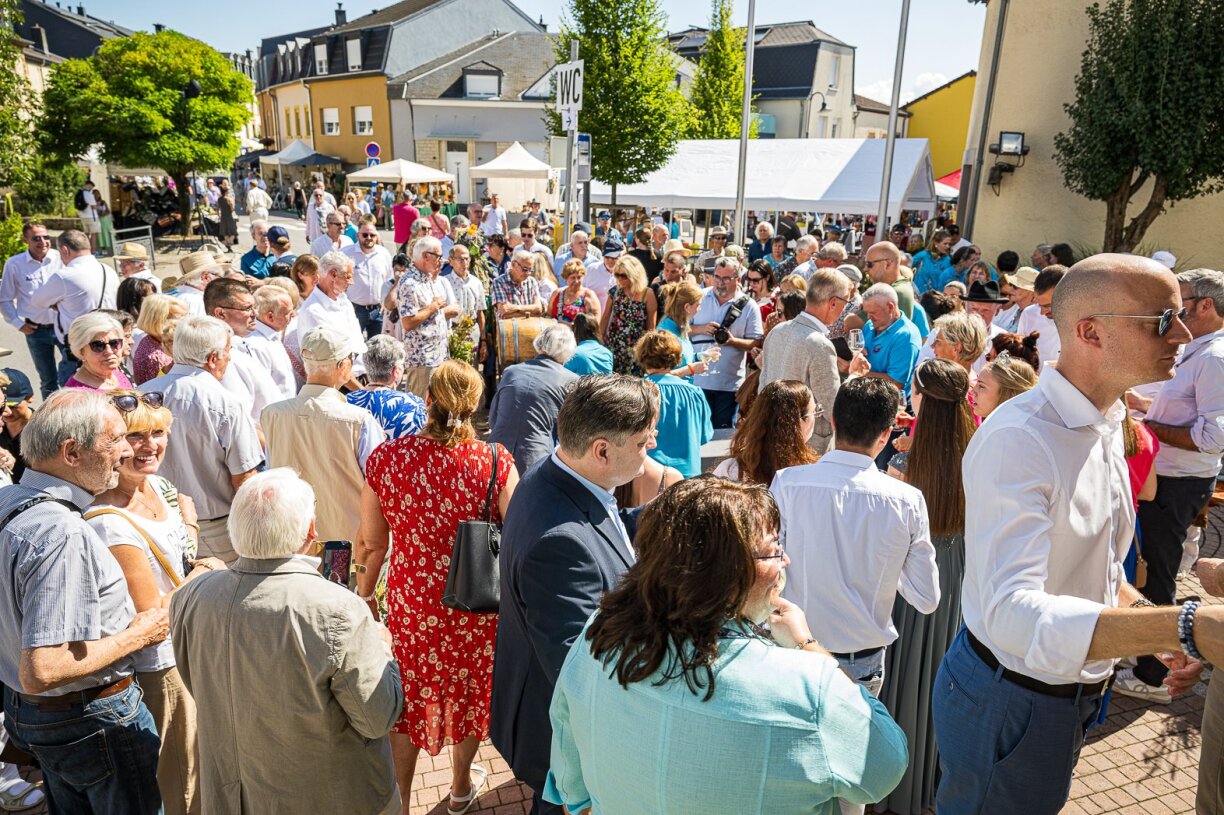
The festival harks back to an old tradition from the 17th century, when villagers assemble bouquets of flowers and herbs in order to honour the dead. The bouquets, now used to decorate the village, were also placed in farmers' stables in olden times to protect livestock from illness.
In 1985, the village reintroduced the traditional festival. A bouquet is made up of around 30 herbs, with other components such as wheat, root vegetables, or even onions. This year, however, the drought made it difficult to find sufficient plants to create the bouquets, as many had already wilted.
Usually, bouquets made for Léiffrawëschdag are taken to the church to be blessed, and afterwards everyone can take a bouquet home with them. The majority of people hang them up at home and leave them there for the whole year. Any proceeds from the bouquets are donated to a good cause. In 2020 the festival was named part of Luxembourg's intangible cultural heritage.