Cimalux in Esch-sur-Alzette is the only cement manufacturer in Luxembourg. Since the process requires a significant amount of energy and is currently as expensive as it has ever been, the company has decided to raise the price of a tonne of cement from roughly €95 to around €150. According to the Cimalux management, this unprecedented price hike was unavoidable.
Cimalux Director Christian Weiler explains that the company must now purchase some of its coal from Colombia or South Africa because it can no longer import it from Russia. Compared to Russian coal, these new imports are "four times more expensive."
In addition, electricity prices at the company's Rumelange factory were five times higher. "This has, of course, a huge impact on our bottom line," Weiler says, adding that in 2022 the company will "record the worst result in over 100 years."
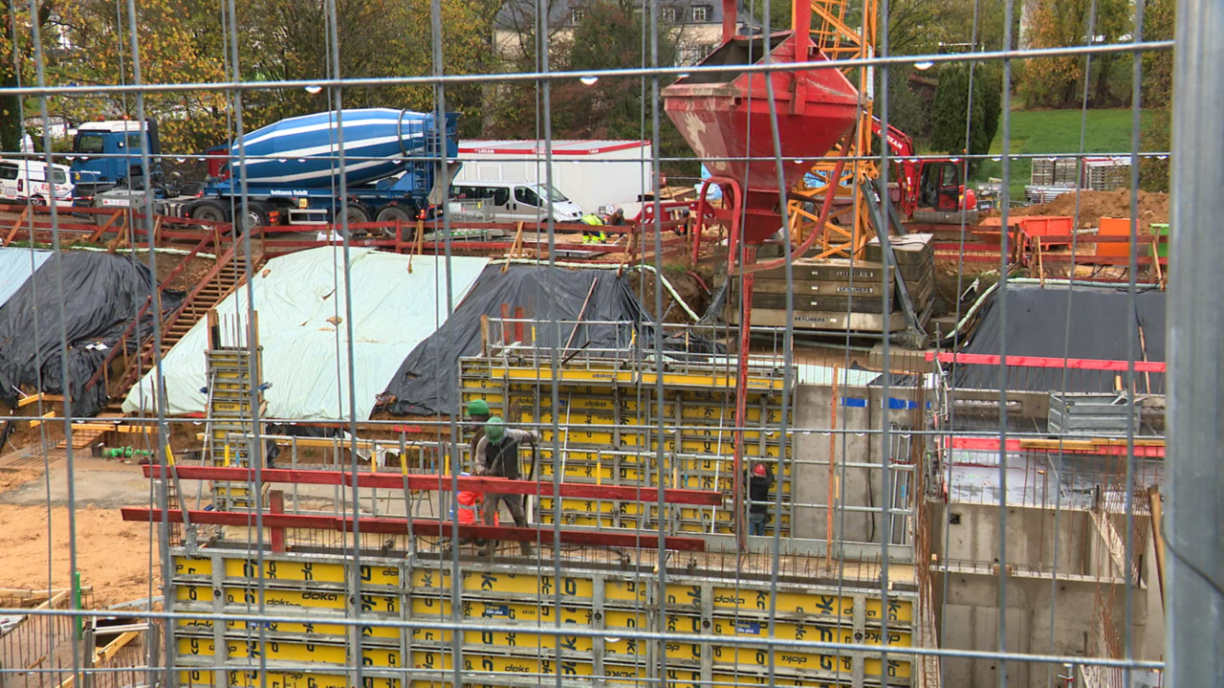
The concrete industry is hit hardest by the rising cement prices. The sector generally passes on the entire price difference, raising the price of a cubic metre of concrete from €110 to €150. The €40 increase could also be attributable to the high price of other raw materials, such as sand. According to the CEO of Bétons Feidt, Ferd Feidt, a French coal-fired power plant did not exactly "play by the rules" in this regard.
"They went and 'seized' the ships on the Rhine and the Moselle, so to speak, by offering a price that was four times higher than normal," Feidt recounts. They were able to do so because electricity prices are usually set on the basis of the gas-electricity pricing, for which they had "much larger reserves." This increased the cost for companies in Luxembourg, "because we have to pay four times more for that sand, which we get from the Rhine."
As concrete is needed in construction, the prices of new houses will also increase. However, Roland Kuhn, the managing director of Kuhn Construction, assures prospective buyers that, especially in the case of single-family homes, the increased concrete prices will not make a significant difference.
According to Kuhn, the difference may be negligible because an average house contains about 60 cubic metres of concrete. If the price of concrete rises by €50, the total cost of concrete will rise to €3,000.
While Kuhn acknowledges that this is "still a lot of money," he points out that "everything that the contractor or the mason does is still much cheaper compared to all of the other sectors that are involved."
On the other hand, Kuhn thinks that the price hike could cause more issues when it comes to larger structures, such as bridges, treatment plants, or wind turbine bases. According to Kuhn, contractors will want to use concrete more sparingly on these types of construction projects.
While it "makes sense" to look for alternatives, the head of Kuhn Construction thinks that the industry will never be able to go without concrete entirely.
The full report by RTL Télé (in Luxembourgish):