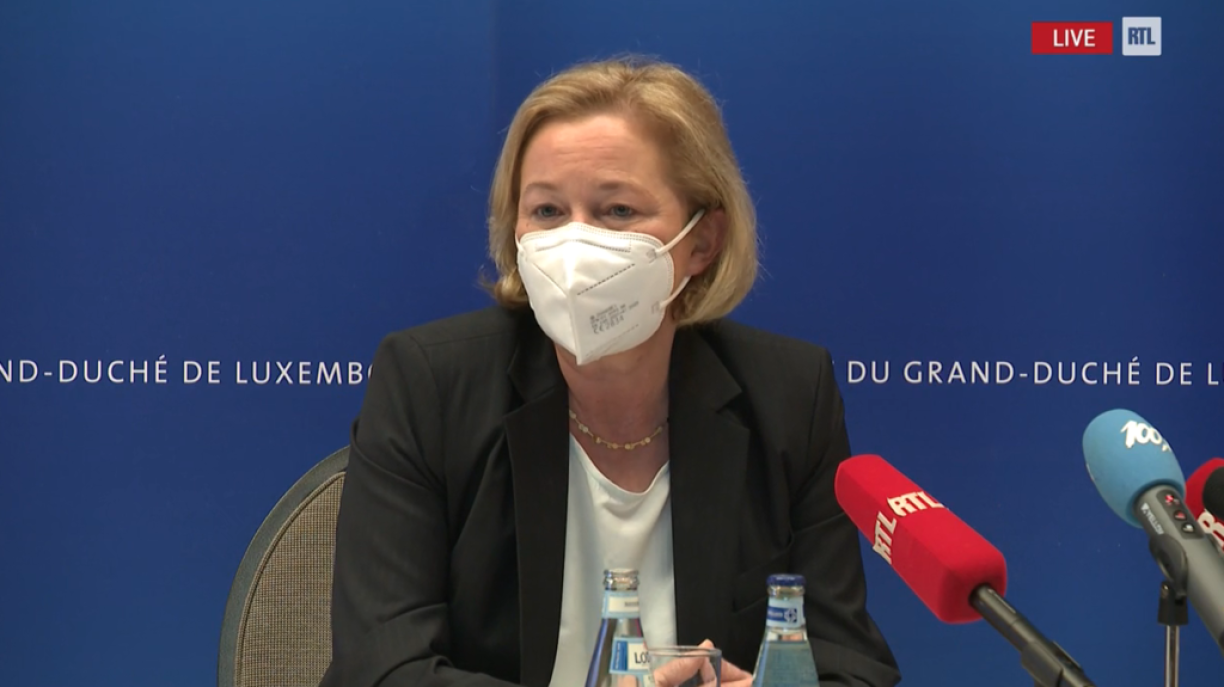
The average age of the victims was 85, following a series of virus clusters identified in some care structures.
Lenert provided these details as part of a more general update on the situation in the Grand Duchy, where the number of infections has dropped slightly after a peak in late February.
The second phase of the Large-Scale Testing (LST) scheme, which began in September, is set to end this month. A preliminary analysis of its findings revealed a virus prevalence of 0.9, meaning 1% of people tested as part of the scheme yielded a positive result. This enabled the health authorities to break a number of infection chains.
2.9% of people who participated in the scheme because they were travelling or returning from abroad tested positive for the virus, depicting a higher prevalence among those wishing to go on holiday.
The scheme has enabled a strategy which can target areas for testing, as well as gaining a thorough overview of the virus and its expansion across the country. Lenert in particular praised the mobile testing teams, deployed as a result of the large-scale testing. 2.15% of tests conducted by mobile teams were positive, depicting a larger prevalence in these more targeted sectors than across the general population.
Blood analysis, or serology, has also played a crucial role in the LST, particularly in terms of antibody research. An increase of 6% was noted in the prevalence of antibodies from November to March.
Health officials want to continue building on the use of mobile testing units. Furthermore, people that have already been vaccinated will receive invitations to the LST in the future, so that it can be monitored whether or not they still tend to carry the virus. Contact tracing will also remain an essential aspect of the process.
Although rapid tests will take on a bigger role in the strategy, authorities will continue to prioritise PCR tests, as they are deemed to be superior and irreplaceable. Minister Lenert further conveyed that from the different models of rapid tests, they were most convinced by the nasal swabs that only need to take a sample from the front area of the nose. The selection process was conducted in cooperation with the National Health Laboratory (LNS).
The rapid tests are set to be introduced across Luxembourgish schools before the Easter holidays. Due to their efficacy in identifying significant viral loads, the tests are especially adequate for locations where large groups of people come together. Moreover, pharmacies have offered to aid in the provision of tests, which will eventually also be given to businesses.
Prof Dr Paul Wilmes emphasised that the LST is a critical tool for the effective monitoring of coronavirus infections. The spokesperson for the Covid-19 task force referred to the spike in new infections over summer last year to show how critical the testing strategy can be in identifying clusters as early as possible.
Due to the nature of work, some professions received more invitations to the LST than others, including health care workers, construction workers, or hairdressers. Similarly, people living in areas with a higher coronavirus prevalence also received more invitations.
The LST further allowed to detect asymptomatic people early on and isolate them efficiently. In that regard, Prof Dr Wilmes highlighted that without the strategy, infection numbers would have been 43% higher.
When it comes to the threshold of 50 new infections per 100,000 inhabitants per week, which is often promoted abroad, Luxembourgish health officials believe this rate to be lacking empirical evidence. Considering the national testing strategy, it is believed that 150 new infections per 100,000 inhabitants per week is a more realistic target.
The hotline used to book vaccine appointments is currently down after not being able to withstand the pressure of 22,000 calls per day. The reason for the fiasco is that vaccination invitations are currently sent out to people who may not have the technical ability to book appointments online, and prefer to call instead. Officials are already working on a solution to bring the hotline back online.