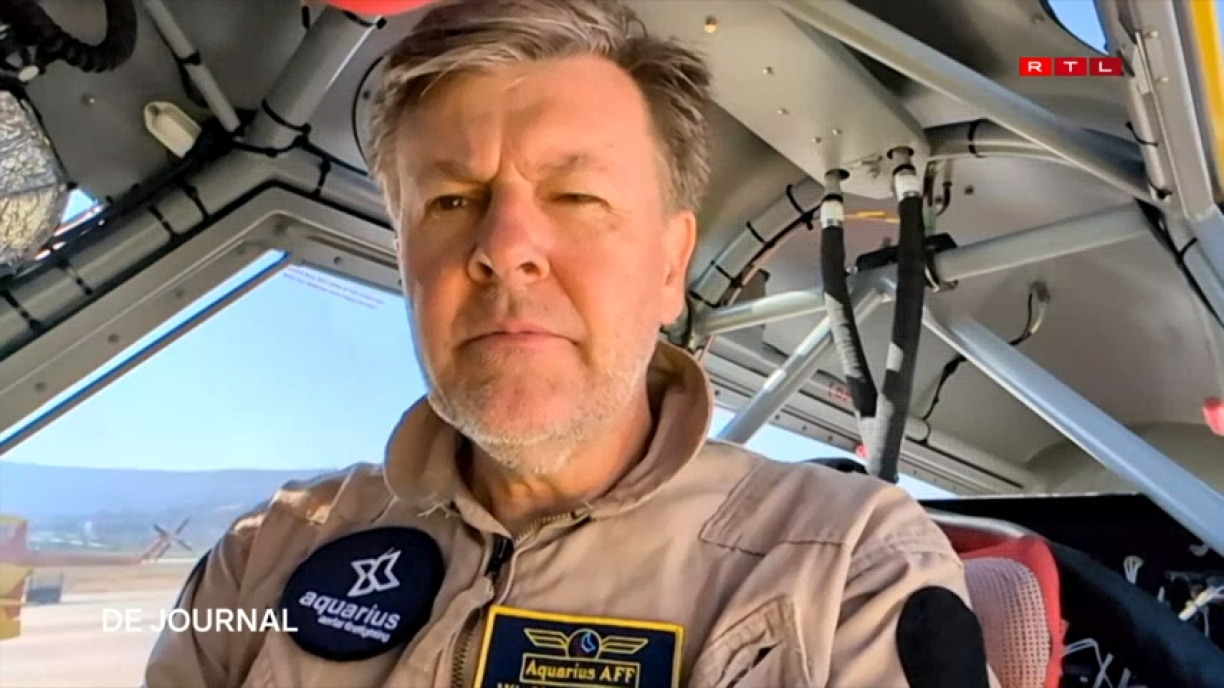
The firefighting operations in the Gironde region saw Aquarius Aerial Firefighting, a subsidiary of Cargolux, in action with three firefighting aircraft over six days. Among them was one aircraft from Luxembourg and two from Turkey. The company's managing director, Wieger Ketellapper, who also participated as a pilot, has since returned to Turkey. In total, four pilots flew two to three missions daily. Each mission lasted approximately three hours, with mandatory breaks in between, followed by a debrief at the end of the day.
According to Ketellapper, the deployment demonstrated the critical need to use amphibious aircraft, capable of operating on both land and water, from the outset. He emphasised the importance of strategically distributing these aircraft across the country to ensure immediate response when fires break out.
Firefighting efforts are fraught with risks, as highlighted by a deadly collision between two helicopters during fire operations in Greece. Pilots are extremely busy amidst smoke, fire, mountains, and lakes. Communication is highly dynamic, as Ketellapper recounted from his personal experience. The possibility of missing a fellow pilot in another aircraft is a reality, making it crucial to take every possible measure to prevent such incidents.
The Luxembourg-based company employs a state-of-the-art collision warning system called PowerFLARM in its firefighting aircraft. These devices have been integrated from the outset into the aircraft and are capable of detecting all signals in the airspace, including those from older transponders. However, complete reliance on these systems is not advisable, as there is no such thing as zero risk.
Currently, the Cargolux subsidiary, specialising in firefighting, operates 10 firefighting aircraft. One is stationed in the Grand Duchy, while nine are based in Turkey. Plans to acquire additional firefighting aircraft are already underway.





