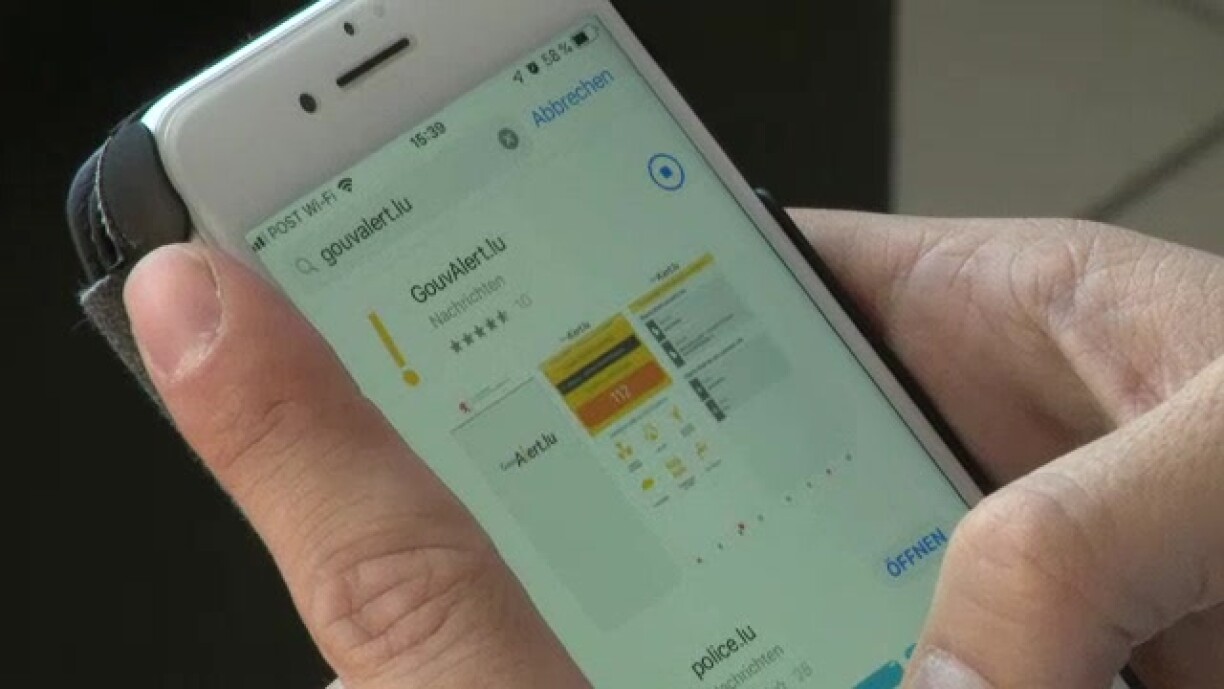
During the floods of 15 July, the app sadly failed to do its job. When it finally alerted users, in almost all cases it was already too late.
The pings came a full 7 to 8 hours after Meteolux had declared an emergency. At this point, many basements were already flooded and the danger to residents was imminent. A number of users received no alert at all.
Paul Schroeder, director general of the CGDIS, said during the press conference the day after the floods that it looked like the warnings via GouvAlert had gone out late. The cause for this would have to be investigated. He stressed that the relevant information had already gone out via other channels at this point.
On Tuesday morning, Deputy Prime Minister Dan Kersch, who had introduced the app in October 2018 as Minister of the Interior, named another cause. There had been a technical problem and allegedly, some licences had not been paid, according to what he was told
Since its introduction, the app has issued 7 warnings for fire, which are categorised as local incidents. There have been two events on a national scale: a storm warning last year, and the recent, delayed flood warning.
The app has the potential to reach the country's entire population, but so far only 23,000 people have installed it on their smartphone. That's why it is currently being worked on, says LSAP Minister for the Interior Taina Bofferding. There is a drive to get more people to install the app so the government's messages can be distributed more efficiently.
Internet sites, social and traditional media remain important channels to inform pepole alongside the app. Currently, only the High Commissioner for National Protection and the CGDIS can actually send out an alert through the app. But this will be expanded to further actors such as Meteolux, Police or the Water Administration.
A Cell Broadcast system is also in the works, according to the Minister for the Interior. This will allow them to send a text message out to all mobile users within a certain area. It is the easiest way to alert every mobile user in case of a national emergency.
The development of this system was already announced when the app was introduced three years ago. The three mobile providers had signed a contract with the government to allow for this.
GouvAlert was meant to work more locally, Dan Kersch said at the time. Users of the app could receive push notifications relating to a single street, for instance.
The development of the app cost 130,000 Euro excl. VAT. It also allows users to call emergency services and immediately be geolocated.





