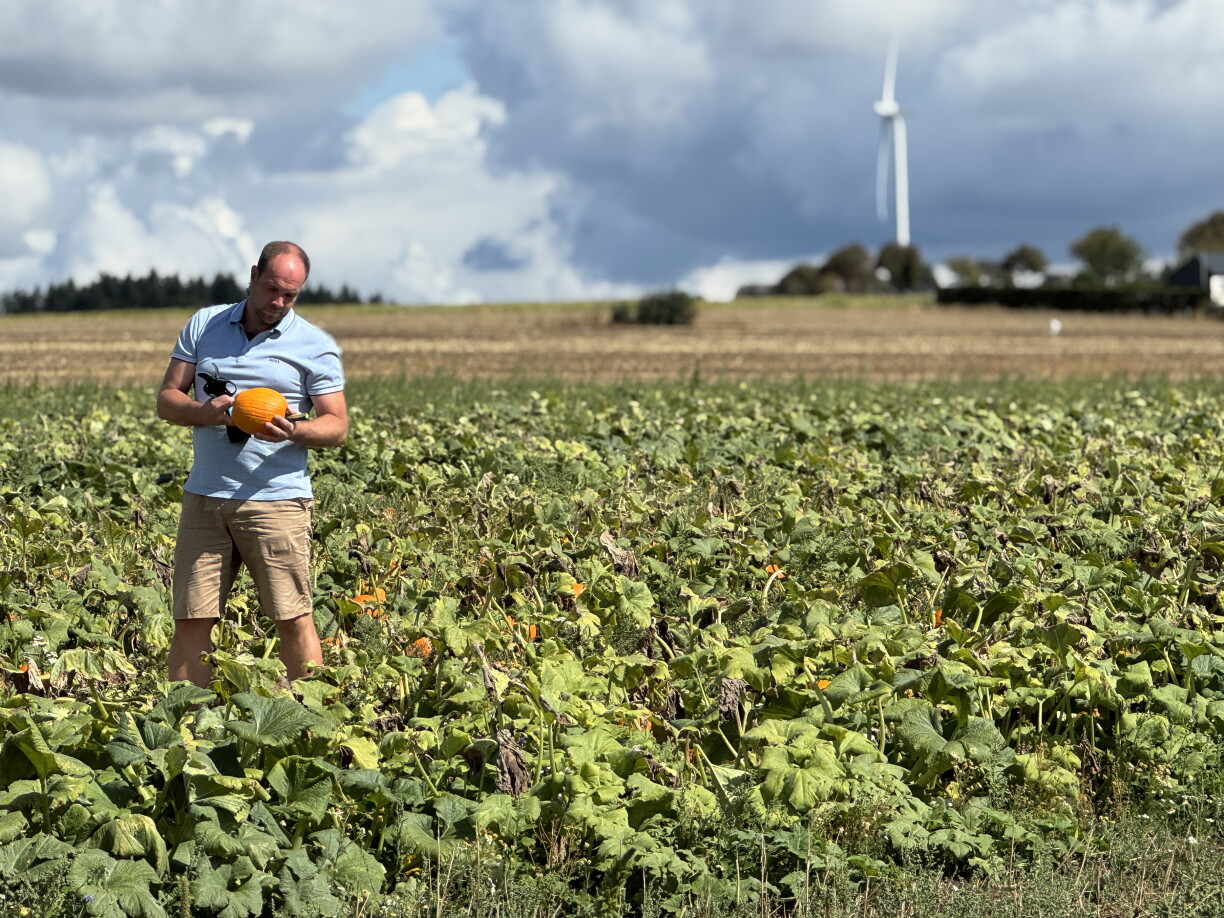
On many fields, the maize has already been harvested. Elsewhere it is still standing, but in some cases has failed to reach even two metres in height. For many farmers, this year's maize harvest is shaping up to be a poor one.
Christian Hahn, president of Luxembourg's Chamber of Agriculture, demonstrated the problem in one of his maize fields in Rood, holding up a particularly small cob.
"This cob is between 10 and 15cm long and perhaps has 40 or 50 kernels", he explained. A normal cob would contain around 400 to 500 kernels and be roughly twice the size, according to Hahn.
The extent of the damage varies considerably depending on location and how much rain individual fields received. Hahn estimates that yields could be down by more than 60% on some fields.
A smaller maize harvest also means farmers risk running short of feed for their livestock over the winter.
To compensate, some are now trying to sow additional grass mixtures, hoping the recent rain will allow them to bring in another cut of hay. Even then, Hahn expects a substantial shortfall.
"It looks as though we will still be missing a considerable amount", he said.
The effects may already be showing elsewhere in the agricultural sector. Hahn said meat prices are coming under pressure as more animals are being slaughtered than would normally be the case at this time of year.
The drought has not only hit maize. Fruit and vegetable grower Jean-Claude Muller has also had to contend with smaller harvests so far this year.
Muller, president of the Luxembourg Fruit Growers' Association, dug up several potatoes from one of his fields to illustrate the problem.
"The plants produced plenty of potatoes, but then there wasn't enough water for them to grow properly", he said. Some are now too small to be sold, according to Muller.
At first glance, his lettuce field appears healthy, but Muller said appearances are deceptive.
"The lettuce harvest has been very difficult this year. There were repeated periods when we simply couldn't harvest any", he said.
At times, the lettuce grew too quickly and bolted; at others, growth slowed too much, according to Muller. Temperatures above 35°C place the plants under considerable stress and can cause them to stop growing altogether, while irrigation can only compensate to a limited extent, he said.
Muller expects his lettuce harvest to be down by around 40% to 50% this year.
Kohlrabi has also suffered from the heat, while insect damage has created an additional problem. Many leaves are covered in holes after pests fed on the plants and weakened them.
Even most fruit varieties struggled with the extreme temperatures of recent weeks, Muller said, pointing to his strawberry plants.
This year's strawberries have already been harvested, but the plants themselves suffered badly from the heat, according to Muller. He is now concerned that heat and drought damage could also affect next year's crop.
Muller hopes, however, that the recent rain could still benefit certain autumn and winter crops, including cabbage and celery.
And for some vegetables, including potatoes and pumpkins, lower yields may at least be partly offset by better quality. That may do little to improve farmers' finances, but could mean better flavour for consumers.