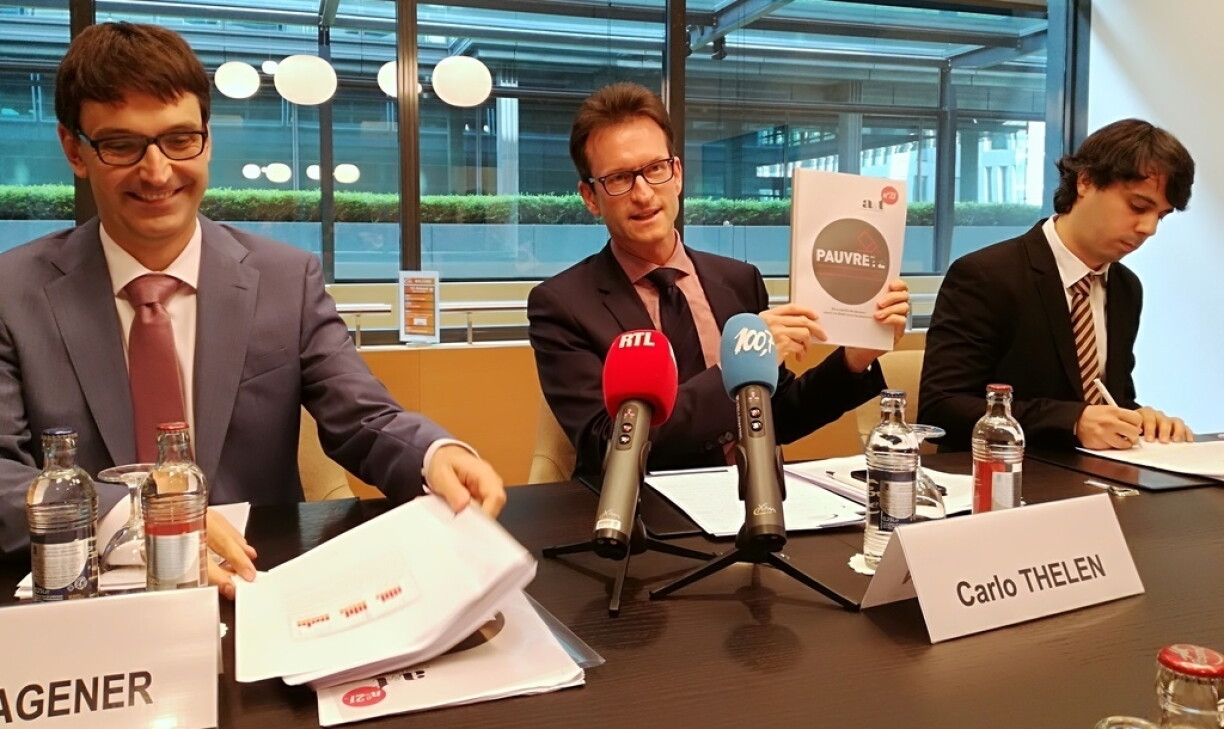
The recent report by the Chamber of Commerce uses a number of different indicators put into place to examine poverty, the risk of poverty, and the development of poverty in Luxembourg.
The chamber's study has shown that five groups in specific are most affected by poverty in the Grand Duchy. The first of those five groups consists of children originating from households without access to certain education standards and having foreign origins (1). The second group is composed of adults in single-parent households or families with a larger number of children (2). Further groups with a higher risk of poverty include the demographic of young adults not in employment (3) and older workers made redundant (4). The final group concerns entrepreneurs who have recently founded new businesses (5).
Between 2014 and 2017, 28% of the country's residents were exposed to a risk of poverty. Of those, 10% were unable to get out from the risk within four years. According to the Chamber of Commerce's study, key factors contributing to the issue are housing, gaps within the education system, modest incomes, and employments.
The analysis by the Chamber of Commerce claims that simply increasing real income (by which the report does not mean salaries) will not resolve the issue. Instead, a more targeted approach is required: rather than globally raising incomes, the report argues that the poorest in society should selectively be given help.
Specifically regarding housing, a third of the poorest households pay more than 40% of their income towards housing, which are predominantly rental costs. This led to the Chamber's provocative question: "Renting because of poverty, but poorer because of renting?"
At the end of the report, the Chamber of Commerce recommended the creation of a quadripartite committee, which would not only be there to fix the objectives of fighting poverty, but would also stand as a platform to measure indicators including the development of poverty in Luxembourg. The Chamber of Commerce also called for politicians to see a paradigm shift in trying to affront the challenge of poverty. In the report's recommendations, the chamber wrote that politicians must set defined goals and work specifically towards those goals.





