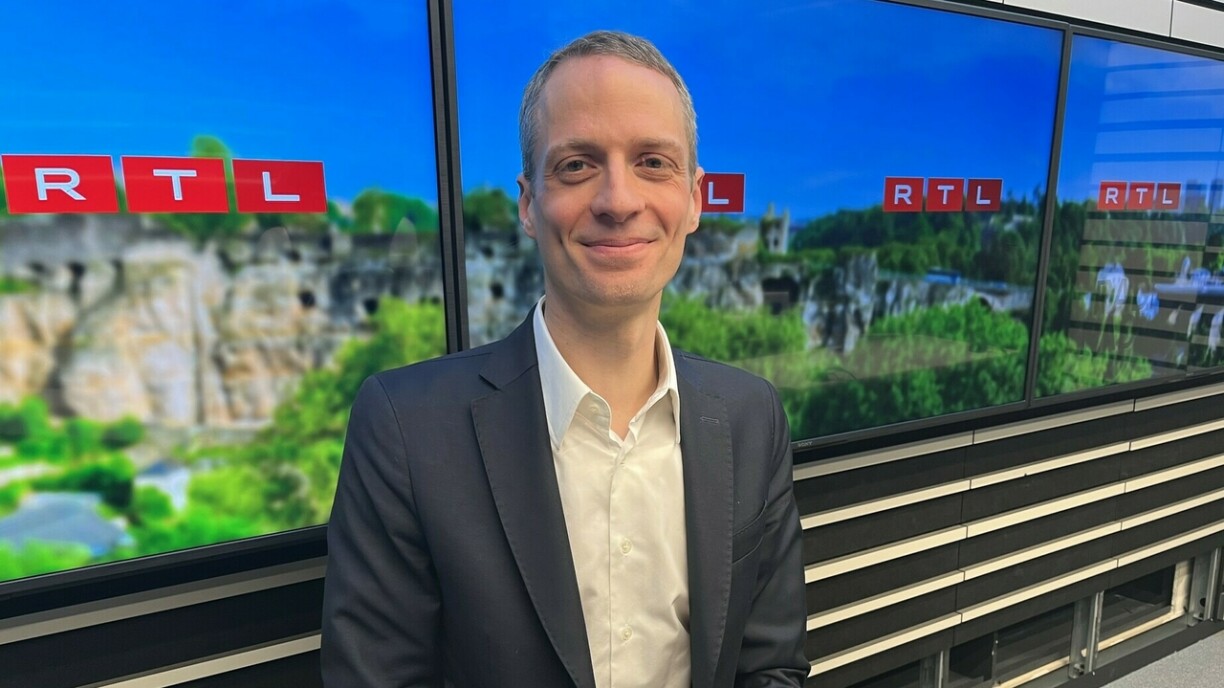
On Tuesday morning, Minister of the Environment Serge Wilmes discussed the government's environmental policies in an interview with our colleagues from RTL Radio.
Responding to criticism by the Ecological Movement that the government is dismantling environmental protections to create housing, Minister Wilmes noted that changes to the environmental protection law will not solve the housing crisis, adding that it is "one aspect among many." Wilmes clarified that environmental protection did not prevent the construction of housing in the past, and "environmental protection is, of course, not to blame for the housing crisis." According to the minister, "a variety of measures" are needed to adequately address the issues in the housing sector.
If a property is within the construction perimeter, the municipality or the owner often regards the nature that grows on it as a restriction, according to Wilmes. The minister attributes this to the fact that in order to build, property owners must first have the value of the land assessed. This process involves paying eco-points and compensating for the loss of nature by acquiring land elsewhere. This process has to be completed before the natural environment on the building site can be removed in order to build. Because this is seen as a restriction, many people simply have their property mowed regularly so that nothing can grow on it, according to Minister Wilmes.
For this reason, the government introduced the "Timed Nature" model, Wilmes said. This means that no individual compensation is required in areas where nature develops over the course of several years. In the future, the general public, the state, and the municipalities will have to ensure that there are enough green spaces in municipal areas.
Criticism has also been levelled at the fact that the Timed Nature principle is to apply retroactively for up to 15 years. Minister Wilmes defended the concept and explained that the government has merely decided to consider the entire territory of a municipality instead of focusing on a single plot of land. Wilmes emphasised that taking a holistic view is important for strengthening biodiversity and pointed out that in the future, municipalities will have to allocate 10% of large construction projects to green spaces.
The government has also introduced new regulations pertaining to forest cover. Moving forward, a municipality must have a minimum of 20% "wooded structures" of at least 1.5 metres in height. The Ecological Movement criticised the fact that the government did not define the term "wooded structure," arguing that an old oak, for instance, would be more suitable than an exotic ornamental shrub.
Minister Wilmes assured that there is in fact a list, but explained that it will be published at a later date through a grand-ducal regulation. Wilmes confirmed that priority will be given to native trees.
Another concern raised by the Ecological Movement is that the threshold of 20% is too low. The environmental organisation pointed out that many municipalities already have forest covers of around 40%, meaning that there is no incentive for them to improve. In response, Wilmes noted that the European legislation requires a forest cover of 10%, which, in his view, makes the government's target of 20% "significantly more ambitious."
The minister acknowledged that 32 municipalities already have forest covers between 20 and 30%, while 38 municipalities are between 15 and 20%. Wilmes also revealed that, in fact, the government is aiming for 30% forest cover. In order to achieve this goal, municipalities that go on to expand their cover to 25 or even 30% will be able to benefit from additional relief measures, according to Wilmes.
COP29 kicked off in Baku, Azerbaijan, on Monday. Minister Wilmes commented that the fact that Donald Trump, a notorious climate sceptic, will be the next US president and may withdraw from the Paris Agreement for a second time is "regrettable" in terms of environmental protection. He stressed that US involvement is "crucial" for ambitious global nature and climate protection agreements. However, the minister added that environmental protection in the US will continue to be pursued by committed states and businesses, "even under a President Donald Trump."





