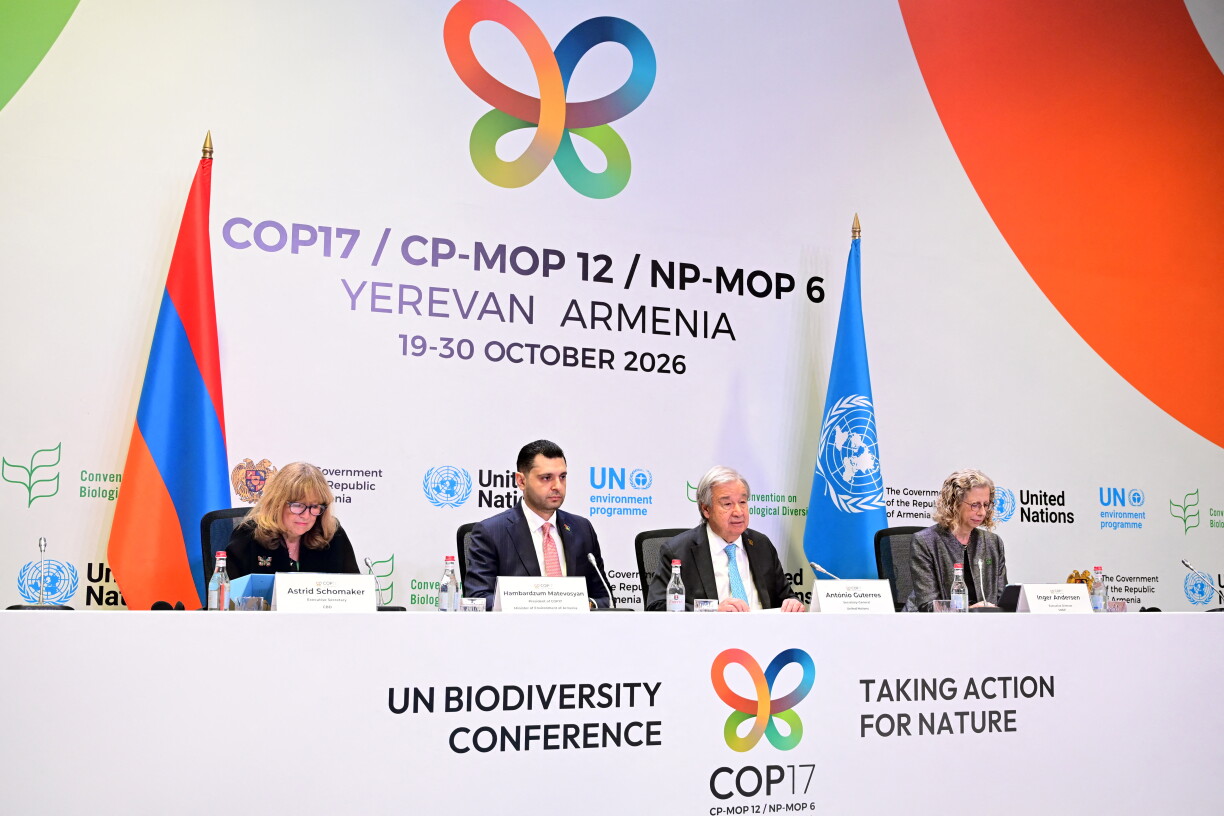
At the latest COP17 summit in Armenia, governments and environmental leaders are acknowledging that the era of merely agreeing on nature protection targets is over.
The immediate task is to translate those pledges into meaningful results by 2030, which is a deadline that remains out of reach for many. Progress has been slow so far, with most nations still lagging behind their own commitments.
Luxembourg’s Environment Minister Serge Wilmes, describes the situation as a wake-up call for countries to accelerate their implementation efforts.
The summit not only takes stock of countries’ progress but also issues recommendations for those falling short of their goals.
Wilmes argues that protecting nature cannot be treated as a standalone policy, but must become the foundation of all human activity.
He also believes that nature conservation must be embedded in every branch of government, with each ministry responsible for introducing concrete measures in its respective area.
Luxembourg revised its national conservation plan in 2022, following the adoption of a global agreement to protect and restore biodiversity by 2030.
The country’s targets have since been incorporated into national policy and are being gradually implemented.
According to Wilmes, priorities include strengthening Luxembourg’s forests, and the national hunting law is due for an update this year to support that aim. However, achieving these goals will require substantial financial resources.
The annual global funding need is estimated at $700 billion to be reached by 2030, a target still far out of reach.
Luxembourg has responded by increasing its public investment envelope for international climate and biodiversity efforts, raising the amount from €220 million to €320 million.
Wilmes emphasises that meeting biodiversity targets will not be possible through public funding alone; much greater efforts are needed to attract private investment to conservation projects.