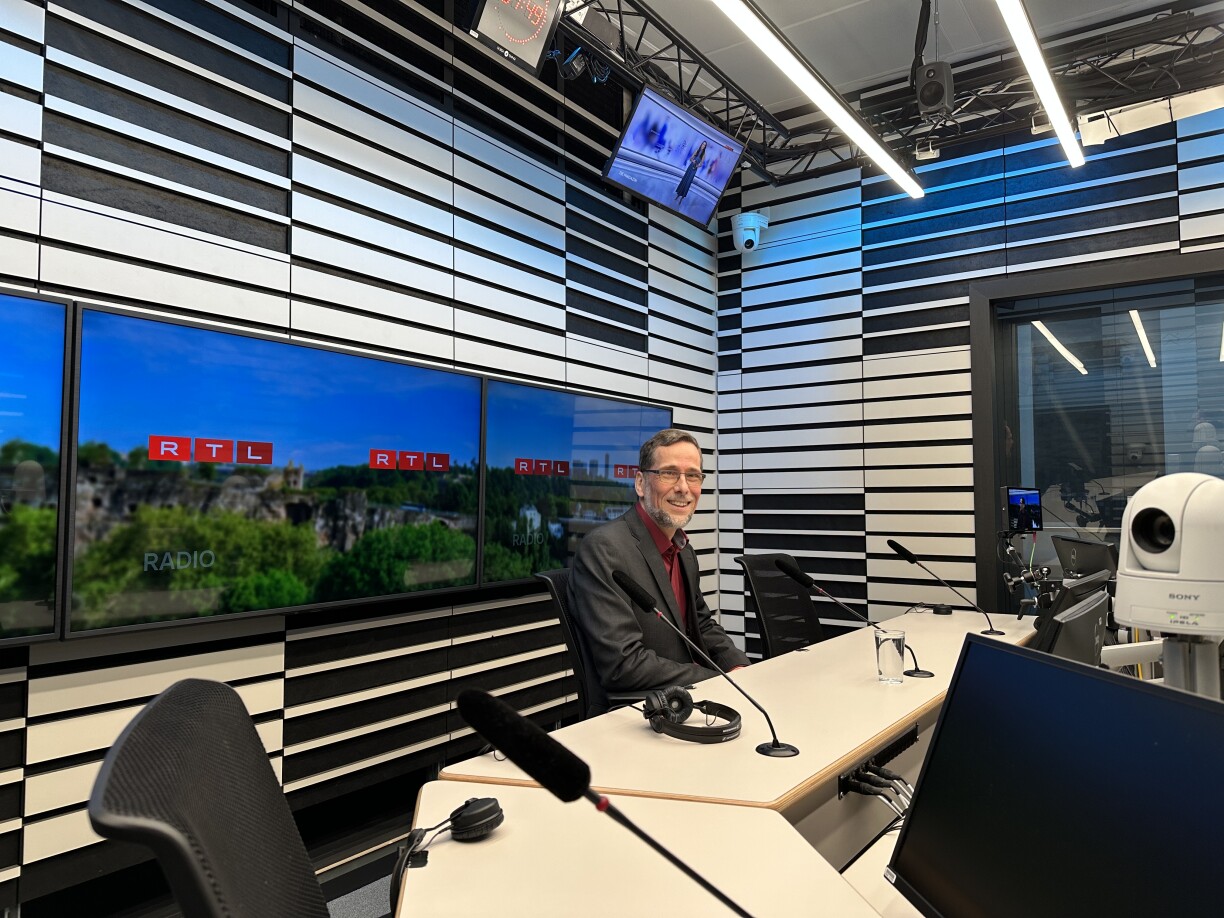
Professor Volker Quaschning has spent over two decades researching renewable energies at Berlin's University of Applied Sciences for Engineering and Economics (HTW). This week, he attended a conference in Luxembourg City, and made time to speak to RTL Radio regarding his preferred topic.
For the last 50 years, he said, there have been repeated energy crises, but we are not learning from them. Europe seems to have a "crisis amnesia" and is therefore still dependent on fossil fuels, he said.
Quaschning recalled his own childhood, set against the backdrop of fuel crisis after fuel crisis, resulting in car-free Sundays in the 1950s and 1970s. Nowadays, Europe imports virtually all its petrol and gas from abroad, but politicians continue to carry on as normal, despite every new crisis. he said.
Quaschning has observed one small development so far. After the outbreak of the conflict in Ukraine, many people installed solar panels, and the demand for electric vehicles and heat pumps soared, he said.
But as soon as fossil fuel prices dropped, so did the desire to change, he explained. However, he hopes that people will be ready for more changes as each crisis is swiftly followed by another.
Quaschning said that if Europe could release itself from fossil fuel dependence, then energy prices would stabilise, as the high prices are due to the high cost of gas, and not the fact the renewable energy sources are more expensive.
Quaschning said he was unsure about the EU Commission's commitment to nuclear power from those in charge in Brussels. Commission President Ursula von der Leyen recently said that Germany's exit from nuclear power was a mistake.
He noted that the fact that the Commission is putting nuclear power in the foreground is more likely to help French President Emmanuel Macron in his election campaign. Wind energy will not win elections, Quaschning said, for whom it makes neither technical nor economic sense to rely on nuclear power.
The so-called mini-nuclear reactors (Smart Modular Reactors) would certainly not be a miracle solution either, he stressed.
All studies show that a shift to 100% renewable energy is technically possible, explained Quaschning, provided fluctuations in solar and wind energy are absorbed by hydrogen and stored energy. More storage options are needed,he said, adding that batteries from China are meanwhile becoming increasingly cheaper.
Europe - and Luxembourg - must be climate neutral by 2050. Germany has set itself a target of five years earlier. Above all, Quaschning highlighted that the consequences of climate change would become increasingly apparent in the next 10 years and as a result, the pressure would also increase.
Even if the current energy crisis ends, this could only be a small "breathing break", he said/
The energy transition is likely to be a question of will or force, Quaschning said, but added that people will realise how good it is once they embrace it.
Luxembourg is in a similar position to Germany in terms of energy transition, Quaschning believes, particularly in terms of solar panels and heat pumps. He lauded Luxembourg's pioneering position in terms of free public transport and suggested other countries should follow suit.
When it comes to electromobility or sustainable heating, however, countries like Norway and Denmark are clearly ahead, he said. In Norway, 70 % of heating is heat pumps, Quaschning concluded.





