According to the latest report from Chinese health authorities, the coronavirus death toll has reached 132 people, and 5,974 cases of contamination have been confirmed so far. And while China might be the epicenter of the epidemic, around fifteen other countries are also affected, including France and Germany.
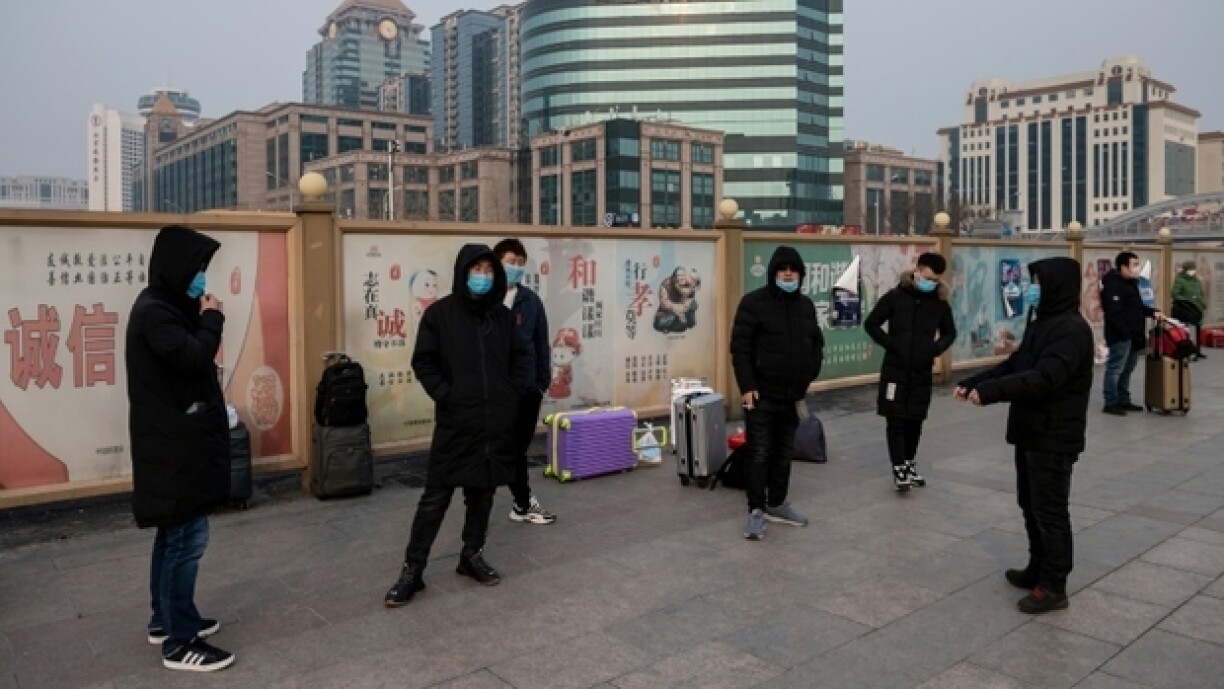
Since last week, pharmacies have been faced with a massive demand for protective masks, which are practically out of stock. Initially the demand came mainly from tourists, more specifically from Asian tourists, says president of the Pharmacists' union Alain de Bourcy, and after checking in with colleagues across the country, it seems that protective masks are almost impossible to find.
"It's the same everywhere. There are almost no more masks. I just tried to look for masks myself and told that I will eventually receive one to three boxes on Friday. I won't get very far with that."
This represents about fifty masks in all, explains Alain de Bourcy, who adds not to rely too much on suppliers' promises until deliveries are actually made. Furthermore, this order will most likely be exhausted rather rapidly, as demand no longer comes solely from tourists.
"Since we know that there are cases in France and in Germany, they are also requested by people here. We were on duty Sunday and in the morning, at eight o'clock sharp, there was a client who asked for masks."
When we talk about protective masks, it should be noted that there are different levels of protection and that it's not a question of using just any mask.
"These are the FFP2 standard, which is the apparent minimum, and these masks are more expensive. A box of 20 pieces costs around fifty euros and these masks are not normally requested. Most of the time, pharmacies don't stock them. They're not the usual protective masks we know, the ones dentists wear or that you buy when you have a cold and you want to avoid contaminating any elderly person or a child toddler at home. So they're not these common masks (...)."
These masks filter the air more, allowing less, if any, particles to pass through, and they are the ones that are very difficult to find at the moment. The same phenomenon can be witnessed in France and Germany, where the situation seems to be identical.