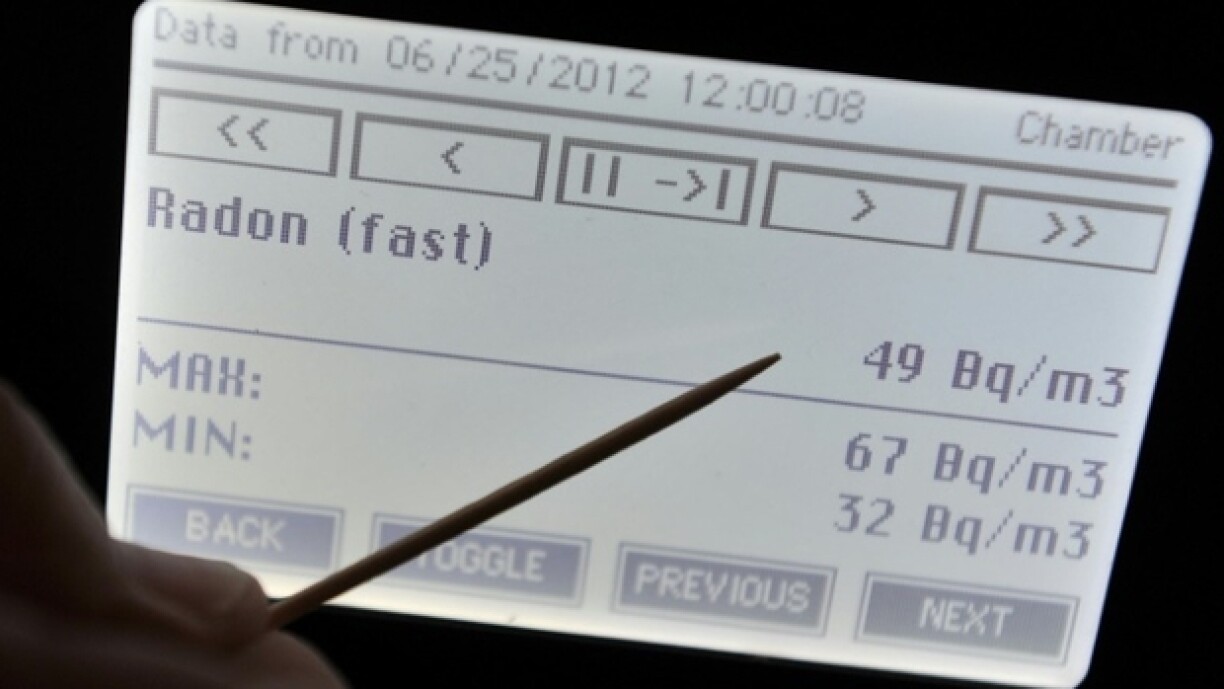
The aim of this national action plan is to ensure that employees are not exposed to excessive levels of radon at the workplace.
Radon can enter any building through, for example, cracks in the ground or leaks in the water supply system. Inhaling this gas can be dangerous, as Minister of Health Paulette Lenert explained.
The Minister stated that the authorities' reference level is 300 Becquerels per cubic metre. This means that, for example, if someone works for a very long time at a workplace or lives in a building where this reference level is doubled, then the risk of developing lung cancer would also be doubled.
This is why it is important that employers guarantee a safe environment for their employees. This is done through measurements, which are carried out during the winter months. These radon measurements are mandatory for companies in the Oesling region, where the reference level is exceeded in a relatively large number of buildings.
There are exceptions for public places, such as hospitals, schools, or nurseries, where radon level measurements must be carried out throughout the country and not just in the north.
Patrick Majerus, head of the Radiation Protection Division at the National Health Directorate, explains how companies can proceed:
A company interested in doing a measurement can choose a laboratory from a list available on the National Health Directorate's website. Majerus stressed that the health authorities intentionally wanted to include private sector companies, resulting in a total of five laboratories that offer these types of measurements in Luxembourg.
If the level is too high, the Radiation Protection Division offers individual consultations on the necessary measures as well as training for construction companies. Further information on radon measurement is available in the "Measurement Guide" at www.sante.public.lu (guide available in French and German).





