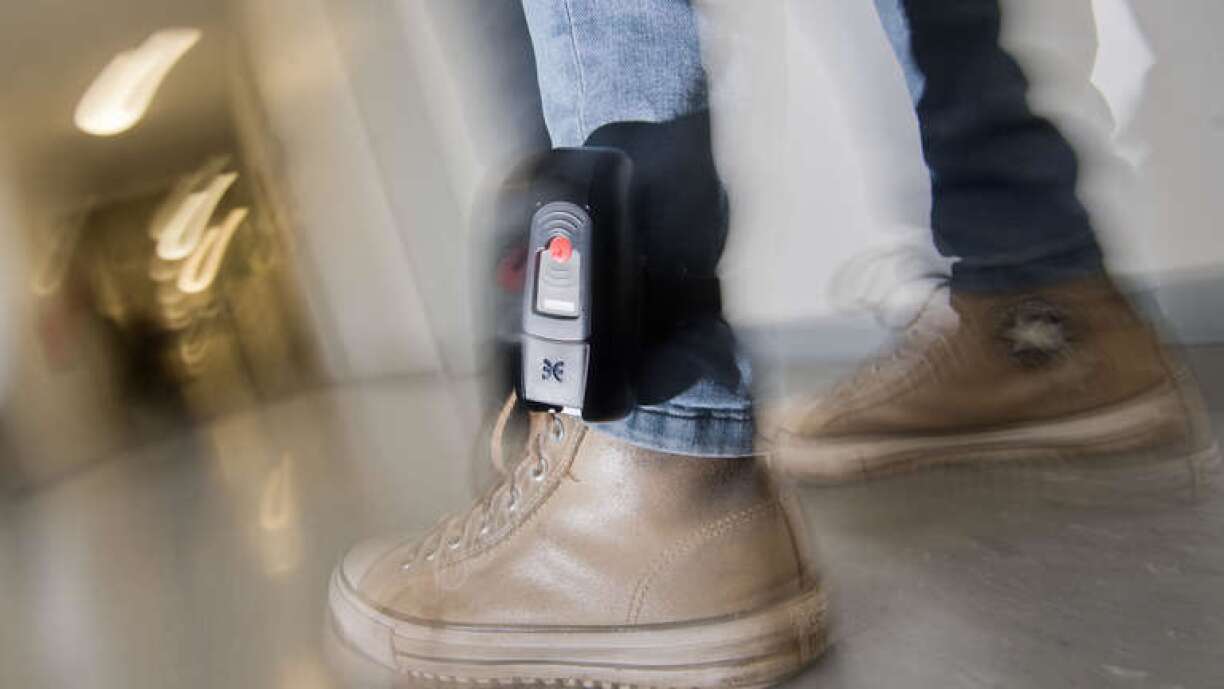
Ankle monitors have rarely been out of the headlines in recent years, not least since the high-profile case involving former French president Nicolas Sarkozy just across the border. In Luxembourg, 15 people are currently wearing such a device, 12 men and 3 women, though that number naturally fluctuates over time.
Not everyone is eligible. Laurent Thyes from the Ministry of Justice outlines the conditions set out in law: the person must no longer pose a danger to society, must have a permanent address in Luxembourg, must be in employment or vocational training, and must have a sentence, or remaining sentence, of no more than three years.
The image that often comes to mind, an iron ball and chain, could hardly be further from reality. Thyes explains that the device is a discreet plastic unit attached to the lower part of the shin. It communicates with a box installed in the person's home, and together the two components monitor whether the individual is where they are supposed to be at the times stipulated when the ankle monitor is issued. If they are not, an alarm is triggered, Thyes added.
That does not mean, however, that police officers are immediately dispatched to the door. The monitoring service SCAS reviews what has happened and determines what the best course of action should be. If violations become too frequent or too serious, the device can be removed at any time and the individual returned to prison, Thyes continued.
The main purpose of the ankle monitor is reintegration into society. Thyes is clear on this point. The device is intended to help people who have served a large portion of their sentence to gradually regain a foothold in society, especially if they are following a vocational course or have secured employment. The surveillance element is there, but it is secondary to the goal of guiding individuals back towards a regulated and independent life, Thyes stated.
Wearing an ankle monitor is therefore seen as a positive sign, a bridge between prison and freedom for those who have demonstrated they have fulfilled the conditions for it and are ready to move on.