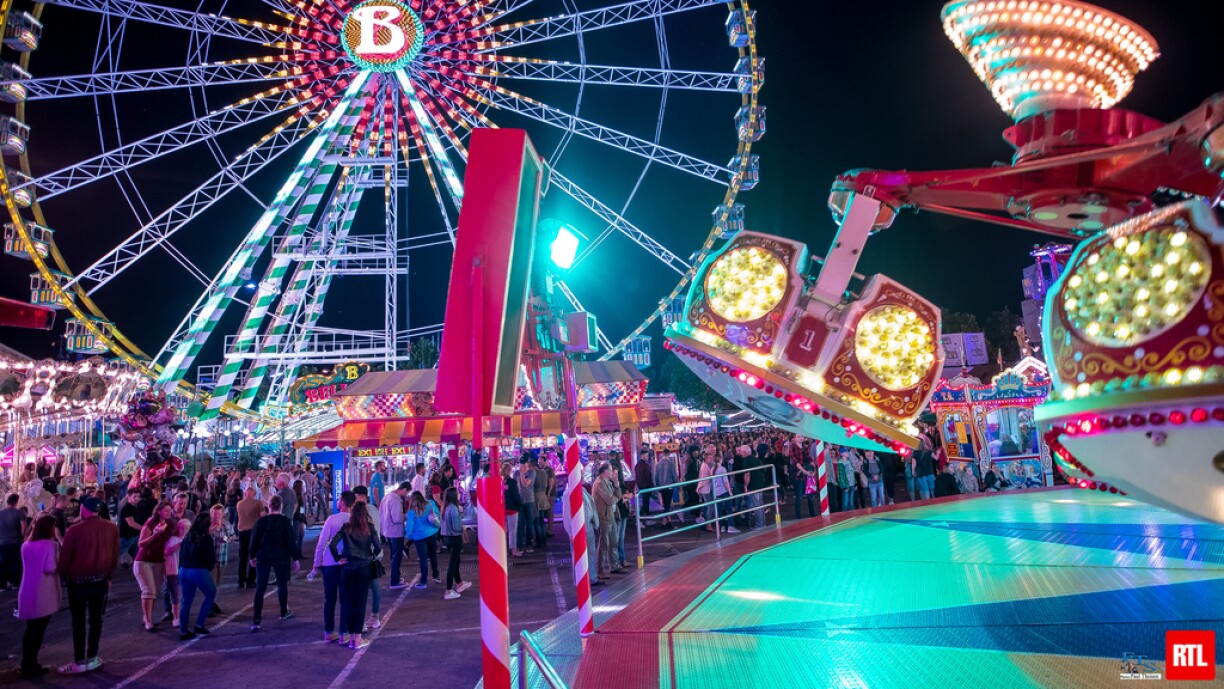
Luxembourg's famous fair is not just a special occasion for the public, but also for the temporary employees making up a large percentage of its workforce.
RTL interviewed a number of young people about their work at the fair. One student described it as very demanding yet lucrative work - the days are long and require huge mental and physical exertion.
Interviews in Luxembourgish.
Others agreed with the assessment of the work as lucrative, but how legal is the work really?
One young man said he worked every single day of the 2018 fair. Although he was paid per hour worked, it was not 100% in accordance with employment laws, with days often lasting 15 hours or more.
The majority of students interviewed were reluctant to use the microphone for fear of being identified; however, many of them confirmed that their shifts were long, breaks were few and far between, and many did not get paid overtime.
One student admitted she had worked without a contract and only received her wages when the job ended. This year, she was offered a contract allowing two hours for breaks, although again she will only be paid at the end of the contract.
The Inspectorate of Labour and Mines (ITM) said they were not aware of such cases, and that regular dispositions of working hours and overtime would not apply to employment at the fair. In terms of payment, Luxembourg's minimum wage rules were to be applied. All hours worked should be paid.
However there are still individual cases with questionable employment conditions. Not all students interviewed had experienced such conditions, with one saying that working at the fair would naturally be more intensive, with the lucrative payment making up for the difficult work.
Luxembourg's labour laws state that employees in a fairground environment are not subject to usual regulations, said Ariane Claverie from law firm Castegnaro. The lawyer, who specialises in workers' rights, said that in the seasonal sector working hours can last 12 hours per day/ 60 hours per week, but only if set by collective agreement. All employees should be informed of this in advance. However, it is still unclear how the fairground industry is defined and which regulations should be applied.