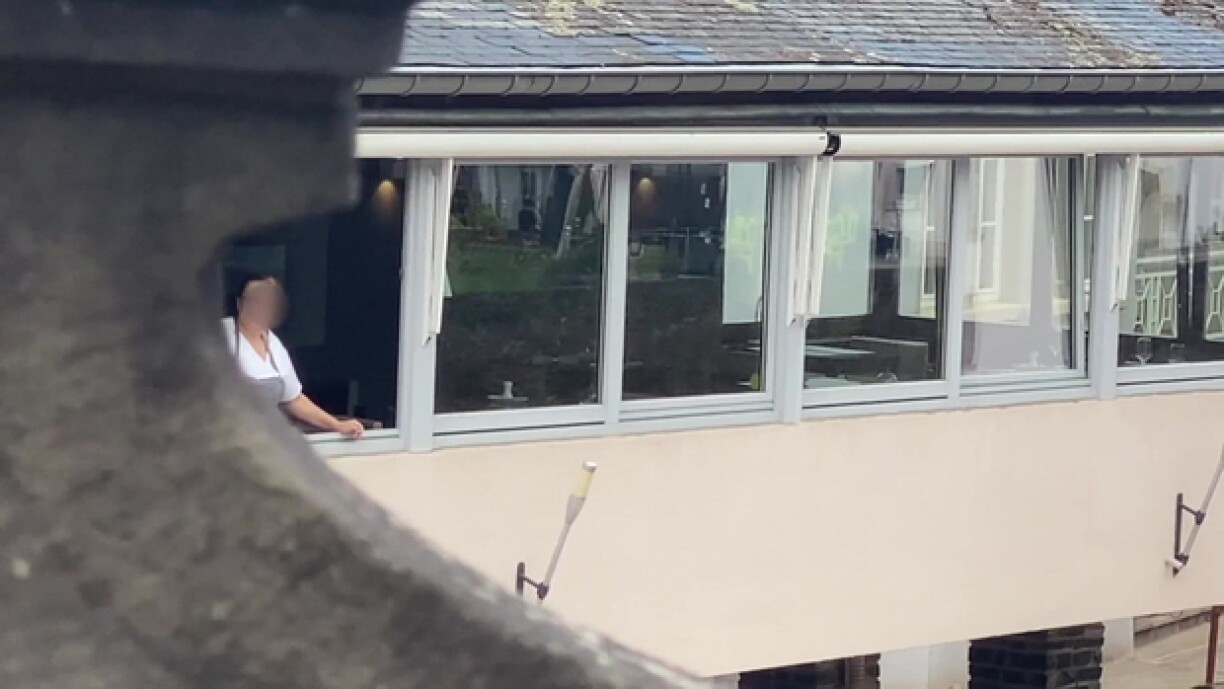
Following a report on RTL Télé about a case of alleged human trafficking by a businessman in Vianden, investigations are still ongoing. Police and the Inspectorate of Labour and Mines (ITM) notably carried out two house searches at three different locations simultaneously.
However, in an answer to a parliamentary question by Pirate Party MPs Marc Goergen and Sven Clement, Ministers Sam Tanson, Henri Kox, and Dan Kersch specified that it remained difficult to definitely put an end to human trafficking.
The ministers pointed out that the cooperation between the public prosecutor's office, the police, and ITM within the responsible committee was going well. They announced that ITM's staff would be increased from currently 29 to 61 civil servants towards the end of the year. This would allow the inspectorate to carry out substantially more checks, precisely also in regard to human trafficking. Human trafficking in the form of exploitation of work or services can take on many different forms of irregularities, e.g. excessive work hours, or salaries which are below the minimum wage or not given out. However, there are also more severe forms of exploitation such as a person being forced to work under economic and/or physical pressure.
The exploitation must also be proven by a variety of evidence, including the enslavement and humiliation of the affected individual by an attack on their body and mind which violates human dignity. The ministers pointed out that not every irregularity discovered by civil servants is automatically a criminal offence.
One must for instance differentiate between a person who is not registered with social security – in which case the law stipulates that only the worker who is working illegally should be punished – and the lack of an employment contract or the employment of people from non-member countries who are here illegally – in which case the employer risks an administrative penalty of up to €2,500.
ITM itself does not have authority when it comes to human trafficking. Instead, responsibility lies with the police's organised crime department.
Most cases of human trafficking are related to pimping. Courts have so far only dealt with three cases of economic human trafficking. Last year, ITM also only forwarded two cases of alleged human trafficking to the public prosecutor's office.
However, in their answer to the questions by the Pirate Party MPs, the ministers all agreed on one point: The overall legal framework must be adapted and adequate penalties must be put in place in order to allow for a more effective prosecution of those organising human trafficking – a phenomenon which remains a sad reality even in wealthy countries such as Luxembourg.
The case is on the agenda of an expert group of the Ministries of Justice, Labour, and Internal Security. A deadline indicating when the first drafts are to be expected has yet to be announced.





