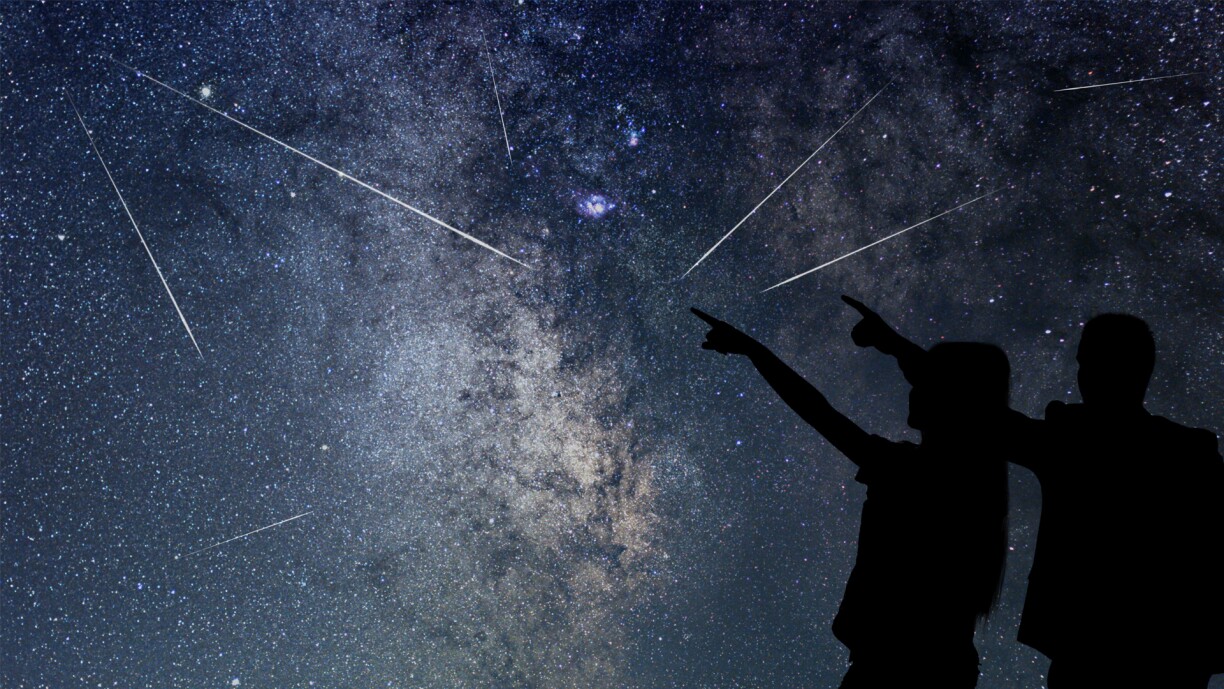
Every year between mid-July and mid-August, small particles from the Swift-Tuttle comet cross the Earth's orbit. The small cometary debris collide with the molecules of the atmosphere, producing light. Each piece of debris is then transformed into a 'shooting star'.
This year, the show should be at its peak on the night of 12 to 13 August. But since 7 August, conditions have been ideal from an astronomical point of view. The peak of the shower will be four days after the new moon, at a time when the sky is still dark. And as the weather is expected to play its part, Luxembourg should enjoy clear skies.
Unfortunately, due to the health crisis, the AAL, the Association of Amateur Astronomers in Luxembourg, will not be organising a star watch party this year.
The night of August 12 to 13, especially between 3-4 am, is the time when the most meteor showers are expected. On average 110 shooting stars can be sighted per hour (some of which are no bigger than a grain of rice). All you have to do is find a quiet place, away from the light pollution of the cities, where you can watch the sky.
But, to give yourself the best chance of success, you must be patient. It takes at least 10 minutes for your vision to get used to the darkness. And finally, bring a good deck chair and a blanket.
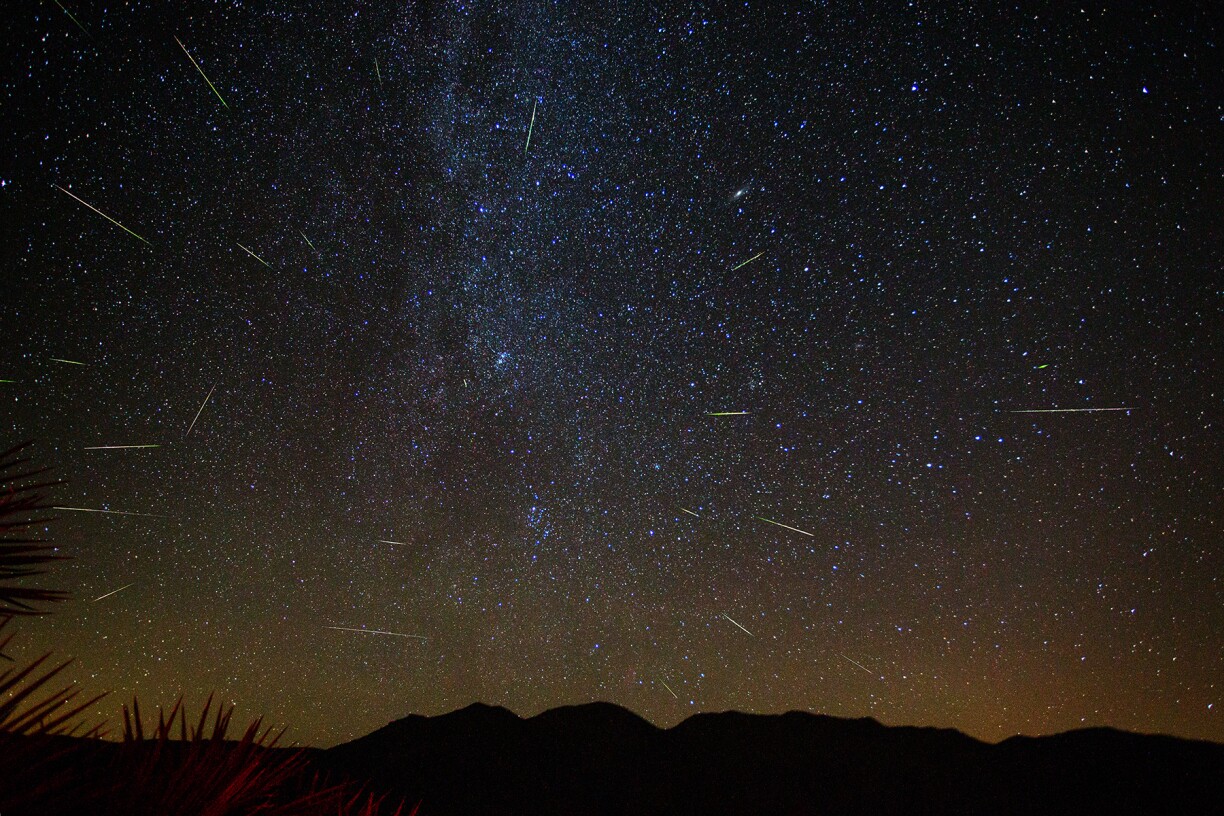
For specialists or those who have a telescope, other observations are possible: the green ray at sunset, Jupiter from 9.30 pm, then Saturn. Between the two, search for Antares or Cassiopeia. And as a final touch, Mars will rise in the East at the stroke of midnight.
This year, the Red Planet will be particularly close to Earth (and therefore brighter). It will be at its closest - 63 million kilometres - in October.
The two planets cross paths every 26 months. But this time, sky lovers are fortunate that it will happen in summer, when the weather is most favourable for observation and the Red Planet is high on the horizon.
The French Astronmy Association explains that this particular period is a godsend for amateur astronomers, who will not fail to observe and photograph the Red Planet, as well as for space agencies, which see it as an opportunity to send missions because of its close distance.
With a little patience, amateur astronomers will be able to make out smaller and smaller dark spots on the planet's surface. Even with a small telescope, one can recognise large regions and one of its polar caps, like a white spot, the AFA adds.





