Prices for both oil and gas have skyrocketed in recent weeks due to the war in Iran. However, the Luxembourg government is not yet considering any measures to relieve the population, for now, it is relying on consumption to go down, or at least not increase.
In Luxembourg, petrol prices remain high: more than 2 euros per litre for diesel, 1.8 euros for 98‑octane petrol, and a still considerable 1.7 euros for 95‑octane. Heating oil currently sits just below 1.5 euros per litre. Despite this, the Ministry of the Economy told RTL that relief measures would be considered if they became necessary. However, the exact conditions that would trigger such measures remain unclear.
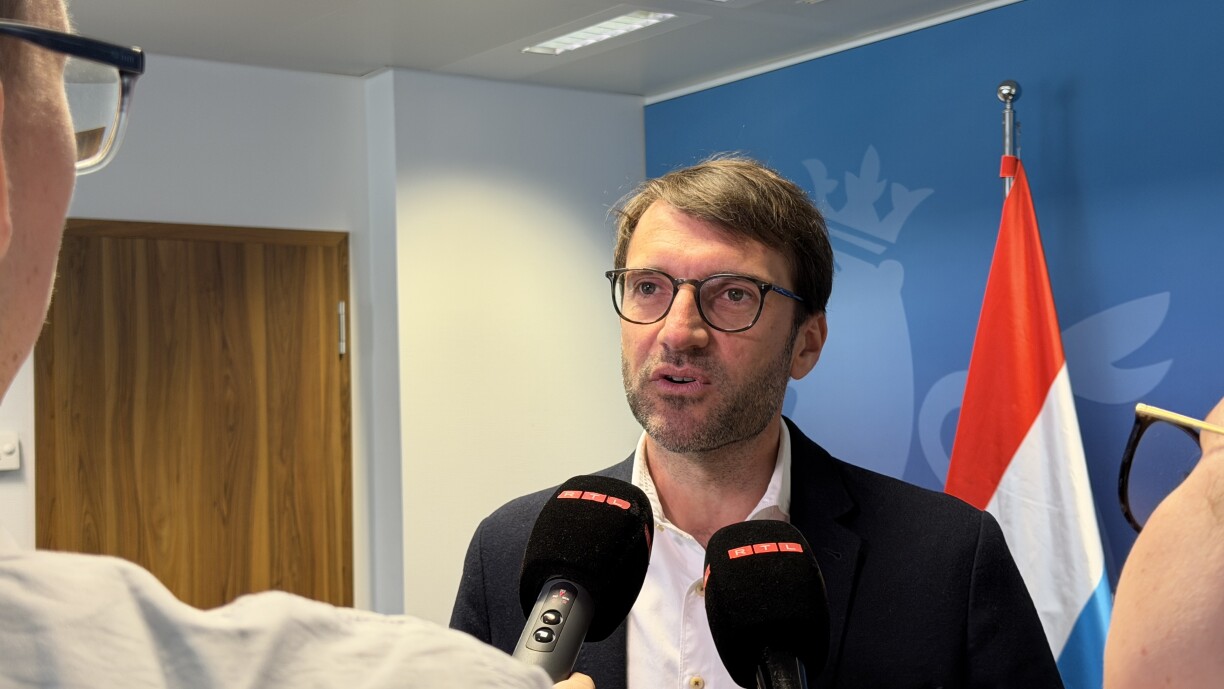
However, There are also tips for saving energy, as Simeon Hagspiel, Energy Commissioner for the Luxembourg government, explains: "For example, turning off the heating when you're not at home," Adding that when it comes to driving the ACL already made useful recommendations like adjusting driving habits. Small measures that according to him "can already have a certain impact."
Larger measures that individuals could take would include switching to an electric car or a heat pump. As for gasoline reserves, they are currently well-stocked and there are no supply bottlenecks. For this reason, the government is not currently planning any restrictive measures which would push people toward less consumption. But depending on how the international situation develops, that could also change. "You also have to prepare for that, if the situation should worsen, in order to take measures there as well, if necessary", he explains, which could include sticking to the speed limit or sales restrictions at the pump. Recommendations that the International Energy Agency and the EU commission have also published. However, for Hagspiel: "it's still too early to actually take such measures."
Regarding the price of fuel at the pump, the government would have the option to influence it either through excise duties or VAT. However, if diesel and gasoline were to become cheaper, that could have a negative impact on reserves. "We have very attractive prices at the pump here in the Greater Region. We also have a certain amount of tank tourism as a result, which we are familiar with, and it's a situation we can manage." However he explains that if prices were to become more attractive, a higher demand could results in supply bottlenecks.
Hagspiel also considers it unrealistic that Luxembourg could follow Slovakia's lead and simply lower the price for people with Luxembourg license plates, but that would ultimately be a political decision. In the case of Slovakia, the EU Commission has also already threatened legal action for not respecting EU treaties. However, this has not yet led Bratislava to change its policy. Regarding the storage of Luxembourg's oil reserves, a quantity equivalent to 10 days' supply is located within the territory of the Grand Duchy. The rest of the stock, equivalent to 83 days, is stored in Belgium and the Netherlands.
According to the energy commissioner of the Luxembourg government, it would be very difficult to predict how the international markets will develop further. They could calm down by summer, but one must also be prepared for the other scenario.