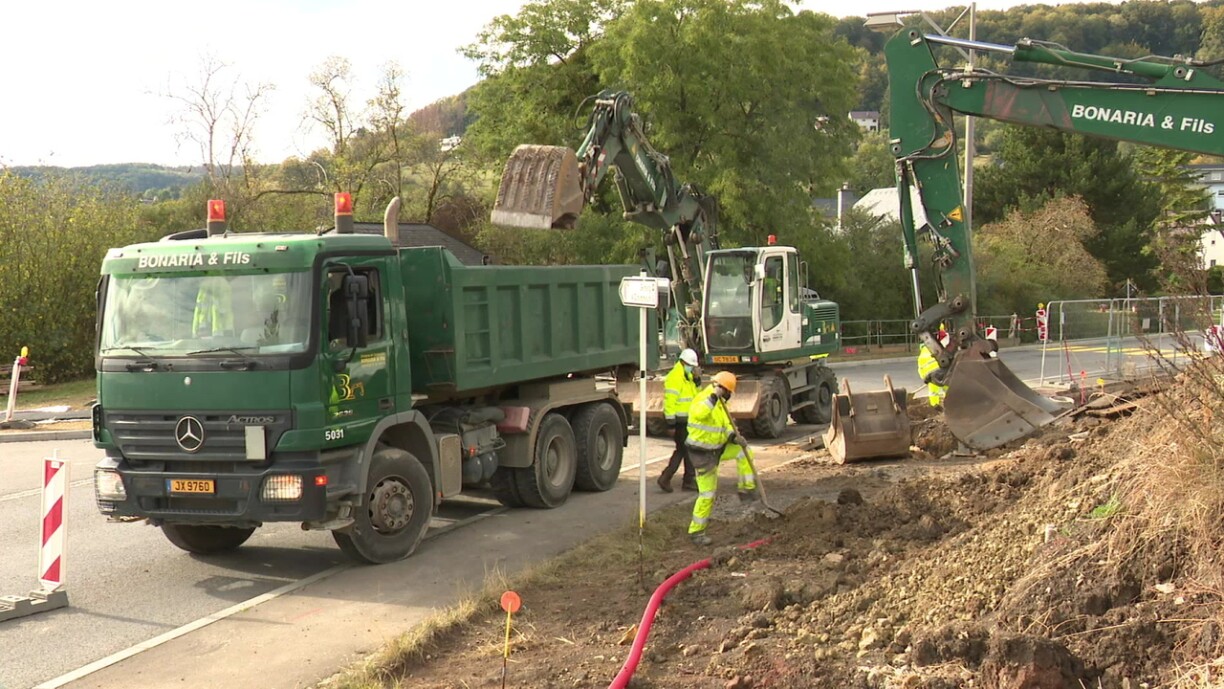
And that is where the problem arises: landfills for inert waste do not have a good image, and nobody wants them near their homes. But where to put the 7.5 million tonnes of rubble excavated each year on Luxembourg's construction sites?
Viviane Pundel, manager of the company Bonaria et Fils, explains that when people talk about rubble, they say that they do not want to have it on their doorstep. Rubble, she adds, is not rubbish, it is dirt.
Dany Sebastiani of Bonaria et Fils explains that when it comes to rubble, the company recycles everything it can, in order to take as little as possible to a landfill.
The landfill where the most construction site waste is currently being dumped in Luxembourg is that of Colmar-Berg. Lorry driver David Marques knows the road well. On average, it takes a truck an hour and a half to come and dump its load. It is not uncommon for trucks to have to come from the south of the country to Colmar-Berg. Transport tourism, as it is referred to in the industry.
The problem, according to Pundel, is that there are fewer and fewer dumpsites. The one in Mondercange, for example, has been closed for years. Other landfills, such as Sanem, are almost full. At these places, the problem of tonnage limitation is also an issue, i.e. you have to make a request in order to be able to offload rubble.
Construction site waste is accumulating to approximately 7.5 million tonnes per year. When there is no other option, the lorries go abroad, near Metz. This takes time and costs money. And in the end, it is the customer who pays the bill, when housing prices are already skyrocketing. Not to mention the impact this rubble transport has on traffic and CO2 emissions.
You watch the full report in Luxembourgish here.





