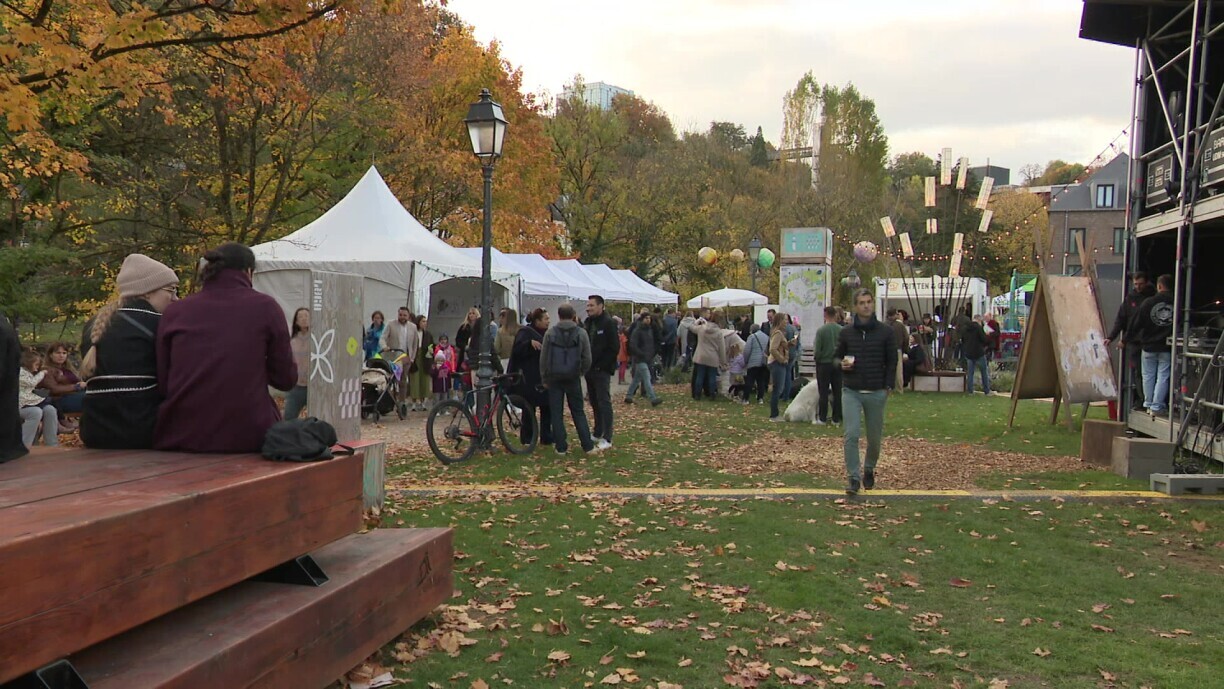
Although exact visitor data is difficult to obtain due to the open and public nature of the exhibition, several indicators point to high visitor numbers for the Luxembourg Urban Garden Expo (LUGA).
"Render the invisible visible" was the motto of LUGA, which aimed to make nature more visible and interactive in the country's cities. In a report released on Wednesday, organisers said they felt the motto had been fulfilled.
Seven months after the exhibition, organisers called LUGA a clear success – not only in terms of visitor numbers, but also regarding its impact on cities, agriculture, and sustainability.
Ann Muller, LUGA coordinator, said the report was overall positive. Although the open-air format made it difficult to gather precise visitor data, several indicators showed strong attendance. Individual installations attracted tens of thousands of visitors: the orchids at Fondation Pescatore drew 33,000 people, the luminescent greenhouse in the capital's park welcomed over 24,000 visitors, and the "Lower World" exhibit at the Aquatunnel attracted 14,000 people.
Ettelbruck's agricultural course also generated significant interest, with over 64,000 visitors between May and September. Luxembourg for Tourism estimated that around 370,000 tourists visited LUGA sites.


According to Muller, the success of the garden exhibition was evident. "It is clear from the surveys, but it is also evident from the happy faces and the people who visited the sites", she said. She particularly highlighted that LUGA was once again able to showcase Luxembourg City from its best side while incorporating 15 themes into a single exhibition.
LUGA was entirely characterised by the "circular economy", with the aim of using resources sustainably and recycling or repurposing as many elements and installations as possible after the exhibition. The projects were built in such a way that materials could be reused after the expo.
Muller stressed that of the 93 projects built in the city, over 20 can remain. As for the materials from gardens that could not remain or be passed on, 98% have been repurposed. Muller explained that organisers developed the "Flower" line, under which wooden signage was repurposed into furniture, and banners were turned into laptop bags and small wash bags.
LUGA was also intended to bring the relationship between cities and agriculture closer to the public and to make topics such as sustainability and food production more visible. According to Minister of Agriculture Martine Hansen, this goal was achieved.
Hansen stressed that regional, seasonal, and organic produce from Luxembourg were put centre stage at the various locations where food and drink were available at LUGA. "We had our LUGA sausage, our LUGA beer, we had LUGA crémant, we had our LUGA bread – precisely to show what good products we produce here in Luxembourg, so that they are brought even more to the fore. Therefore, I think this was indeed a success", the minister said.
The budget for LUGA was originally set at around €10 million in 2021 but was adjusted upwards to €22 million during the course of the project. In the end, however, only approximately €19 million was spent. The difference is now flowing back into the coffers of the state and the municipality of Luxembourg City, which largely financed the project.
The coordinator of LUGA, together with Mayor of Luxembourg City Lydie Polfer, also highlighted that, in their opinion, the expo contributed to the city being voted the most beautiful capital in Europe according to a Tripadvisor survey in which over 3 million people took part.





