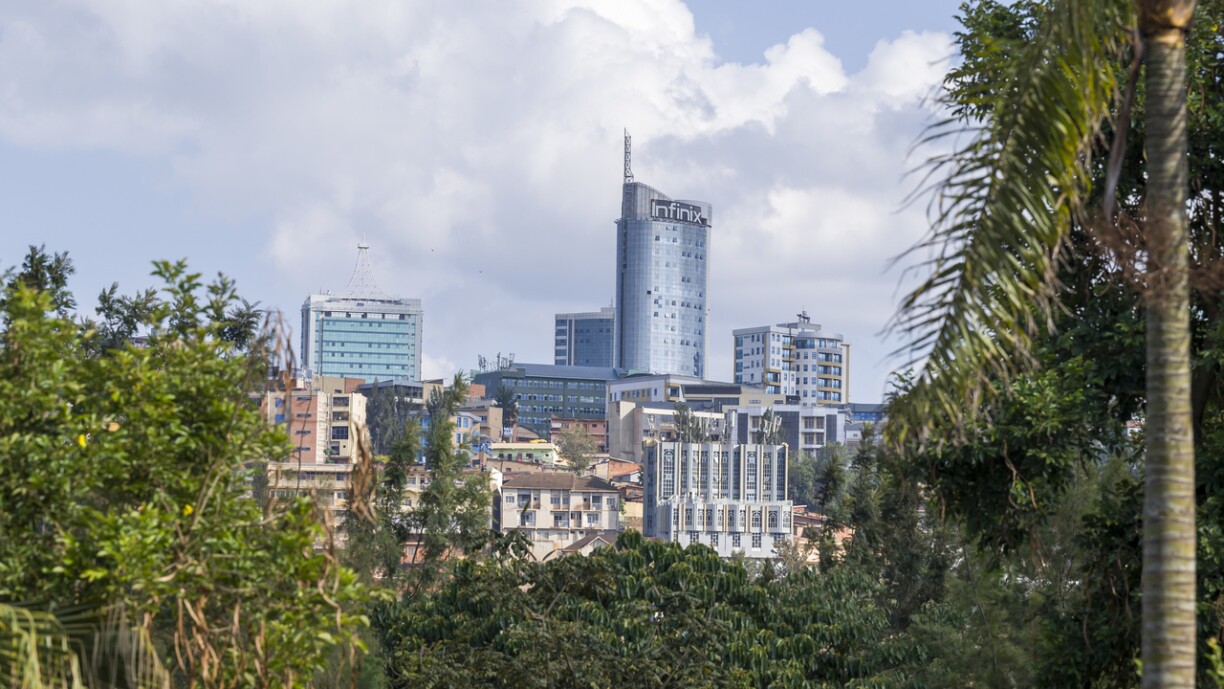
On their final day, the delegation visited Kigali, the capital city of Rwanda. While the cityscape of Kigali is defined by the presence of Western restaurant chains, large roads, and tall buildings, Minister of the Economy Franz Fayot pointed out that this should not distract from the fact that "the rest of Rwanda is still very poor". "There is still a lot of catching up to do," Fayot stated, "for instance in the agricultural sector".


The delegation attended an international telecommunications conference. During the conference, it was pointed out that nearly 3 billion people throughout the world do not have access to the internet.
Luxembourg, according to Prime Minister Xavier Bettel, can help connect these people, particularly through Betzdorf-based SES, one of the world's leading satellite owners and operators.
The government of Rwanda approached Luxembourg specifically to cooperate in the sectors of finance and digitalisation. Fayot explained that the local government "wants to develop a financial centre in Kigali". This financial centre would "specialise in sustainable finance against climate change" as well as "inclusive finance", which would focus on providing loans to farmers and women in particular.
Following the genocide of the Tutsi people in 1994, many women became widows, and numerous children became orphans, according to the Prime Minister.
Bettel also acknowledged that the development assistance given to Rwanda differs significantly from that given to Niger. The focus in Niger is on improving water supplies, while in Rwanda, the Grand Duchy is assisting in the development of a financial centre modelled after Luxembourg's.