The legislation will replace that of 1983 and counts four areas, one focusing on archaeological and architectural heritage in particular.
The ministry is heading in a completely new direction in its work on protecting architectural heritage. Currently, each listed classification results from an individual request or the state's own's initiative. However, the future of architectural heritage will revolve around an inventory of listed buildings.
The minister explained that the text makes room for a 'scientific inventory' which will list buildings requiring national protection by municipality. Work is already underway to create the inventory, with three such lists already complete, namely those of Larochette, Helperknapp, and Fischbach. The municipality of Mersch is also working on its list.
Once the final inventory has been established, the next step will be a public procedure. Each citizen will be able to participate in this procedure, which has the purpose of creating a larger legal safeguard for these buildings.
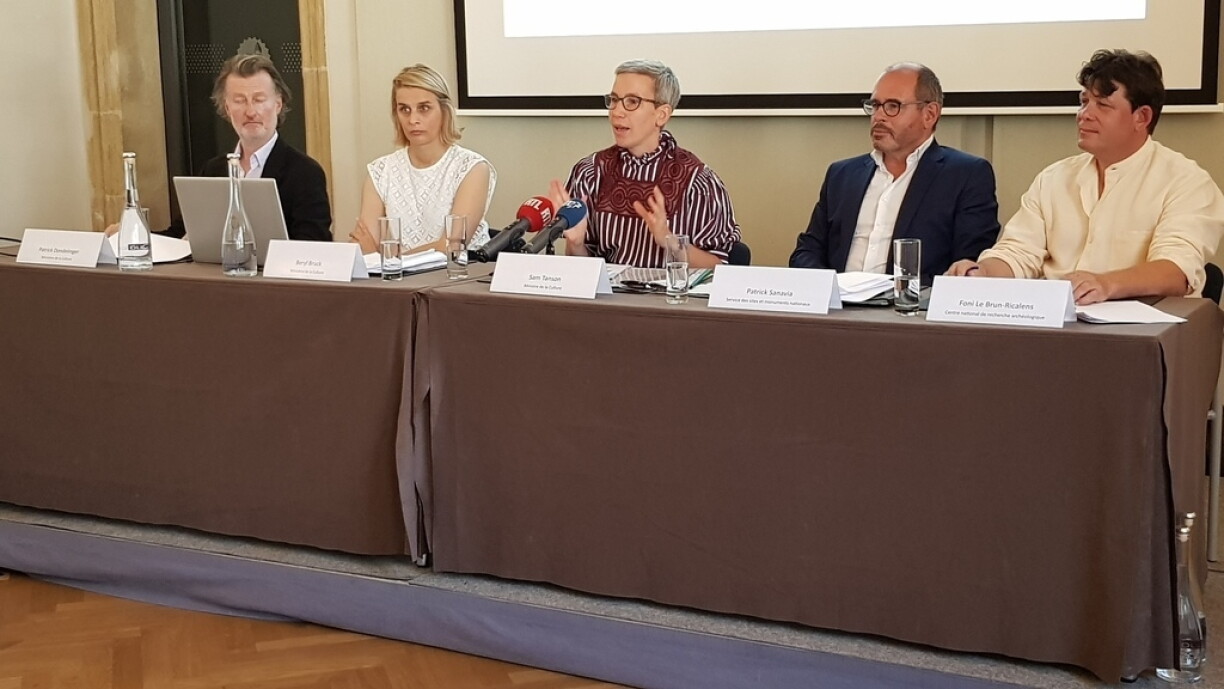
As Tanson explained, the new legislation will change the rhythm of protecting architectural heritage. It will no longer be the case that the ministry is running behind the development, but instead all those involved - building owners, potential building owners, those charged with construction projects, and more - will understand what comes under heritage protection.
The inventory will not be complete from one day to the other, which is why the current Sites and Monuments service, which will become the National Architectural Heritage Institute, will hire additional personnel over a ten-year transition period.
As for archaeological heritage, the ministry will introduce the preventative archaeology principle. This will involve the creation of two zones to determine in advance whether a particular piece of land has architectural value. One zone will cover land where there is a great likelihood of finding archaeological artefacts and the other zone will cover land where there is an eventuality of finding archaeological evidence.
At the very latest, the National Centre for Archaeological Research will provide its permission by the time the construction request is submitted. The main purpose of this concept, Tanson explained, is to ensure that the archaeological question is cleared before a construction site is underway. This in turn would prevent delays to construction sites.





