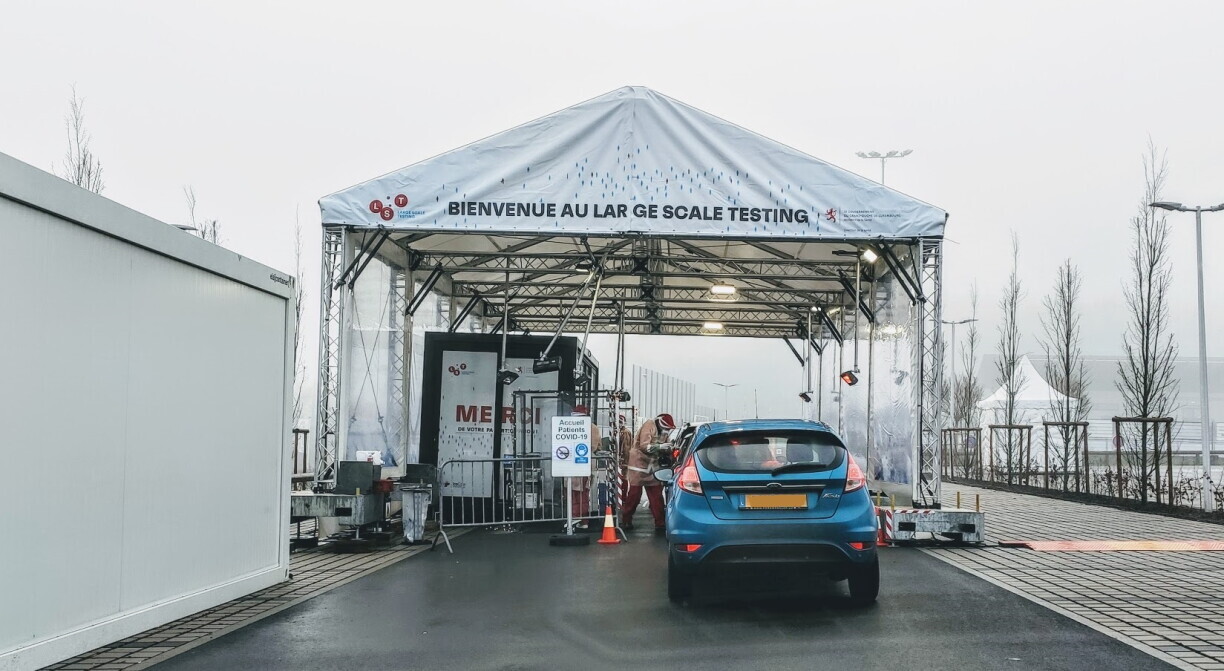
MPs in the Chamber of Deputies criticised on Wednesday the lack of budgetary control and irregularities in public contracts related to Luxembourg's large-scale Covid-19 testing campaign. Several MPs emphasised that even during an extraordinary crisis, transparent budgeting, rigorous financial oversight, and the responsible management of public funds must be maintained.
The debate centered on a report by the Court of Auditors, which highlighted significant shortcomings in financial management, budget adherence, public procurement, and parliamentary oversight during the testing initiative.
During the first phase of the campaign, financial commitments exceeded the authorised budget. While the Council of Government approved €39.5 million, an additional €3.66 million was spent on PCR kits, bringing the total commitment to €43.16 million – a surplus that typically requires a special funding law. Additionally, during the second and third phases, parliament was not provided with all the necessary financial data to effectively exercise its supervisory role.
The Court of Auditors found that the final accounts failed to capture all actual costs and revenues. Certain expenses, including testing materials, expert fees, and serological analyses, were partially omitted. Additionally, approximately €1.4 million in revenue generated from the sale of materials was left unrecorded.
The audit also revealed that the Luxembourg Institute of Health (LIH) received roughly €2.3 million more than required for the project. Rather than returning the surplus, the funds were redirected to a separate research initiative. The court further noted deficiencies in monitoring variable costs, resulting in the payout of a retained 20% tranche before the verification process was completed.
Co-rapporteur Stéphanie Weydert of the Christian Social People’s Party (CSV) stressed that all financial commitments must be consolidated into a single overall budget and that parliament must have continuous access to the information required for effective oversight. She also emphasised the need to systematically document all direct and indirect costs and ensure that budgetary funds are strictly used for their intended purposes.
Regarding public contracts, the audit criticised the failure to consistently meet fixed deadlines and performance indicators. Co-rapporteur Sam Tanson of the Green Party (Déi Gréng) pointed out that while some performance targets were missed, the resulting financial sanctions were disproportionately reduced. For example, during the second phase, a planned penalty of €2 million was slashed to approximately €266,000.
The Court of Auditors also identified several flaws in the public procurement process. Tanson noted that the first phase lacked sufficient documentation justifying the award of a contract without a competitive tender or an objective analysis of potential providers. During the second phase, despite a European call for tenders, only one bid was submitted by Laboratoires Réunis. The court argued that the company's existing infrastructure and experience from the first phase granted it a privileged position, effectively eliminating genuine competition. Additionally, during negotiations, the company was guaranteed €26.9 million in fixed costs, thereby shifting a portion of the financial risk onto the state.
The relationship between the government and parliament during the crisis also came under scrutiny. The financial statement for the second phase was not submitted alongside the relevant draft bill, and MPs were denied comprehensive data on the outcomes of previous phases. Cooperation with the Court of Auditors was similarly hindered, as documents were frequently submitted late, unstructured, or incomplete.
Looking ahead, both co-rapporteurs emphasised the need for systemic reforms to prepare for future crises. They called for better-prepared public procurement procedures, clearer contractual terms, rigorous enforcement of sanctions, and the comprehensive recording of all costs within the overall budget. Above all, they stressed that parliament must be kept fully and transparently informed at all times to fullfill its constitutional oversight duties.