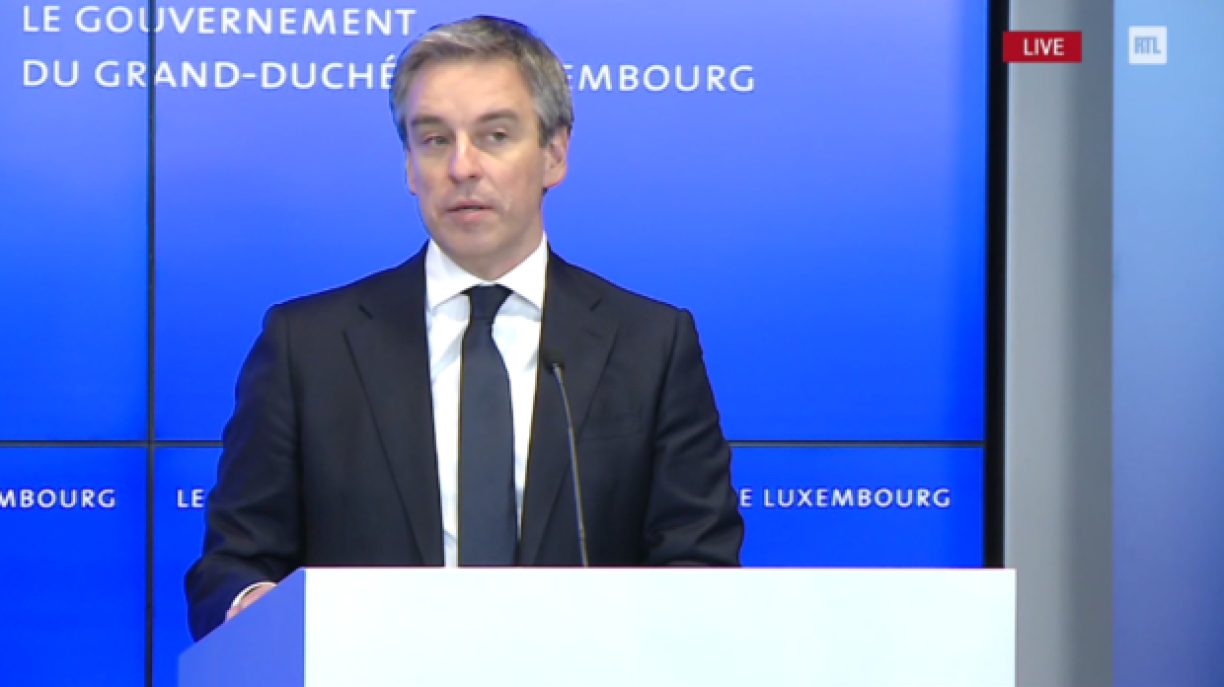
In a press conference (translated as it happened here), Meisch explained children in primary schools would be divided into two groups, and would only attend class from 8am to 1pm.
During the first week from 25 May, the two groups will attend on alternate days, then changing to alternate weeks. When not in class, pupils will be allowed to benefit from an optional supervised study in reception structures, free of charge, although they can also choose to do this at home. The Pentecost holiday will be maintained as usual.
The two groups will be kept separated, even on school transport and during breaks, which will be staggered to reduce the number of children in playgrounds at the same time. Meisch underlined the importance of maintaining some degree of social contact with other children for their wellbeing and development.
In principle, the right to leave for family reasons will no longer be valid from 25 May, with exceptions. Parents with children aged 0 to 3 years old will still be allowed to take leave, as will parents with vulnerable children who are unable to find childcare within their municipality.
Meisch also highlighted that children in the first cycle of education, including kindergarten, had a right to education, and the return to school would also be mandatory for this age group. The Minister acknowledged that safety regulations would not operate in the same way as in primary schools and explained they were working with health officials to find adequate solutions. Kindergarten or Spillschoul groups would likely be smaller than those in primary school.
As preschool, or Precoce, is not mandatory, it is up to parents to decide whether they wish to send their children to preschool, or keep them at home.
The adapted school system will likely need around a third more staff, with teachers to work additional hours. Staff from elsewhere will also be brought in to make up the difference, for example, from adult learning structures, or summer schools and activity leaders. For crèches, staff may be drafted in from private establishments.
The number of school buses in circulation will also be increased to allow for safety measures, with the government funding this in full.





