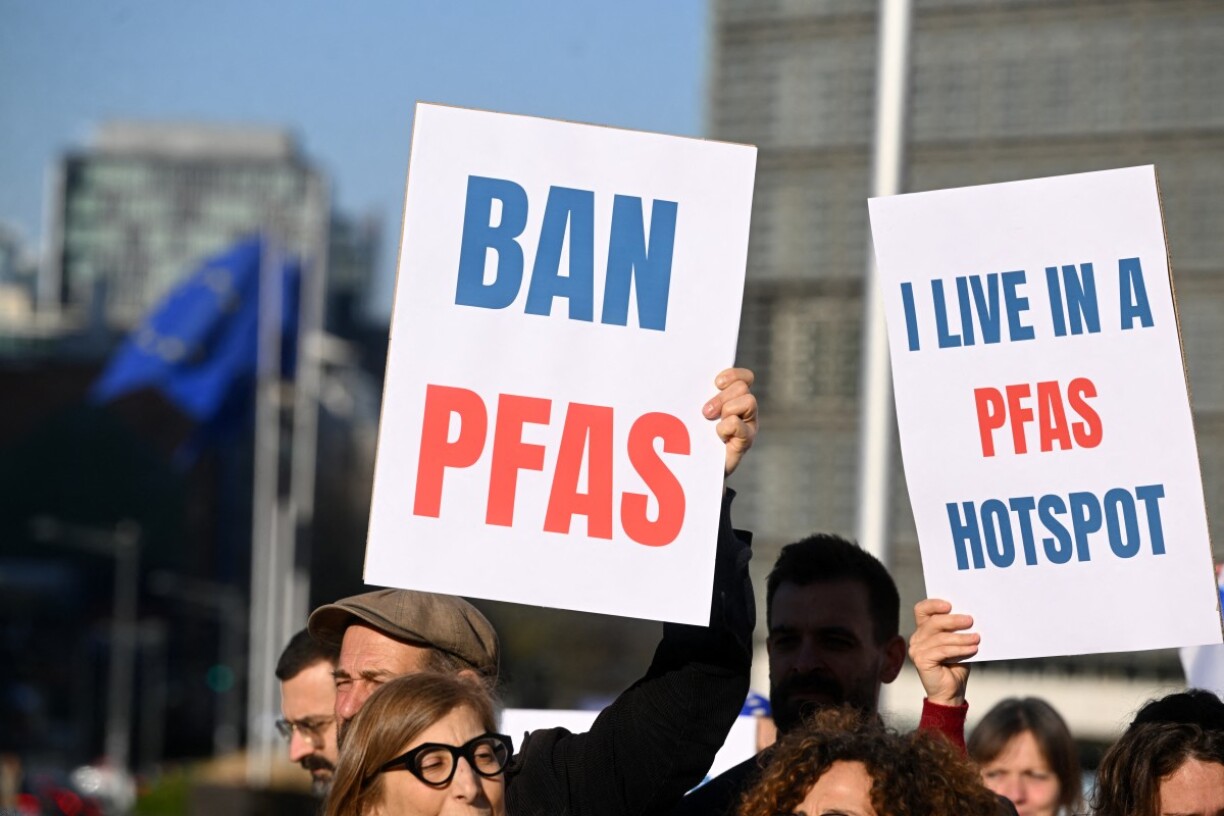
Present in countless everyday products, PFAS, which stand for per- and polyfluoroalkyl substances, are coming under growing scrutiny for their effects on human health and the environment. In the Chamber of Deputies on Wednesday, elected officials and the government found themselves at odds over the appropriate response, with opinion divided between targeted restrictions and a broader ban.
These so-called perennial pollutants or forever chemicals are persistent chemical substances found in a wide range of everyday items, from textiles to cosmetics, prized for their resistance to water, grease and heat. That very durability is also their greatest danger. PFAS accumulate in the environment and in the human body with virtually no degradation over time, making them a long-term health and environmental concern.
A large proportion of PFAS enters the natural environment through rainwater, and to a lesser extent via agriculture and waterways, resulting in what is now considered widespread exposure across the population.
The issue was raised in the Chamber by Luxembourg Socialist Workers’ Party (LSAP) MP Claire Delcourt, who was keen to move the debate beyond the technical. She stressed the need to put a human face on the issue, stressing that behind the scientific acronyms lay substances that build up in the body, seep into drinking water and linger in the environment indefinitely. According to Delcourt, a majority of the population already carries traces of PFAS in their blood, with potential consequences including liver damage, hormonal imbalances and an increased risk of certain cancers. Children, she warned, could be particularly vulnerable.
She also highlighted what she described as inconsistencies in current European limits, pointing to the example of a three-year-old child who could exceed the recommended daily intake simply by eating one egg, a consequence of limits she considers too high.
Whether these substances should be banned outright remains a matter of debate. Democratic Party (DP) MP Luc Emering urged caution, illustrating the complexity of the issue with a telling example: eggs from free-range hens can sometimes contain higher levels of PFAS than those from caged hens, due to the hens consuming worms and organisms from potentially contaminated soil. A ban or change in practices, he argued, can produce unintended consequences, and the issue is far from straightforward.
For Delcourt, the central question is one of necessity. She argued that the priority should be identifying where PFAS are truly indispensable, where alternatives exist, and where their use could simply be avoided altogether.
The majority parties were keen to highlight action already taken. Christian Social People’s Party (CSV) MP Françoise Kemp noted that limit values for PFAS in drinking water have already been established, and that a national strategy for water resource resilience is due to be presented by mid-2026. An interministerial working group has also been set up and has published an initial report confirming the scale of the problem.
The Minister of the Environment, concluding the debate, underlined the need for a coordinated response at European level to reduce the presence of PFAS in drinking water, food and consumer products.
The prominence of PFAS in public debate is also partly a matter of technological progress. Until recently, the analytical tools used to test water, air and soil were simply not sensitive enough to detect these substances reliably, meaning the full extent of the problem has only begun to come to light in recent years.





