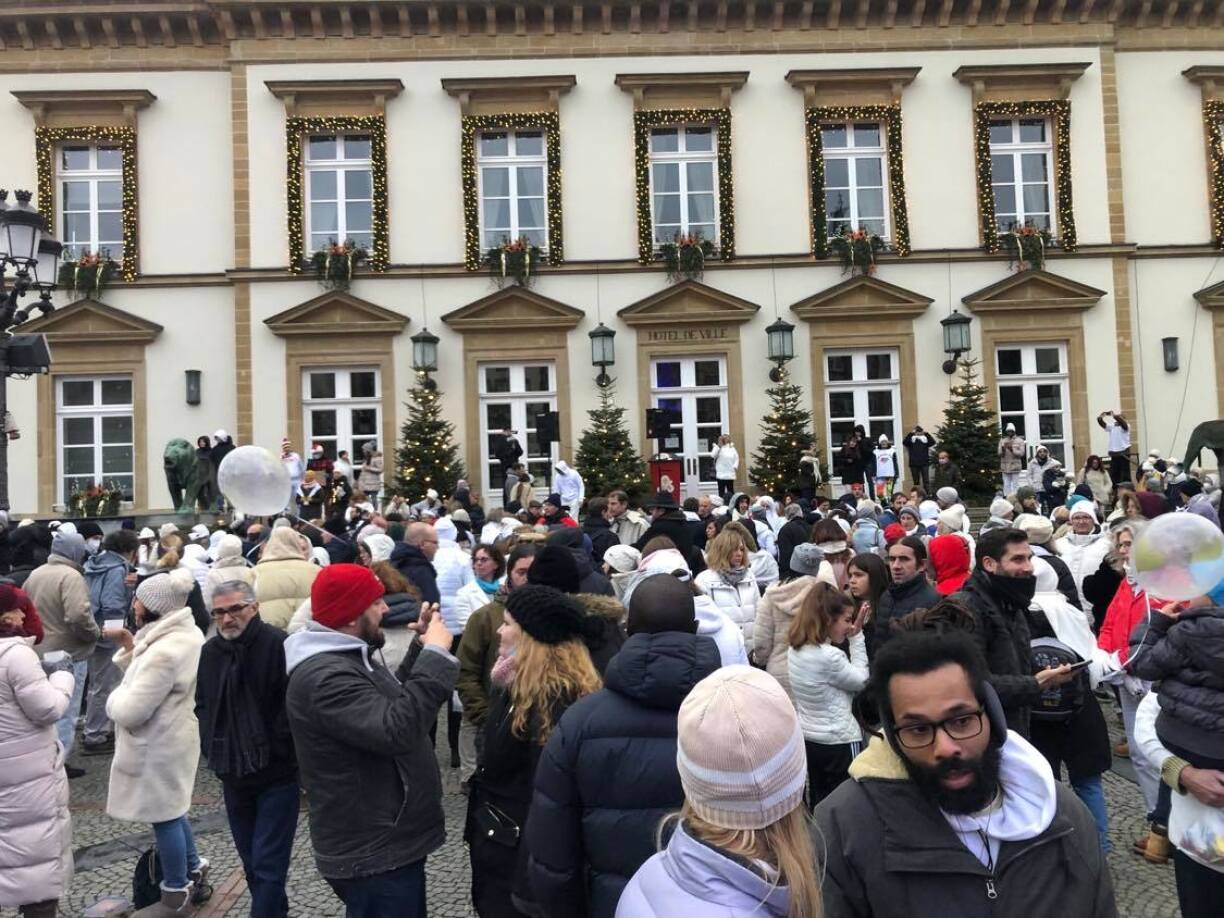
Stolz explained that the protests began relatively calm, as most people stayed in the predetermined zones. However, the situation changed when a group split off and tried to make its way out of the zone and into the city centre: "Police had to intervene with water canons to push protestors back. After that, people divided into even smaller groups and dispersed across town. In the end, we had to detain about 20 people and take them to the station for causing unrests or attacking officers with bangers."
Stolz further explained that the rioters could only be detained for a maximum of 12 hours: "After that, we have to consult with the prosecutor's office to decide if and which charges to press, and if a person is to be arrested."
Police presence in the capital was massively increased ahead of the Saturday protests, and Luxembourgish officers received back-up from their Belgian colleagues: "It was not the first time that we commissioned support from the Belgian riot units, and we were glad to receive their help with water canons on Avenue de la Porte Neuve."
It is estimated that between 60 and 70 Belgian officers joined the Grand Ducal Police on Saturday evening.
Spokesperson Stolz also addressed the planned White Silent March for tonight: "The protest zone is the same as last night, but the march will go in the opposite direction from Glacis towards Place de l'Europe in Kirchberg. We are well-prepared and hope that tonight will be much calmer."