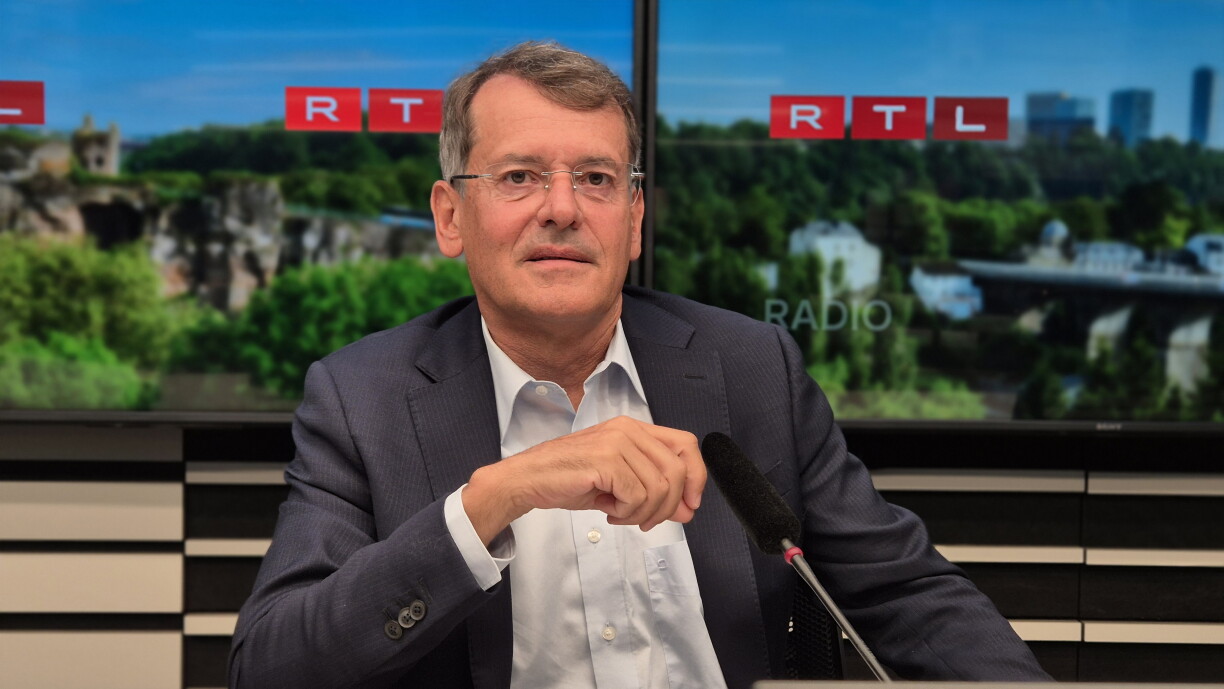
After 13 years as Director General of the Luxembourg Red Cross, Michel Simonis will step down from the role on 1 August, although he will remain involved in blood donation services and construction projects.
Speaking to RTL, Simonis outlined plans for the organisation's new headquarters in Howald, discussed changes to blood donation rules, and warned that Luxembourg still lacks sufficient long-term accommodation for homeless people and vulnerable young people.
The Luxembourg Red Cross expects to receive the keys to its new Maison de la Croix-Rouge by the end of the year. Services will then move into the building gradually over the course of 2027, according to Simonis.
He explained that the new site will accommodate administrative departments including finance, human resources, and communications, as well as advisory services for children, young people, and people seeking social support. The organisation's international services and blood donation centre will also move there, he added.
Simonis said the location had been selected partly because of its proximity to the tram and its accessibility by public transport, particularly for people using Red Cross services.
He noted that the organisation had originally expected around 450 people to work at the site, but that figure has now risen to more than 600 following internal reorganisation.
According to Simonis, much of the project was financed through an exchange involving land owned by the Red Cross at Geesseknäppchen. The organisation had purchased the site in the 1920s with the original intention of building a maternity hospital there, he said.
The current headquarters near Glacis will remain the Red Cross's official seat. Simonis ruled out turning the historic building into a museum, saying it should continue to serve a social purpose, potentially by offering services for older people or others in need.
Luxembourg now has more than 15,000 active blood donors, compared with around 12,000 in the past.
Simonis explained that hospitals generally require less blood than before because operations have become less invasive and blood products are used more carefully. However, maintaining a reliable supply remains essential because many products have a limited shelf life, he said.
More donors are also needed because people are increasingly affected by temporary exclusion criteria, including travel, medication, and certain sexual behaviour, according to Simonis.
Commenting on proposed changes that would allow men who have sex with men to donate under the same rules as other donors, Simonis stressed that assessments should focus on individual behaviour rather than sexual orientation.
"We look at people's behaviour, not their sexual orientation", he said, referring to factors such as changing partners, having multiple partners, travel, and medication.
He did not expect the change to lead to a significant increase in available blood products, but said it was important to resolve the question of legal liability. Unlike neighbouring countries, where the state assumes responsibility for unforeseen harm linked to blood transfusions, the Luxembourg Red Cross currently carries that risk, according to Simonis.
More than 50,000 people accessed Luxembourg Red Cross services last year.
Simonis said the figure covered a broad range of users, from children attending Red Cross-run childcare facilities, to homeless people, former prisoners struggling to reintegrate, and young people facing severe difficulties at home.
He warned that poverty and insecurity remained serious issues in Luxembourg despite the country's overall wealth.
"Some people in Luxembourg are doing very well, but others are doing much less well", he said, pointing to high housing costs and the difficulty faced by people on lower incomes.
Simonis argued that support services were essential to prevent society from becoming increasingly divided and to ensure that people in difficulty continued to have access to a social safety net.
Youth housing was one of the main concerns highlighted in the Red Cross's 2025 annual review.
Simonis described the situation as "extremely alarming", noting that a recently opened residence offering accommodation for children and young people had filled immediately. More than 100 young people were already on the waiting list, he noted.
Many were unable to remain with their families because of conflict, family breakdown, or domestic violence, rather than purely financial difficulties, he said.
The National Office for Children works to find suitable solutions, but Simonis said the number of young people requiring accommodation showed that further investment was urgently needed.
The Red Cross plans to continue developing youth housing and supported accommodation, including facilities intended to help young people who have dropped out of school reconnect with education, according to Simonis.
With temperatures of up to 38°C forecast, Simonis was also asked whether Luxembourg needed a summer programme comparable to the annual winter action for homeless people.
Rather than focusing on a temporary seasonal scheme, he called for more permanent, basic accommodation.
People living on the streets were in an "extremely precarious" situation, he said, and their physical condition often deteriorated the longer they remained without shelter. During periods of extreme heat, many were unable to protect themselves adequately, he added.
Simonis criticised the reliance on temporary arrangements in buildings made available for only a few years.
"We need to invest more in long-term structures where these people can be given shelter", he said, describing this as a clear and urgent need.
Responsibility should not fall solely on either the state or individual municipalities, he added. Simonis called for a system under which all municipalities contributed fairly to social infrastructure, including accommodation for homeless people and refugees.
Civil society also had a role to play, he said, concluding that the Red Cross itself accepted its share of responsibility.





