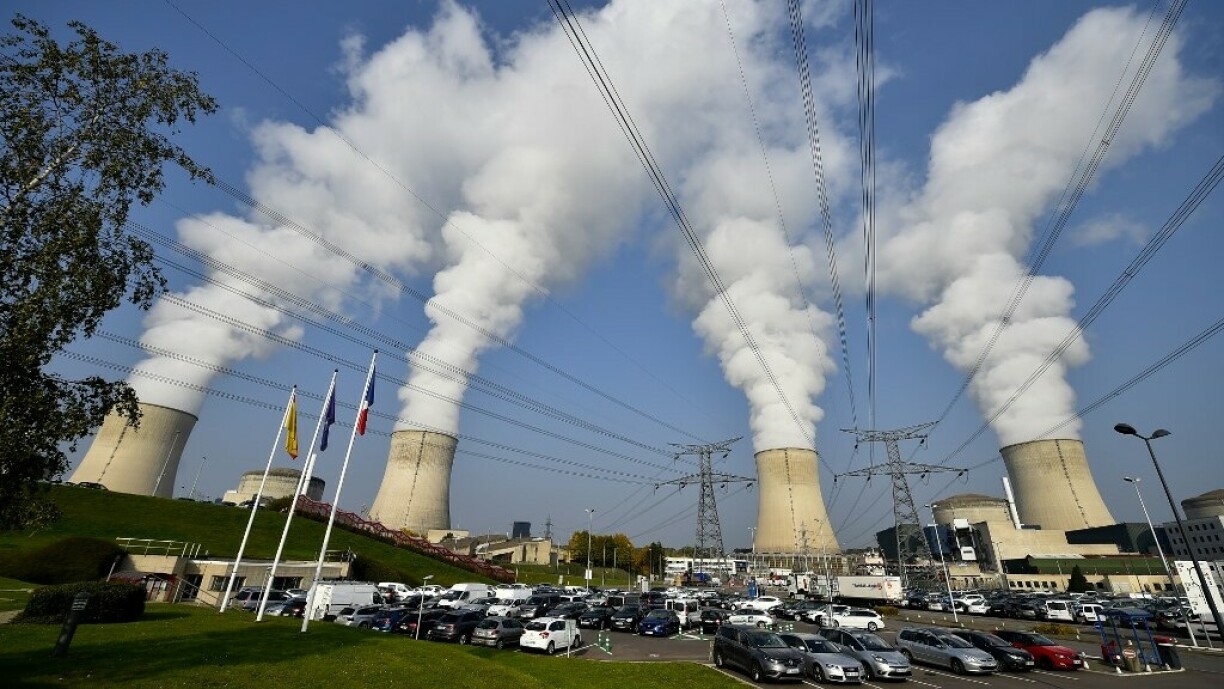
How well protected are we in the event of a nuclear accident? How would an evacuation work? MP François Benoy from the Green Party (Déi Gréng) asked for details on the subject from the government during Wednesday's plenary session in the Chamber of Deputies, as 2021 marks 35 years after the disaster at Chernobyl.
Minister for Home Affairs Taina Bofferding referred to the Cattenom Plan, which dates back to 2014 and was confirmed by the State Council two years ago.
Every household has received iodine tablets, which have not yet expired. In the event of a nuclear accident, everyone must take them in order to saturate the thyroid gland, which will then no longer be able to absorb the radioactive iodine. However, iodine tablets must be taken at the right time. If necessary, the government will give precise orders. As an example, the Minister mentioned schools, where iodine tablets are stored.
Otherwise, in the event of a nuclear accident, the main rule is one the population knows fairly well by now: "Stay at home!"
Especially during the hours when a radioactive cloud passes over the country's regions. Inside a house, no radioactive particles can land directly on the skin, and without external ventilation, no radioactivity is inhaled. The concrete walls provide some protection from radiation. It can be assumed, the Minister said, that people are five times less exposed at home than in the open air.
Evacuation is planned in the event of a very serious accident, if the amount of radioactive substance in the air is expected to be very high. In a first phase, a 15-kilometre zone from the Cattenom power plant would be evacuated, according to the Minister.





